
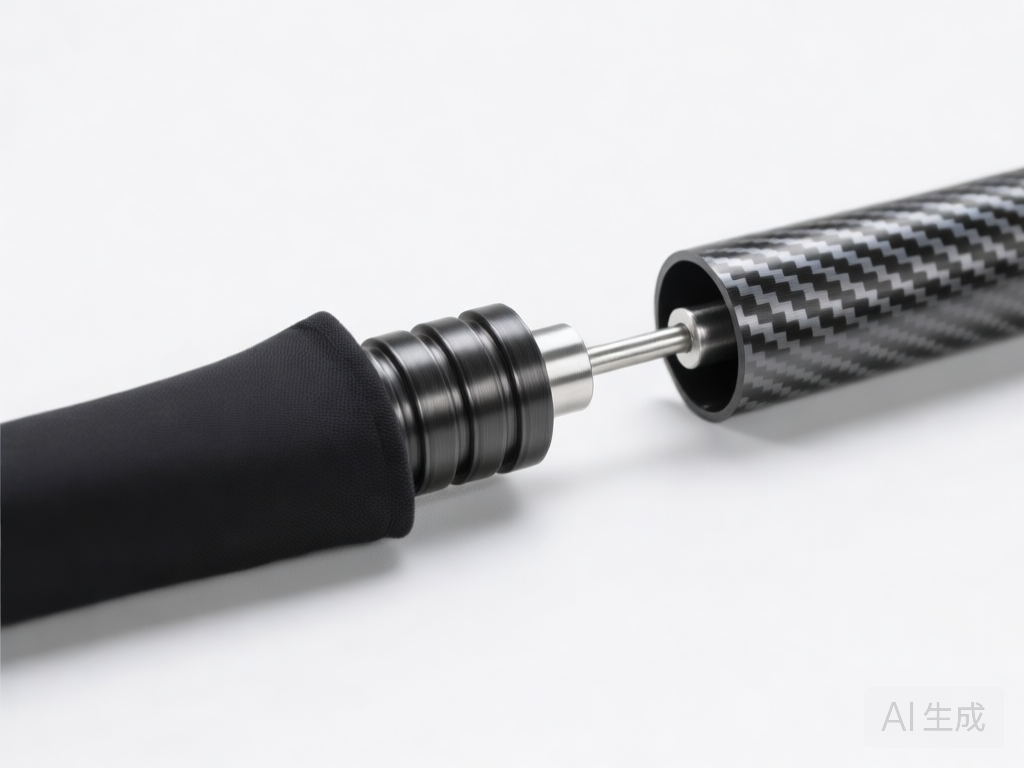
# Internal Sleeve vs External Ferrule Carbon Tube Connection Strength Test
Carbon fiber tubes are widely used in aerospace, automotive, and sports equipment due to their high strength-to-weight ratio. However, the connection between carbon tubes remains a critical point of failure. Two common methods are internal sleeves and external ferrules. This article presents a comparative strength test to determine which method offers superior performance.
## Test Methodology
To ensure a fair comparison, we used identical carbon fiber tubes (20mm outer diameter, 1.5mm wall thickness) and bonded them with a two-part epoxy adhesive. The internal sleeve was a 30mm long aluminum tube inserted into the tube ends, while the external ferrule was a 30mm long aluminum collar fitted over the tube ends. Both connections were subjected to axial tensile tests using a universal testing machine.
### Sample Preparation
Five samples of each connection type were prepared. The bonding surfaces were sanded and cleaned with acetone. The adhesive was cured at room temperature for 24 hours, followed by a post-cure at 80°C for 2 hours.
## Test Results
### Internal Sleeve Connection
The internal sleeve connections failed at an average load of 12.5 kN. Failure modes included adhesive failure at the sleeve-tube interface and tube splitting in some samples. The internal sleeve provided good alignment but showed stress concentrations at the tube ends.
### External Ferrule Connection
The external ferrule connections failed at an average load of 15.8 kN. Failure occurred primarily by ferrule yielding and adhesive failure. The external ferrule distributed stress more evenly along the bond line, resulting in higher load capacity.
## Discussion
The external ferrule demonstrated a 26% higher average failure load compared to the internal sleeve. This can be attributed to the larger bond area and better stress distribution. However, external ferrules add bulk to the outer diameter, which may be undesirable in aerodynamic applications. Internal sleeves maintain a smooth outer profile but may cause tube splitting due to wedging effects.
### Factors Affecting Performance
– **Bond area**: External ferrule provides more surface area for adhesion.
– **Stress distribution**: External ferrule reduces stress concentration at the tube ends.
– **Material stiffness**: Aluminum ferrules yield before carbon tube failure, providing a warning.
– **Installation**: Internal sleeves require precise alignment; external ferrules are easier to install.
## Conclusion
For applications requiring maximum connection strength, external ferrules are superior. However, if a smooth outer profile is essential, internal sleeves can be used with careful design to mitigate stress concentrations. Engineers should consider the specific requirements of their application when choosing between these two methods.
## Keywords
– Carbon tube connection
– Internal sleeve
– External ferrule
– Strength test
– Adhesive bonding