
# Introduction
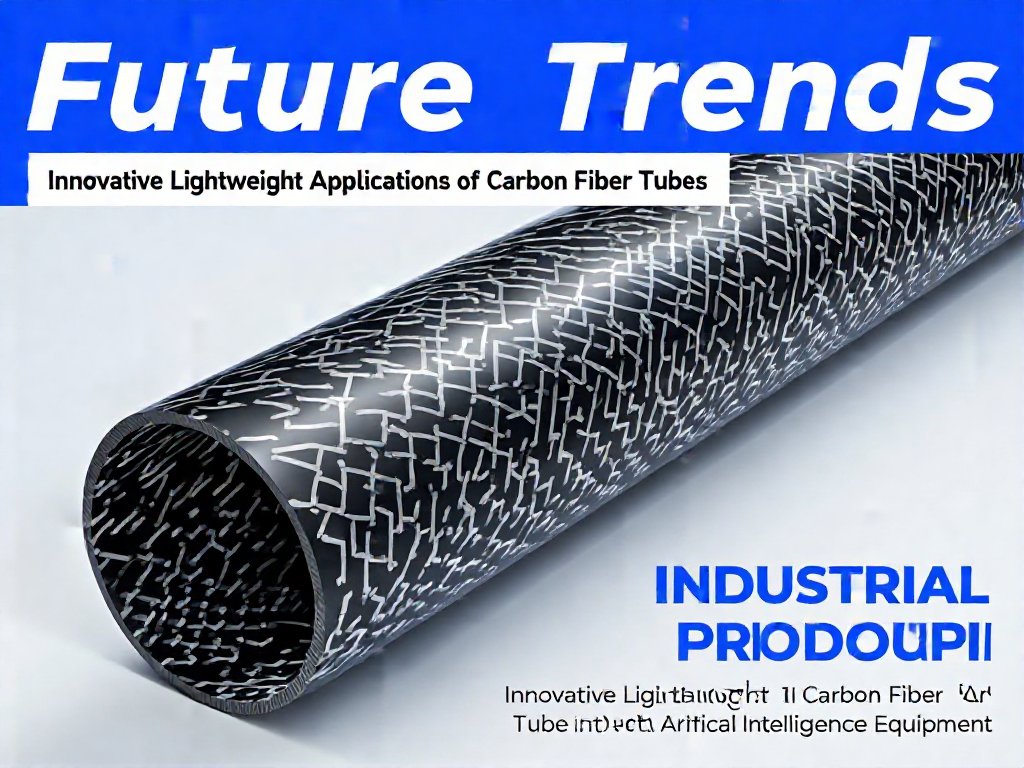
The rapid evolution of artificial intelligence (AI) is reshaping industries from autonomous robotics to advanced medical diagnostics. As AI equipment becomes more sophisticated, the demand for materials that offer exceptional strength, minimal weight, and high stiffness has never been greater. Carbon fiber tubes, known for their outstanding mechanical properties and lightweight nature, are emerging as a critical component in next-generation AI hardware. This article explores the innovative applications of carbon fiber tubes in AI equipment, highlighting future trends that will define the intersection of advanced materials and intelligent machines.
## Why Carbon Fiber Tubes Are Ideal for AI Equipment
### Exceptional Strength-to-Weight Ratio
Carbon fiber composites offer a strength-to-weight ratio that is significantly superior to traditional metals like steel and aluminum. For AI equipment such as drones, robotic arms, and portable diagnostic devices, reducing weight without compromising structural integrity is essential. Carbon fiber tubes provide the necessary rigidity to maintain precision while enabling lighter, more energy-efficient designs.
### High Stiffness and Dimensional Stability
AI systems often rely on precise movements and stable platforms. Carbon fiber tubes exhibit high modulus values, meaning they resist deformation under load. This stiffness is crucial for applications like camera gimbals in AI surveillance systems or the arms of collaborative robots (cobots), where even minor flex can lead to inaccuracies.
### Thermal and Electrical Properties
Carbon fiber tubes can be engineered to have specific thermal expansion coefficients, making them dimensionally stable across varying temperatures—a key requirement for AI hardware operating in diverse environments. Additionally, their electrical conductivity can be tailored, offering shielding against electromagnetic interference (EMI) in sensitive AI electronics.
## Innovative Applications in AI Equipment
### Autonomous Drones and UAVs
Unmanned aerial vehicles (UAVs) are at the forefront of AI integration, used for delivery, inspection, and surveillance. Carbon fiber tubes are used in drone arms and landing gear to reduce overall weight, extending flight time and payload capacity. The stiffness of carbon fiber also minimizes vibration, ensuring stable sensor readings for AI navigation systems.
### Robotic Arms and End-Effectors
In industrial automation, AI-driven robotic arms must be both fast and precise. Carbon fiber tubes are replacing aluminum in robotic arm segments, reducing inertia and enabling higher acceleration while maintaining positional accuracy. This is particularly beneficial in pick-and-place operations, where speed and repeatability are critical.
### AI-Powered Exoskeletons and Wearables
Wearable AI devices, such as exoskeletons for rehabilitation or heavy lifting assistance, require lightweight yet strong structural frames. Carbon fiber tubes provide the necessary support while minimizing the energy required by the wearer. Their fatigue resistance ensures long-term reliability in repetitive motion scenarios.
### Medical AI Imaging Systems
AI-enhanced imaging equipment, like portable MRI or CT scanners, often incorporates carbon fiber tubes in patient support structures and gantry components. The radiolucency of carbon fiber allows better X-ray transmission, improving image clarity while reducing patient discomfort due to lighter equipment.
### Data Center Cooling and Structural Supports
As AI computing demands increase, data centers require efficient cooling systems. Carbon fiber tubes are used in advanced liquid cooling loops and server rack structures due to their low thermal conductivity and high strength. This reduces the overall weight of cooling infrastructure and improves energy efficiency.
## Future Trends in Carbon Fiber Tubes for AI
### Integration with Smart Sensors
The future will see carbon fiber tubes embedded with fiber-optic sensors or piezoelectric elements, enabling real-time structural health monitoring. In AI equipment, this could provide feedback on stress, strain, and temperature, allowing predictive maintenance and adaptive control.
### 3D Printing of Carbon Fiber Composites
Additive manufacturing is evolving to produce carbon fiber-reinforced components with complex geometries. This will allow for custom-designed tubes that optimize material placement, further reducing weight and enhancing performance for specific AI applications.
### Recycling and Sustainability
As environmental concerns grow, the development of recyclable carbon fiber composites is gaining momentum. Future AI equipment will likely incorporate tubes made from recycled carbon fibers, maintaining performance while reducing the carbon footprint.
### Hybrid Materials and Nanotechnology
Combining carbon fiber tubes with nanomaterials like graphene or carbon nanotubes can enhance electrical and thermal properties, opening new possibilities for AI hardware that requires rapid heat dissipation or advanced sensing capabilities.
## Conclusion
Carbon fiber tubes are poised to play a transformative role in the advancement of AI equipment. Their unique combination of lightweight, strength, and stiffness addresses the core challenges of modern AI hardware—weight reduction, precision, and durability. As technology progresses, we can expect even more innovative applications, from smart structural components to sustainable manufacturing practices. For engineers and designers, embracing carbon fiber tubes will be key to unlocking the full potential of future AI systems.