
## Introduction
Carbon fiber tubes are widely used in aerospace, automotive, robotics, sporting goods, and industrial machinery due to their exceptional strength-to-weight ratio, stiffness, and corrosion resistance. However, the market is flooded with products labeled as “carbon fiber” that are actually inferior imitations or low-grade composites. These counterfeits can compromise performance, safety, and durability. This buying guide provides a systematic approach to identifying high-quality carbon fiber tubes and avoiding common pitfalls.
## Understanding Carbon Fiber Tube Manufacturing
High-quality carbon fiber tubes are produced through processes like pultrusion, filament winding, or roll wrapping, using continuous carbon fiber tows impregnated with epoxy resin. The fiber orientation, resin content, and curing process determine the final mechanical properties. Inferior tubes often use chopped fibers, fiberglass reinforcement, or excessive resin to cut costs, resulting in lower strength and stiffness.
### Key Quality Indicators
– **Fiber Type**: Aerospace-grade carbon fiber (e.g., T700, T800) offers higher tensile strength and modulus. Inferior tubes may use recycled or low-grade fibers.
– **Resin System**: Premium epoxy resins provide better adhesion and thermal stability. Polyester or vinyl ester resins are cheaper but degrade faster.
– **Fiber Volume Fraction**: High-quality tubes have a fiber volume fraction of 60-70%. Lower fractions indicate more resin, reducing performance.
– **Surface Finish**: A smooth, glossy, and pinhole-free surface indicates proper curing and minimal voids.
## Visual Inspection: What to Look For
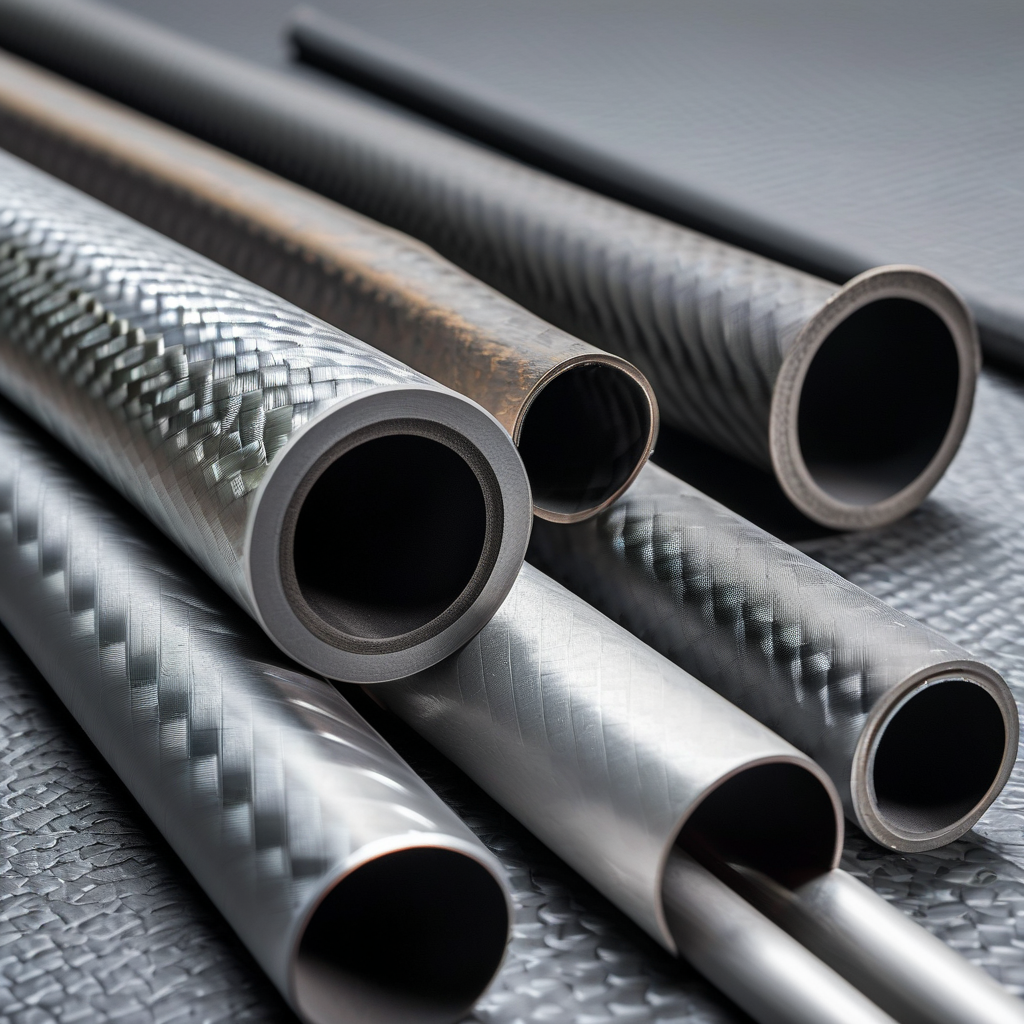
Visual examination is the first step in distinguishing quality. High-quality carbon fiber tubes have a consistent, uniform weave pattern (e.g., 3K, 6K, 12K) with no gaps, wrinkles, or misaligned fibers. The surface should be free of bubbles, cracks, or resin-rich areas. Inferior tubes often show:
– **Uneven texture**: Patchy or blotchy appearance due to poor resin distribution.
– **Visible fiber exposure**: Fibers protruding from the surface indicate insufficient resin coating.
– **Discoloration**: Yellowing or dark spots may indicate resin degradation or improper curing.
– **Thick resin layer**: A thick, shiny coating can hide poor fiber quality underneath.
### Check the Edges and Cut Ends
Examine the cut ends of the tube. High-quality tubes have clean, solid edges with tightly packed fibers. Inferior tubes may show hollow sections, delamination, or loose fibers. The cross-section should be uniform and free of voids.
## Physical Testing Methods
Beyond visual inspection, simple physical tests can reveal material quality.
### Weight and Density
Carbon fiber is lightweight. Compare the weight of the tube to its dimensions. A high-quality tube will have a density around 1.5-1.6 g/cm³. If the tube feels unusually heavy, it may contain excessive resin or fiberglass. Conversely, if it feels too light, it might have voids or insufficient fiber content.
### Flexural and Compression Tests
Apply moderate pressure to the tube. High-quality carbon fiber tubes are rigid and resist bending. Inferior tubes may flex easily or crack under stress. For a more quantitative test, use a simple three-point bend test with a known load and measure deflection. However, be cautious not to damage the tube if it is intended for use.
### Acoustic Test
Tap the tube gently with a metallic object. A high-quality carbon fiber tube produces a clear, ringing sound, indicating good consolidation. A dull or thudding sound suggests voids, delamination, or resin-rich areas.
## Thermal and Chemical Resistance
High-quality carbon fiber tubes can withstand high temperatures (up to 150°C or more, depending on resin) and are resistant to most chemicals. Inferior tubes may soften, warp, or discolor when exposed to heat. You can perform a simple heat test by placing the tube in an oven at 100°C for 30 minutes. If it deforms or emits a strong odor, it is likely low-grade.
## Supplier Verification and Documentation
Reputable manufacturers provide material data sheets (MDS) and certificates of conformance (CoC) specifying fiber type, resin system, mechanical properties, and manufacturing standards. Ask for these documents and verify them. Also, check if the supplier has ISO 9001 or AS9100 certifications. Be wary of suppliers who cannot provide traceable documentation.
### Request Samples
Before bulk purchasing, request samples and perform your own tests. Compare samples from different suppliers under the same conditions. This is the most reliable way to assess quality.
## Common Counterfeit Types
– **Fiberglass with carbon veil**: A thin carbon layer over fiberglass core. This is often used in decorative tubes but lacks strength.
– **Chopped fiber composites**: Short fibers mixed with resin, offering low stiffness and strength.
– **Recycled carbon fiber**: Reclaimed fibers from scrap, which may have degraded properties.
– **Over-resinated tubes**: High resin content to mimic the glossy finish but with poor mechanical performance.
## Price as an Indicator
High-quality carbon fiber tubes are expensive due to raw material and processing costs. If the price is significantly lower than market average, it is likely inferior. However, high price does not guarantee quality, so always combine price with other verification methods.
## Conclusion
Distinguishing high-quality carbon fiber tubes from inferior counterfeits requires a combination of visual inspection, physical testing, and supplier verification. By understanding the manufacturing process, knowing what to look for, and requesting proper documentation, you can make informed purchasing decisions. Always prioritize safety and performance over cost, especially in critical applications. Remember, a small investment in quality assurance can prevent costly failures and ensure long-term reliability.