
## Introduction
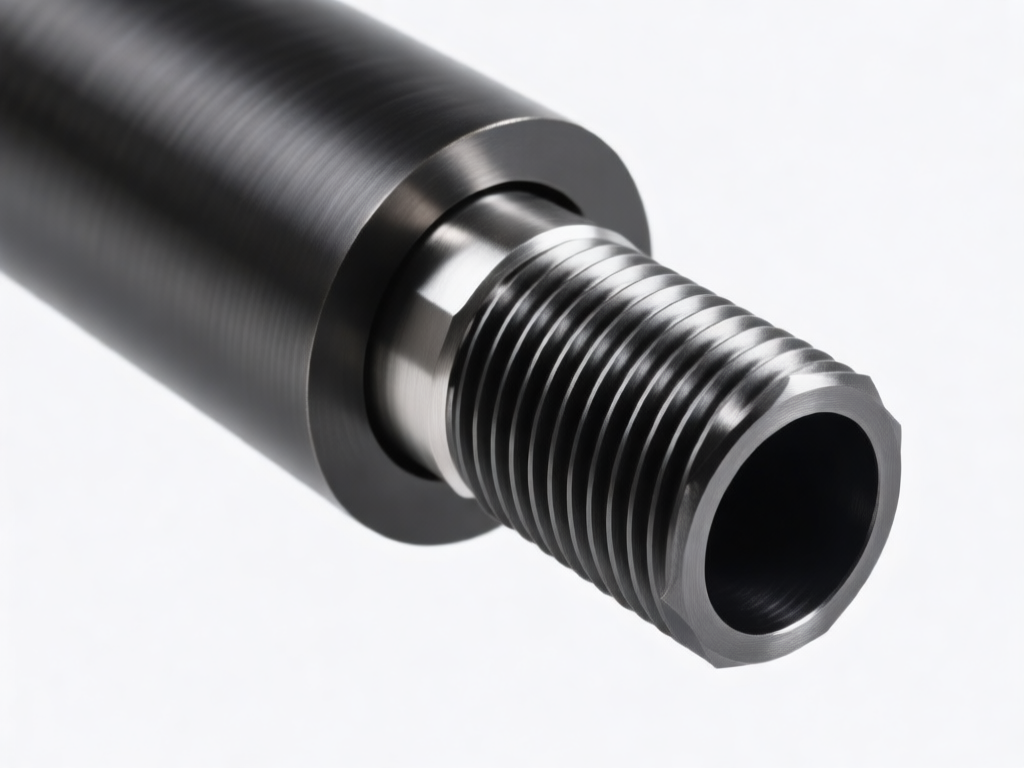
The composites industry is witnessing a paradigm shift in the design and manufacturing of carbon fiber components. For decades, the standard method for creating threaded connections in carbon fiber tubes involved bonding or mechanically fastening separate metal inserts—typically aluminum or steel—into the tube ends. While functional, this approach introduces weight, galvanic corrosion risks, and assembly complexity. Today, a new trend is gaining momentum: the integrated threaded structure, where threads are formed directly into the carbon tube itself. This article explores the technical drivers, manufacturing methods, and benefits of replacing metal insert assemblies with integrated carbon threads, and why this trend is reshaping industries from aerospace to sporting goods.
## The Limitations of Conventional Metal Insert Assemblies
### Weight and Inertia Penalties
Metal inserts add significant mass to a component that is otherwise chosen for its lightweight properties. In rotating applications such as drive shafts or drone arms, this added weight increases rotational inertia, reducing efficiency and responsiveness. The density of aluminum (2.7 g/cm³) or steel (7.8 g/cm³) contrasts sharply with carbon fiber composites (1.5–1.6 g/cm³), making the insert a disproportionate contributor to overall weight.
### Galvanic Corrosion and Interface Failures
When carbon fiber (a cathodic material) comes into direct contact with an anodic metal like aluminum, galvanic corrosion can occur, especially in humid or saline environments. This degrades the metal insert over time, compromising the joint’s integrity. Even with insulating layers or adhesive bonding, the interface between the metal and composite remains a potential weak point, susceptible to micro-cracking and delamination under cyclic loading.
### Assembly Complexity and Cost
Inserting a metal part requires additional manufacturing steps: machining the insert, applying adhesive, curing, and often secondary operations like drilling or tapping. This increases labor, cycle time, and the potential for quality variations. Each interface also introduces tolerance stack-ups, making precision alignment more challenging.
## The Emergence of Integrated Threaded Structures
### What Is an Integrated Threaded Structure?
An integrated threaded structure refers to a carbon fiber tube where the thread profile is formed directly into the composite material during the manufacturing process, eliminating the need for a separate metal component. This can be achieved through various techniques, including:
– **Direct molding:** Using a threaded mandrel or mold cavity to shape the uncured prepreg or resin-infused fibers.
– **Post-cure machining:** CNC machining of threads into the cured carbon tube using specialized tooling.
– **Additive manufacturing:** 3D printing of carbon-reinforced thermoplastics with integrated threads.
### Key Drivers for the Trend
1. **Weight reduction:** Removing metal inserts can reduce component weight by 30–50% in the joint area.
2. **Improved corrosion resistance:** Eliminating the metal-composite interface removes galvanic corrosion risks.
3. **Simplified supply chain:** Fewer parts and processes reduce inventory and assembly time.
4. **Design freedom:** Integrated threads allow for more aerodynamic or ergonomic shapes without protruding flanges.
## Manufacturing Techniques for Integrated Threads
### Compression Molding with Threaded Mandrels
In this method, a threaded mandrel (usually made of steel or aluminum) is wrapped with prepreg carbon fiber. After curing under heat and pressure, the mandrel is unscrewed, leaving a precise internal thread. This technique is ideal for high-volume production of tubes with consistent thread geometry. The key challenge is ensuring that the fibers follow the thread contour without wrinkling or bridging, which requires careful ply scheduling and material selection.
### Filament Winding with Threaded Inserts
Filament winding can be adapted to create external threads by winding over a threaded core, then removing the core. However, this is less common for internal threads. More often, filament winding is used to create a near-net-shape tube that is then machined.
### CNC Machining of Cured Tubes
For low-to-medium volumes, CNC machining is a flexible option. A cured carbon tube is mounted on a lathe or mill, and threads are cut using diamond-coated tools. This method allows for high precision and the ability to produce custom thread forms. The downside is that cutting fibers can create micro-cracks, so proper edge finishing and sealing are essential.
### Additive Manufacturing (3D Printing)
Continuous fiber 3D printing (e.g., Markforged or Anisoprint) can produce tubes with integrated threads in a single operation. The printer deposits a matrix (nylon or PEEK) reinforced with continuous carbon fiber, building up the thread layer by layer. This offers unprecedented design freedom, including internal threads with complex geometries that are impossible to machine. However, the mechanical properties of printed composites are still lower than those of prepreg laminates, limiting their use in high-stress applications.
## Mechanical Performance Considerations
### Thread Strength and Load Capacity
Carbon fiber composites exhibit excellent compressive strength but are weaker in shear and bearing. Threads rely on shear transfer between the male and female parts, so the thread root is a critical stress concentration point. Designers must optimize thread depth, pitch, and flank angle to maximize pull-out strength. Testing has shown that well-designed integrated carbon threads can achieve 70–90% of the load capacity of comparable metal inserts, which is sufficient for many applications.
### Fatigue and Impact Resistance
Carbon composites have good fatigue resistance, but the thread area can be susceptible to delamination under cyclic loading. To mitigate this, designers often add local reinforcement (e.g., additional plies or a fiberglass layer) at the thread zone. Impact resistance is generally lower than metal, so integrated threads are best suited for applications where impact loads are minimal.
### Environmental Durability
Without metal, there is no galvanic corrosion. However, the exposed thread surface can absorb moisture, leading to micro-cracking in freeze-thaw cycles. Applying a sealant or using a hydrophobic resin system can enhance durability.
## Applications Driving the Adoption
### Aerospace and Drones
In UAVs (unmanned aerial vehicles), every gram counts. Integrated threads on carbon arms and fuselage sections reduce weight and simplify assembly. For example, a drone arm with an integrated threaded end can be directly screwed into a central hub, eliminating the need for metal brackets.
### Sporting Goods
Bicycle components, such as handlebars, seat posts, and fork steerer tubes, are increasingly using integrated threads. This reduces weight and improves the aesthetic by removing visible metal parts. High-end racing bikes have adopted this trend for aerodynamic and weight savings.
### Robotics and Automation
Robotic arms and linear actuators often use carbon tubes for their high stiffness-to-weight ratio. Integrated threads allow for modular assembly of end-effectors and joints without bulky metal flanges, enabling faster and lighter robotic systems.
### Medical Devices
In prosthetics and orthotics, carbon tubes with integrated threads provide a lightweight, corrosion-free connection for adjustable components. This is particularly beneficial for patients who are active or in humid environments.
## Challenges and Limitations
### Thread Wear and Galling
Carbon threads can wear over repeated assembly/disassembly cycles, especially if debris accumulates. Unlike metal, carbon does not self-lubricate, so dry film lubricants or thread coatings may be required.
### Repair and Replacement
If a metal insert fails, it can often be replaced. With integrated threads, damage to the thread usually means replacing the entire tube, which can be more costly. This is a consideration for applications where field repair is critical.
### Manufacturing Tolerances
Achieving tight tolerances on threaded carbon parts is more difficult than on metal due to material shrinkage during curing and the anisotropic nature of composites. This requires precise process control and may limit the use of integrated threads in high-precision assemblies.
## Future Outlook and Innovations
### Hybrid Approaches
Some manufacturers are exploring hybrid designs where a thin metal sleeve is co-cured with the carbon tube, but the thread is formed in the carbon itself. This provides a wear-resistant surface while retaining most of the weight savings.
### Advanced Materials
The development of thermoplastic composites (e.g., PEEK/carbon) with higher toughness and better wear resistance will make integrated threads more viable for demanding applications. Thermoplastics can also be welded or fused, enabling new assembly methods.
### Digital Twin and Simulation
Finite element analysis (FEA) is being used to optimize thread geometry for maximum strength and fatigue life. Digital twins of the manufacturing process can predict fiber flow and void formation, reducing trial-and-error.
## Conclusion
The trend of replacing separate metal insert assemblies with integrated threaded structures in carbon tubes is a logical evolution in composite engineering. By eliminating the metal-composite interface, manufacturers achieve significant weight savings, improved corrosion resistance, and simplified assembly. While challenges remain in terms of thread wear and manufacturing precision, ongoing innovations in materials and processes are rapidly overcoming these barriers. As industries continue to demand lighter, more efficient, and more durable components, the integrated threaded carbon tube is set to become a standard solution in the composites industry. For engineers and designers, embracing this trend means rethinking traditional joint designs and leveraging the full potential of carbon fiber composites.