
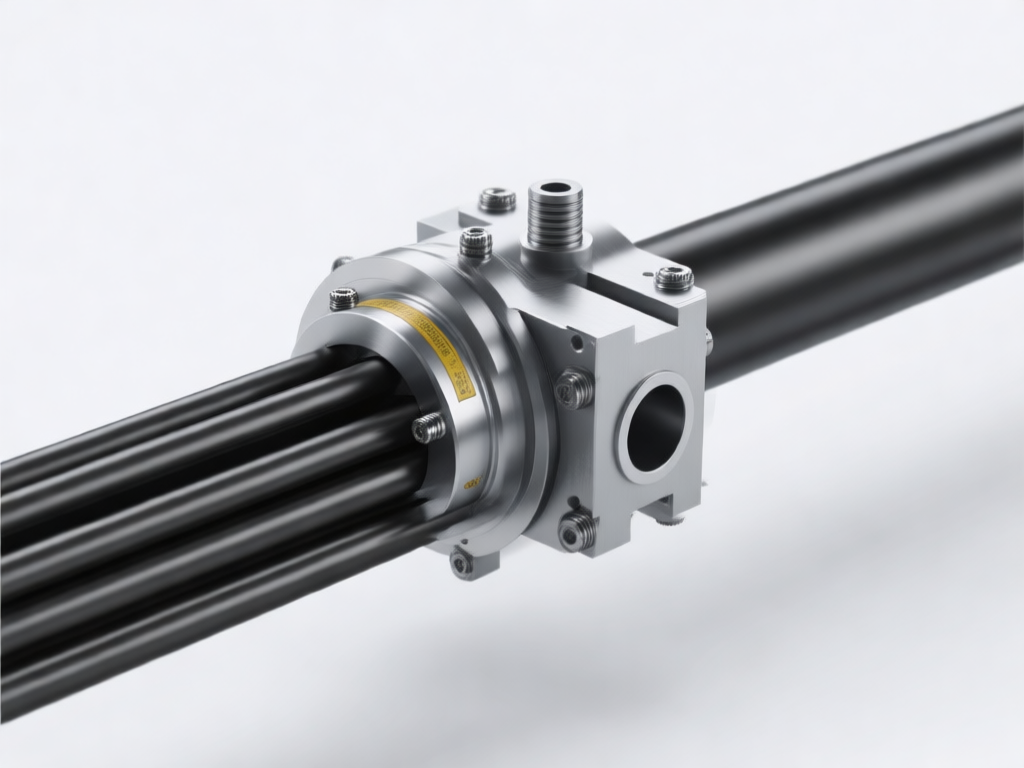
# Carbon Tube Slotting Processing Method for Mechanical Positioning Connection
## Introduction
Carbon fiber tubes are increasingly used in aerospace, automotive, robotics, and sports equipment due to their high strength-to-weight ratio and corrosion resistance. However, joining carbon tubes to other components requires precise mechanical connections. Slotting—cutting precise grooves or slots into the tube—is a common method to create interlocking joints that ensure accurate positioning and reliable load transfer. This article explores the slotting processing methods for carbon tubes, focusing on techniques that achieve mechanical positioning connections. We will cover design considerations, machining processes, quality control, and best practices to help engineers and manufacturers optimize their carbon tube assemblies.
## Why Slotting for Mechanical Positioning?
Mechanical positioning connections rely on geometric features to align and secure components. Slotting provides a keyway or interlocking profile that prevents rotation and axial movement. Compared to adhesive bonding or clamping, slotted connections offer:
– **High torque resistance**: Slots engage with mating keys or pins to transmit torsional loads.
– **Repeatable assembly**: Components can be disassembled and reassembled without loss of alignment.
– **Enhanced reliability**: Mechanical interlocks reduce dependence on adhesive strength, which can degrade in harsh environments.
## Design Considerations for Carbon Tube Slots
Before machining, engineers must define slot geometry based on load requirements and tube dimensions. Key parameters include:
– **Slot width and depth**: Determined by the mating key size and required shear strength. A common rule is slot depth not exceeding 1/3 of the tube wall thickness to avoid excessive stress concentration.
– **Slot length**: Should accommodate the full engagement length of the mating component, typically 1.5 to 2 times the tube diameter.
– **Number of slots**: Multiple slots can distribute load but may weaken the tube. Finite element analysis (FEA) is recommended to optimize.
– **Edge fillets**: Rounded corners reduce stress concentration and prevent crack initiation.
## Slotting Processing Methods
Several machining methods can create slots in carbon fiber tubes. The choice depends on production volume, precision requirements, and budget.
### 1. CNC Milling
CNC milling is the most versatile method for slotting carbon tubes. A rotary axis holds the tube while an end mill cuts the slot. Key advantages:
– High precision and repeatability
– Ability to create complex slot shapes
– Suitable for small to medium production runs
**Best practices**: Use diamond-coated or carbide end mills designed for composite materials. Maintain high spindle speeds (10,000–20,000 RPM) and low feed rates to minimize delamination. Climb milling is preferred to reduce fiber pull-out.
### 2. Abrasive Waterjet Cutting
Abrasive waterjet (AWJ) cutting uses a high-pressure stream of water mixed with abrasive particles to erode the material. It is ideal for carbon tubes because it is a cold-cutting process that avoids heat damage.
– **Advantages**: No heat-affected zone, minimal mechanical stress, can cut thick walls.
– **Limitations**: Tapered edges, slower for high-volume production, requires masking to protect surfaces.
**Best practices**: Use fine abrasive mesh (e.g., 120 grit) for smooth finishes. Compensate for taper by tilting the cutting head or using a 5-axis system.
### 3. Laser Cutting
Laser cutting offers high speed and precision for thin-walled carbon tubes. However, the intense heat can cause charring and delamination.
– **Advantages**: Very fast, excellent for intricate slots.
– **Limitations**: Heat-affected zone, potential fiber damage, requires inert gas assist.
**Best practices**: Use a femtosecond or picosecond laser to minimize thermal damage. Ensure proper ventilation to remove fumes.
### 4. Diamond Wire Sawing
Diamond wire sawing is a slower but highly precise method that uses a wire embedded with diamond abrasives. It is suitable for cutting slots in thick-walled tubes without inducing delamination.
– **Advantages**: Smooth cuts, no heat damage, can cut complex profiles.
– **Limitations**: Slow, limited to straight cuts unless combined with a rotary axis.
**Best practices**: Maintain constant wire tension and use coolant to flush debris.
## Tooling and Fixturing
Proper fixturing is critical to prevent tube deformation and vibration during slotting. Recommended approaches:
– **Mandrel support**: Insert a snug-fitting mandrel inside the tube to support the walls.
– **V-block clamps**: Use soft jaws or V-blocks with rubber padding to hold the tube without crushing.
– **Rotary table**: For CNC milling, a 4th-axis rotary table allows precise indexing of multiple slots.
## Quality Control and Inspection
After slotting, inspect the tubes for dimensional accuracy and defects:
– **Dimensional inspection**: Use calipers or CMM to verify slot width, depth, and position.
– **Visual inspection**: Check for delamination, fiber pull-out, and burns.
– **Non-destructive testing**: Ultrasonic testing or X-ray can detect internal defects.
## Case Study: Robotic Arm Joint
A robotics manufacturer needed to connect a carbon fiber tube to an aluminum hub. The tube had a 50 mm outer diameter and 2 mm wall thickness. Two slots, 5 mm wide and 1 mm deep, were CNC milled at 180° apart. The slots engaged with keys on the hub, providing a torque capacity of 50 Nm. The assembly passed 10,000 cycles of dynamic testing without failure.
## Conclusion
Slotting carbon tubes for mechanical positioning connections requires careful selection of processing methods and adherence to best practices. CNC milling and abrasive waterjet cutting are the most reliable methods for achieving precise, damage-free slots. By considering design parameters, tooling, and quality control, manufacturers can create strong, durable joints that leverage the unique properties of carbon fiber composites. As carbon tubes continue to replace metals in high-performance applications, efficient slotting techniques will remain essential for mechanical assembly.