
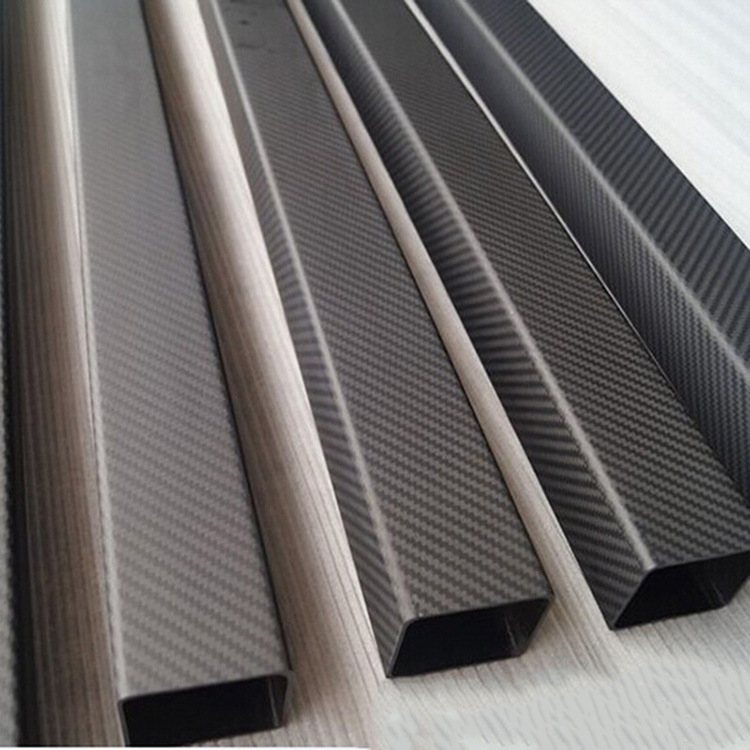
## Introduction
Industrial automation production lines demand conveyor systems that deliver exceptional performance under continuous operation, high loads, and stringent precision requirements. Traditional materials such as steel and aluminum have long served as the backbone of conveyor frameworks, but they come with inherent limitations—weight, friction, and susceptibility to fatigue. Carbon fiber tubes are emerging as a transformative solution, offering a unique combination of high load-bearing capacity, low friction, and remarkable durability. This article explores how carbon fiber tubes are engineered into conveyor systems to solve the most pressing challenges in modern manufacturing, from automotive assembly to electronics packaging.
## The Role of Conveyor Systems in Industrial Automation
Conveyor systems are the circulatory system of automated production lines, moving components, sub-assemblies, and finished goods between workstations with precise timing. In high-throughput environments, any downtime or inefficiency directly impacts productivity and profitability. Key performance indicators for conveyor systems include:
– **Load capacity** – the ability to support heavy products without deformation.
– **Friction coefficient** – lower friction reduces energy consumption and wear.
– **Stiffness-to-weight ratio** – lighter structures reduce inertial forces and allow faster acceleration.
– **Fatigue resistance** – components must withstand millions of cycles without failure.
Carbon fiber tubes excel in all these areas, making them an ideal choice for next-generation conveyor designs.
## Why Carbon Fiber Tubes Outperform Traditional Materials
### High Load-Bearing Capacity
Carbon fiber composites are renowned for their exceptional tensile strength, often exceeding that of steel while being up to 70% lighter. In conveyor applications, carbon fiber tubes can be used as structural cross-members, roller axles, or support beams, carrying heavy payloads without sagging or permanent deformation. The anisotropic nature of carbon fiber allows engineers to orient fibers along the primary load path, maximizing strength where it is needed most.
### Low Friction and Wear
The surface of a carbon fiber tube can be finished to a very low roughness (Ra < 0.2 µm), reducing friction against conveyor belts and rollers. This low friction coefficient translates into: – Reduced motor torque requirements – Lower energy consumption – Minimized wear on belts and drive components – Quieter operation Additionally, carbon fiber is inherently self-lubricating in some composite formulations, further reducing maintenance intervals. ### Lightweight and High Stiffness A carbon fiber tube offers a stiffness-to-weight ratio that is 2-3 times higher than aluminum and 4-5 times higher than steel. In conveyor systems, this means lighter moving parts that can accelerate and decelerate faster, enabling higher throughput without increasing motor size. The reduced mass also lessens the load on bearings and drive systems, extending their service life. ### Corrosion and Chemical Resistance Unlike metals, carbon fiber is immune to corrosion from moisture, oils, and many industrial chemicals. This makes carbon fiber tubes ideal for conveyor systems in food processing, pharmaceutical manufacturing, and chemical plants where washdowns and aggressive cleaning agents are common. ## Design Considerations for Carbon Fiber Conveyor Components ### Tube Geometry and Fiber Orientation The performance of a carbon fiber tube is heavily influenced by its manufacturing process. For conveyor applications, tubes are typically produced via pultrusion or roll-wrapping, allowing precise control over fiber orientation. A combination of unidirectional fibers (for axial strength) and ±45° fibers (for torsional rigidity) provides a balanced profile suitable for both bending and twisting loads. ### Connection and Mounting Methods Joining carbon fiber tubes to metal or plastic components requires careful design to avoid stress concentrations. Common methods include: – **Adhesive bonding** – using structural adhesives to create a seamless joint. – **Mechanical fastening** – with custom-designed clamps or inserts that distribute load evenly. – **Hybrid joints** – combining bonding and fastening for maximum reliability. Engineers must account for the coefficient of thermal expansion (CTE) mismatch between carbon fiber and metal, using flexible adhesives or slotted connections to accommodate thermal cycling. ### Load Testing and Safety Factors Given the critical nature of conveyor systems, carbon fiber components must undergo rigorous testing, including static load tests, fatigue tests, and impact tests. Safety factors of 2.5-3.0 are commonly applied to account for unexpected overloads and long-term degradation. Finite element analysis (FEA) is used to optimize tube wall thickness and ply layup for specific load cases. ## Applications in Industrial Automation Production Lines ### Automotive Assembly Lines In automotive plants, conveyor systems transport heavy engine blocks, chassis frames, and body panels. Carbon fiber tubes are used as lightweight yet strong support beams in overhead conveyors, reducing the energy required to move the entire system. Their low friction surface also allows smoother transitions at transfer stations, minimizing product damage. ### Electronics and Semiconductor Manufacturing Precision is paramount in electronics assembly. Carbon fiber tubes are employed in conveyor systems that handle delicate circuit boards and wafers, where vibration and static discharge must be minimized. The inherent damping properties of carbon fiber reduce micro-vibrations, ensuring accurate placement of components. ### Food and Beverage Packaging Hygiene is a top priority in food processing. Carbon fiber tubes are non-porous and resistant to bacterial growth, making them suitable for direct contact with food products. Their corrosion resistance allows for frequent washdowns with high-pressure water and sanitizing chemicals without degradation. ### Warehouse and Logistics Automation Automated storage and retrieval systems (AS/RS) rely on high-speed conveyors to move parcels and pallets. Carbon fiber tubes enable lighter, faster-moving shuttle systems that can handle variable loads while maintaining positional accuracy. The low friction also reduces noise, creating a more pleasant working environment. ## Case Study: High-Load Roller Conveyor Upgrade A major appliance manufacturer replaced steel roller axles with carbon fiber tubes in a high-load roller conveyor. The results were: – **25% reduction in energy consumption** due to lower friction and reduced mass. – **30% increase in maximum load capacity** without structural modification. – **50% reduction in maintenance frequency** because of reduced wear on bearings and belts. – **Improved product quality** – fewer scratches and dents on finished goods. This case demonstrates the tangible benefits of carbon fiber tubes in real-world industrial settings. ## Challenges and Solutions ### Cost Considerations Carbon fiber tubes are more expensive than steel or aluminum on a per-unit basis. However, the total cost of ownership (TCO) is often lower when factoring in energy savings, reduced downtime, and longer service life. For high-volume production lines, the ROI can be realized within 1-2 years. ### Impact Damage While carbon fiber is strong, it can be brittle under sharp impact. To mitigate this, conveyor designs can incorporate protective sleeves or use hybrid composites that include aramid fibers for enhanced toughness. ### Recycling and End-of-Life The industry is developing recycling methods for carbon fiber composites, including pyrolysis and solvolysis, to recover fibers for reuse. As these technologies mature, the environmental footprint of carbon fiber tubes will decrease. ## Future Trends ### Integration with Smart Sensors Carbon fiber tubes can be embedded with fiber-optic sensors or strain gauges to provide real-time monitoring of load and structural health. This enables predictive maintenance and prevents catastrophic failures. ### Additive Manufacturing of Composite Tubes 3D printing with continuous carbon fiber reinforcement is becoming viable for producing custom tube geometries with optimized internal structures, reducing waste and lead times. ### Hybrid Metal-Carbon Fiber Systems Combining carbon fiber tubes with metal end-fittings or brackets offers the best of both worlds: the lightweight strength of composites and the ease of welding or bolting of metals. ## Conclusion Carbon fiber tubes are not just a lightweight alternative; they are a strategic upgrade for industrial automation production lines. Their high load capacity, low friction, and exceptional durability directly address the core demands of modern conveyor systems. While initial costs are higher, the long-term benefits in energy efficiency, maintenance reduction, and productivity gains make carbon fiber tubes a compelling investment. As manufacturing continues to evolve toward greater automation and sustainability, carbon fiber composites will play an increasingly vital role in shaping the factories of the future.