
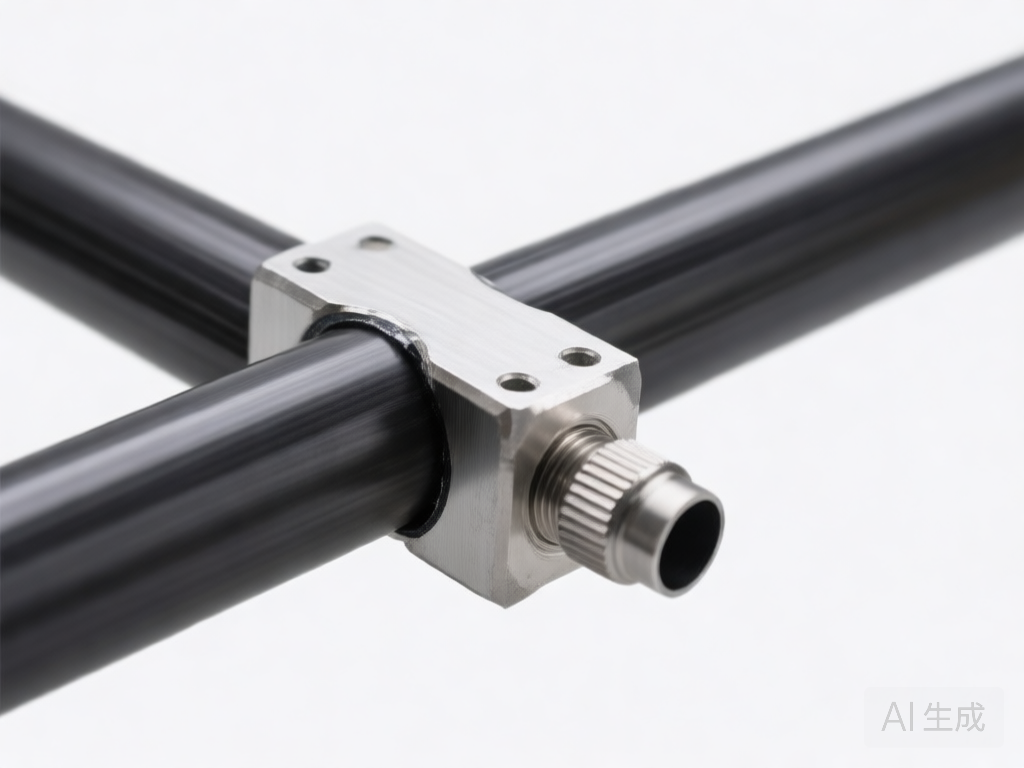
# Adhesive Filling Gap Control Standard for Carbon Tube Butt Joint Assembly
## Introduction
In the assembly of carbon fiber reinforced polymer (CFRP) tubes, butt joints are critical connections that rely on adhesive bonding to transfer loads. The performance of these joints is highly sensitive to the adhesive filling gap—the thickness of the adhesive layer between the tube ends and the mating components. Inadequate control of this gap can lead to stress concentrations, reduced joint strength, and premature failure. This article establishes a comprehensive standard for adhesive filling gap control in carbon tube butt joint assembly, covering definitions, requirements, measurement methods, and process controls.
## Scope and Definitions
### Scope
This standard applies to the assembly of carbon fiber composite tubes using adhesive bonding in butt joint configurations, where the tube ends are joined directly or via a connector. It covers gap control during adhesive application, curing, and inspection.
### Definitions
– **Adhesive filling gap**: The distance between the bonded surfaces that is filled with adhesive, measured perpendicular to the bondline.
– **Bondline thickness**: The actual thickness of the cured adhesive layer.
– **Gap tolerance**: The allowable variation in adhesive filling gap.
## Importance of Gap Control
The adhesive filling gap directly influences the mechanical behavior of the joint. An optimal gap ensures uniform stress distribution and maximizes bond strength. If the gap is too small, the adhesive may be starved, leading to voids and weak bonding. If the gap is too large, the adhesive layer becomes more compliant, reducing load transfer efficiency and increasing the risk of creep. Moreover, excessive gap can cause exothermic reactions to generate higher temperatures, potentially damaging the composite. Therefore, strict control of the adhesive filling gap is essential for reliable and durable joints.
## Standard Requirements
### Gap Dimensions
For carbon tube butt joints, the recommended adhesive filling gap is typically in the range of 0.2 mm to 0.5 mm, unless otherwise specified by the design authority. This range balances the need for sufficient adhesive to fill irregularities and the desire to maintain a thin, strong bondline.
### Surface Preparation
Proper surface preparation is crucial to ensure adhesive wetting and bond strength. The bonding surfaces shall be cleaned, abraded, and primed according to the adhesive manufacturer’s instructions. The surface roughness should be controlled to promote mechanical interlocking.
### Adhesive Selection
Adhesives shall be selected based on the service environment, load requirements, and compatibility with carbon fiber composites. Two-part epoxy adhesives are commonly used due to their high strength and gap-filling capabilities.
### Application Process
Adhesive shall be applied uniformly to both mating surfaces. The amount of adhesive should be sufficient to fill the gap completely without excessive squeeze-out. A controlled application method, such as using a metering dispenser, is recommended.
### Curing Conditions
Curing shall be performed according to the adhesive manufacturer’s recommended temperature and time profiles. Fixtures or clamps shall be used to maintain the gap during curing. The curing process should be monitored to ensure complete cure.
## Measurement and Inspection
### Gap Measurement
Prior to bonding, the gap between the tube ends and the mating component shall be measured using calibrated feeler gauges or optical methods. The gap shall be within the specified tolerance. After bonding, the bondline thickness can be verified using ultrasonic inspection or by measuring squeeze-out.
### Inspection Criteria
Visual inspection shall be conducted to ensure complete adhesive fill and absence of voids or voids. Destructive testing on coupons may be performed to validate the bonding process.
## Process Control and Documentation
### Process Control
A documented process control plan shall be established, including parameters such as adhesive mix ratio, application temperature, and curing cycle. Statistical process control (SPC) may be used to monitor gap variation.
### Documentation
Records of gap measurements, adhesive batch numbers, and curing conditions shall be maintained for traceability.
## Conclusion
Adhesive filling gap control is a critical factor in ensuring the structural integrity of carbon tube butt joints. By adhering to the standard requirements outlined in this article, manufacturers can achieve consistent, high-quality bonds that meet performance and safety expectations. Proper surface preparation, precise gap measurement, and controlled curing are essential elements of a robust assembly process.