
## Introduction
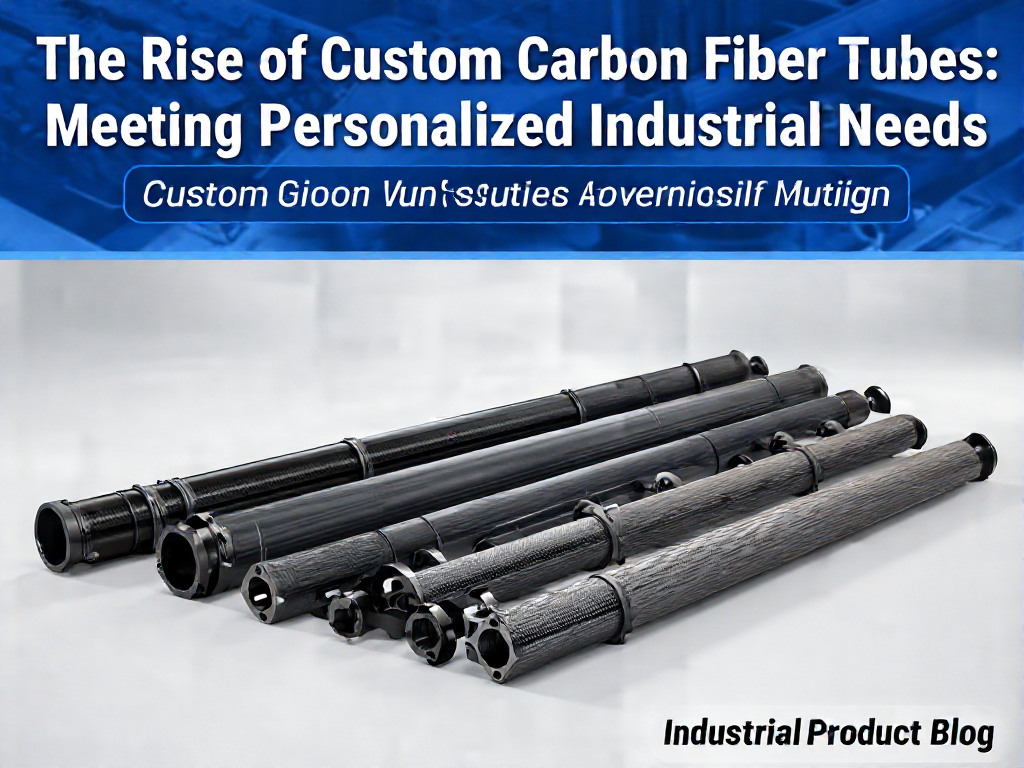
In the ever-evolving landscape of advanced manufacturing, the demand for materials that offer both exceptional strength and minimal weight has never been higher. Carbon fiber composites have long been the gold standard in aerospace, automotive, and sporting goods. However, the industry is now witnessing a significant shift from standard, off-the-shelf components to highly specialized, custom-engineered solutions. The rise of custom carbon fiber tubes is a direct response to this trend, enabling industries to meet precise performance criteria, geometric constraints, and environmental challenges. This article explores the drivers, manufacturing processes, and applications of bespoke carbon fiber tubing, highlighting how this technology is reshaping personalized industrial needs.
## Why Customization is Becoming the Norm
### The Limitations of Standard Tubes
Standard carbon fiber tubes are manufactured in a limited range of diameters, wall thicknesses, and lengths. While they serve general purposes well, they often fall short in specialized applications. For instance, a drone manufacturer may require a tube with a specific stiffness-to-weight ratio that standard products cannot provide. Similarly, a robotics engineer might need a tube with a unique internal profile for cable routing or a specific coefficient of thermal expansion. These limitations force engineers to compromise on design, leading to suboptimal performance and increased assembly complexity.
### The Push for Performance Optimization
Industries are increasingly moving toward performance-based specifications rather than material-based ones. Custom carbon fiber tubes allow engineers to tailor the fiber orientation, resin system, and ply schedule to achieve exact mechanical properties. This level of control ensures that the final product is not just a component but a solution optimized for its specific load case, environment, and lifespan. Whether it is achieving a higher modulus for a telescope mount or enhancing impact resistance for a protective casing, customization is the key to unlocking the full potential of carbon fiber.
## The Custom Manufacturing Process
### Design and Engineering Consultation
The journey of a custom carbon fiber tube begins with a detailed consultation. Engineers work closely with clients to understand the application, load requirements, environmental exposure, and aesthetic preferences. Using finite element analysis (FEA) and computer-aided design (CAD), the team simulates the tube’s performance under various conditions. This phase is critical for determining the optimal fiber orientation (e.g., unidirectional, woven, or a hybrid), the number of plies, and the type of resin (e.g., epoxy, vinyl ester, or thermoplastic).
### Tooling and Mandrel Selection
Unlike standard tubes that are pultruded or rolled, custom tubes often require specialized tooling. The mandrel—the mold around which the carbon fiber is wrapped—can be made of steel, aluminum, or even inflatable bladders for complex geometries. The choice of mandrel affects the inner surface finish and the ability to create tapered or stepped tubes. For high-volume production, reusable mandrels are cost-effective, while for prototypes, collapsible or wash-out mandrels are used.
### Layup and Curing
The layup process involves precisely placing pre-impregnated (prepreg) carbon fiber sheets or filaments onto the mandrel. This can be done manually for complex shapes or through automated fiber placement (AFP) for high-repeatability. The orientation of each layer is dictated by the design, with 0° fibers providing axial strength and ±45° fibers providing torsional rigidity. Once the layup is complete, the tube is cured in an autoclave or oven under controlled heat and pressure. This step consolidates the layers, removes voids, and ensures a uniform resin distribution.
### Post-Processing and Quality Control
After curing, the tube is removed from the mandrel and undergoes post-processing. This includes trimming to length, machining of end fittings, and surface preparation. Non-destructive testing (NDT) methods such as ultrasonic inspection or X-ray are employed to detect any internal defects. Dimensional verification ensures that the tube meets the tight tolerances required for its application. Finally, the tube may be painted or coated for UV protection or aesthetic purposes.
## Key Industries and Applications
### Aerospace and Drones
In aerospace, every gram counts. Custom carbon fiber tubes are used in satellite booms, antenna masts, and structural frames. For drones, lightweight yet rigid tubes are essential for arms and landing gear. Customization allows for the integration of mounting points and the ability to withstand high-frequency vibrations.
### Robotics and Automation
Robotic arms and gantry systems require components that are stiff, lightweight, and resistant to fatigue. Custom tubes can be designed with internal channels for pneumatic lines or wiring, reducing clutter and improving reliability. The low inertia of carbon fiber tubes also enhances the speed and precision of robotic movements.
### Medical and Prosthetics
The medical field benefits from custom carbon fiber tubes in prosthetics, orthotics, and surgical instruments. Tubes can be tailored to match the weight and strength requirements of a specific patient, providing comfort and durability. In imaging equipment, carbon fiber tubes offer radiolucency, allowing for clearer X-rays and CT scans.
### Automotive and Motorsports
From driveshafts to roll cages, custom carbon fiber tubes are revolutionizing vehicle design. In motorsports, a custom driveshaft can reduce rotational mass, improving acceleration and handling. The ability to tune the torsional stiffness of a tube is particularly valuable in suspension and steering components.
### Renewable Energy
In wind turbines and solar trackers, custom carbon fiber tubes offer corrosion resistance and high strength-to-weight ratios. They are used in blade spars, tower internals, and support structures, where long-term reliability is paramount.
## The Advantages of Going Custom
### Enhanced Performance and Efficiency
The primary advantage of custom carbon fiber tubes is the ability to achieve a precise balance of properties. By optimizing the fiber architecture, engineers can create a tube that is 30-50% lighter than an equivalent metal component while maintaining or exceeding its strength. This leads to improved fuel efficiency, higher payloads, and reduced energy consumption.
### Design Freedom and Integration
Custom tubes can be manufactured with complex shapes, such as tapered ends, flanges, or integrated bosses. This reduces the need for additional fasteners and connectors, simplifying assembly and reducing potential failure points. The ability to co-cure or bond metal inserts also enhances the structural integrity of the final assembly.
### Long-Term Cost Savings
While the initial cost of a custom tube is higher than a standard one, the total cost of ownership is often lower. The reduced weight leads to energy savings, and the superior fatigue resistance extends the service life. Additionally, the elimination of secondary machining operations and the reduction in assembly time can offset the upfront investment.
## Challenges and Considerations
### Cost and Lead Time
Custom carbon fiber tubes are not a commodity. The design, tooling, and manufacturing process require specialized expertise and equipment. This results in higher unit costs and longer lead times compared to standard tubes. For small production runs, the cost can be prohibitive, making it essential to evaluate the return on investment.
### Quality Assurance
Ensuring consistency in custom tubes is challenging, especially for complex geometries. Manufacturers must adhere to strict quality control protocols, including process documentation and traceability. Clients should seek suppliers with ISO certifications and a proven track record in their industry.
### Environmental Impact
Carbon fiber production is energy-intensive, and the disposal of cured composites is problematic. However, advancements in recycling technologies are emerging, and some manufacturers are using bio-based resins. Companies looking to reduce their carbon footprint should discuss sustainability options with their suppliers.
## The Future of Custom Carbon Fiber Tubes
### Automation and Digitalization
The future of custom carbon fiber tubes lies in automation and digitalization. Automated fiber placement (AFP) and robotic layup systems are increasing production speeds and reducing labor costs. Digital twins and AI-driven design tools are enabling faster optimization and virtual testing, shortening the development cycle.
### Sustainable Materials
Research into recyclable thermoplastics and bio-derived fibers is gaining momentum. These materials offer the potential for closed-loop recycling and reduced environmental impact. As these technologies mature, they will become viable options for custom tube manufacturing.
### Expanded Applications
As the cost of carbon fiber continues to decline, custom tubes will find new applications in consumer goods, construction, and even furniture. The ability to personalize products for individual users will drive demand in niche markets, such as custom-fit bicycle frames and ergonomic tools.
## Conclusion
The rise of custom carbon fiber tubes is a testament to the growing need for personalized industrial solutions. By moving beyond standard components, manufacturers can achieve unprecedented levels of performance, efficiency, and design flexibility. While challenges such as cost and lead time remain, the benefits far outweigh the drawbacks for applications where precision and reliability are non-negotiable. As technology advances and sustainability becomes a priority, custom carbon fiber tubes will continue to evolve, meeting the ever-changing needs of industries worldwide. For any engineer or manufacturer seeking to push the boundaries of what is possible, the path forward is clear: embrace customization and unlock the full potential of carbon fiber.