
## Introduction
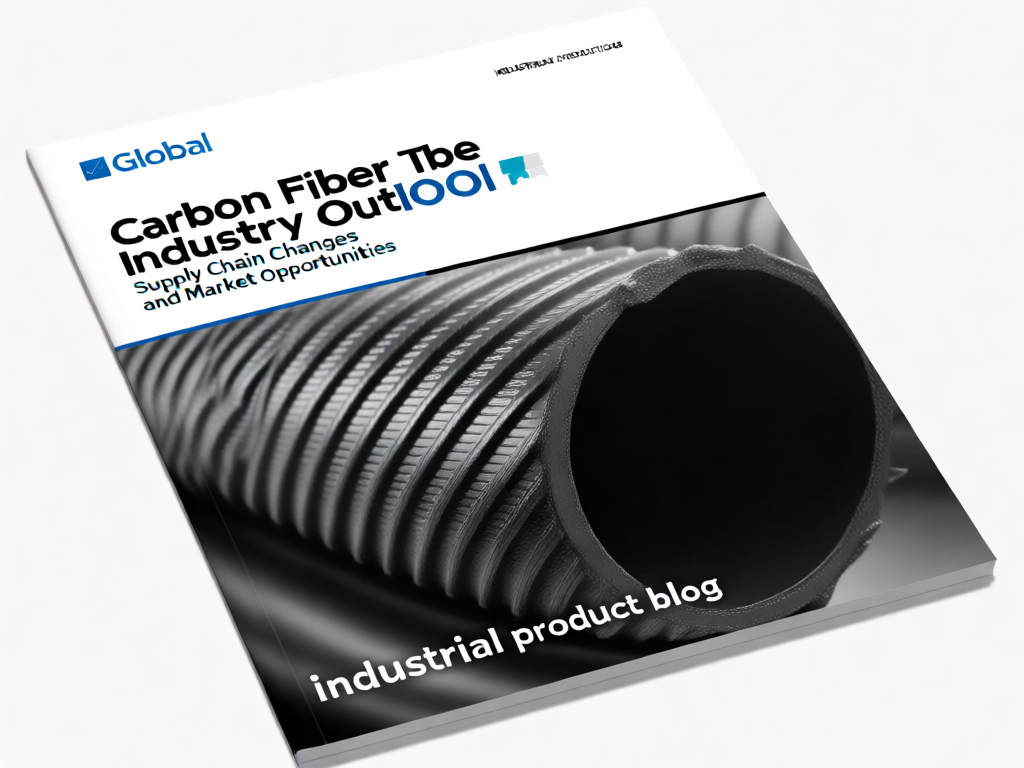
The global carbon fiber tube industry is undergoing a significant transformation. As industries ranging from aerospace and automotive to renewable energy and sports equipment increasingly demand lightweight, high-strength materials, carbon fiber tubes have emerged as a critical component. However, the industry is not just growing—it is evolving. Supply chain disruptions, shifting manufacturing hubs, and new technological breakthroughs are reshaping the landscape. This article provides a comprehensive outlook on the global carbon fiber tube industry, focusing on supply chain changes and the market opportunities they create.
## Current Market Overview
### Market Size and Growth Projections
The carbon fiber tube market has witnessed steady growth over the past decade. Valued at approximately $1.2 billion in 2023, the market is projected to reach $2.1 billion by 2030, growing at a compound annual growth rate (CAGR) of 8.5%. This growth is driven by increasing demand from end-use industries such as aerospace, where carbon fiber tubes are used in fuselage frames and control surfaces, and renewable energy, where they are integral to wind turbine blades and structural supports.
### Key Applications Driving Demand
– **Aerospace**: Lightweight and high stiffness make carbon fiber tubes ideal for aircraft structures, reducing fuel consumption.
– **Automotive**: High-performance vehicles use carbon fiber tubes for drive shafts, roll cages, and suspension components.
– **Renewable Energy**: Wind turbine manufacturers rely on carbon fiber tubes for blade spars and tower sections.
– **Sports and Leisure**: Bicycle frames, fishing rods, and golf shafts are common consumer applications.
– **Industrial Automation**: Robotic arms and precision machinery benefit from the dimensional stability of carbon fiber tubes.
## Supply Chain Dynamics: A Sector in Flux
### Raw Material Sourcing and Bottlenecks
The production of carbon fiber tubes begins with polyacrylonitrile (PAN) precursor, which accounts for over 50% of the final product cost. Historically, PAN supply was concentrated in Japan and the United States, with companies like Toray, Teijin, and Hexcel dominating. However, recent geopolitical tensions and trade restrictions have prompted manufacturers to diversify their sourcing. China has aggressively expanded its PAN production capacity, now accounting for nearly 30% of global output. While this reduces dependency on traditional suppliers, it also introduces quality variability and potential intellectual property concerns.
### Manufacturing Concentration and Regional Shifts
Carbon fiber tube manufacturing is capital-intensive and requires specialized winding and curing equipment. Traditionally, production was centered in North America, Europe, and Japan. Yet, over the past five years, there has been a noticeable shift toward Asia-Pacific, particularly China, Taiwan, and South Korea. Lower labor costs, government subsidies, and proximity to growing end-markets have made these regions attractive. For instance, China’s carbon fiber tube production capacity grew by 25% in 2023 alone, according to industry reports.
### Logistics and Lead Times
The pandemic exposed vulnerabilities in global logistics, and the carbon fiber tube industry was no exception. Shipping delays, container shortages, and port congestion led to extended lead times—sometimes doubling from 4–6 weeks to 10–12 weeks. In response, many manufacturers have adopted a regionalized supply chain strategy, establishing local warehouses and just-in-time delivery systems. This shift has reduced dependency on long-haul shipping but has increased inventory holding costs.
### Impact of Geopolitical Factors
Trade wars and export controls have directly affected the carbon fiber tube supply chain. For example, the U.S. Department of Commerce imposed restrictions on certain carbon fiber products to China, citing national security concerns. Similarly, the European Union has introduced anti-dumping duties on carbon fiber from China. These measures have forced companies to reassess their sourcing strategies, often leading to higher costs and more complex compliance requirements.
## Technological Innovations Reshaping Production
### Advanced Winding Techniques
Filament winding remains the dominant method for producing carbon fiber tubes, but innovations are improving efficiency and quality. Robotic filament winding systems now offer higher precision and faster cycle times, reducing waste by up to 15%. Additionally, automated tape laying (ATL) and automated fiber placement (AFP) are being adapted for tube manufacturing, enabling complex geometries and variable wall thicknesses that were previously impossible.
### Recycling and Sustainability
Sustainability is becoming a key differentiator in the industry. Traditionally, carbon fiber waste was landfilled, but new recycling technologies are emerging. Pyrolysis and solvolysis processes can recover carbon fibers from scrap and end-of-life products, retaining up to 90% of their original mechanical properties. Several manufacturers, such as Carbon Fiber Recycling and ELG Carbon Fibre, are now supplying recycled carbon fiber tubes for non-critical applications, reducing costs and environmental impact.
### Digitalization and Industry 4.0
Smart manufacturing is entering the carbon fiber tube sector. Sensors embedded during the winding process can monitor tension, temperature, and resin flow in real-time, ensuring consistent quality. Digital twins allow manufacturers to simulate production runs and optimize parameters without physical trials. This reduces development time and material waste, contributing to lower production costs.
## Market Opportunities Arising from Supply Chain Changes
### Regionalized Production Hubs
As supply chains become more regionalized, there is a growing opportunity for local manufacturers to capture market share. For example, the U.S. government’s infrastructure bill includes funding for domestic advanced materials production, which could spur new carbon fiber tube plants in North America. Similarly, the European Union’s Green Deal emphasizes sustainable materials, creating demand for locally produced, low-carbon carbon fiber tubes.
### Emerging Economies and New Applications
Developing economies, particularly in Southeast Asia and Latin America, are investing in infrastructure and renewable energy projects. This creates demand for carbon fiber tubes in construction, transportation, and energy sectors. For instance, India’s push for solar power has led to increased use of carbon fiber tubes in solar tracker structures, which require high strength-to-weight ratios and corrosion resistance.
### Niche High-Performance Markets
While commodity carbon fiber tubes face price pressure, niche applications offer higher margins. The medical device industry, for example, uses carbon fiber tubes in surgical instruments and prosthetics due to their radiolucency and biocompatibility. Similarly, the defense sector requires carbon fiber tubes for missile casings and drone frames, where performance is paramount and price sensitivity is lower.
### Aftermarket and Repair Services
With the growing installed base of carbon fiber tube products, there is a rising need for inspection, repair, and replacement services. Non-destructive testing (NDT) methods, such as ultrasonic and thermographic inspection, are being adapted for carbon fiber tubes. Companies that offer these services can build recurring revenue streams and deepen customer relationships.
## Challenges and Risk Mitigation
### Cost Volatility
The price of carbon fiber tubes is sensitive to raw material costs, energy prices, and currency fluctuations. To mitigate this, manufacturers are entering long-term supply agreements with PAN producers and investing in energy-efficient production processes. Some are also exploring alternative precursors, such as lignin-based carbon fiber, which could reduce costs and environmental impact.
### Quality Assurance
Ensuring consistent quality across batches is a challenge, especially when sourcing from multiple suppliers. Implementing rigorous testing protocols and certification standards, such as ISO 9001 and AS9100, is essential. Additionally, adopting statistical process control (SPC) can help detect variations early and prevent defects.
### Intellectual Property Protection
As production shifts to regions with weaker IP enforcement, protecting proprietary manufacturing techniques becomes critical. Companies should secure patents, trade secrets, and non-disclosure agreements. Collaborating with local partners who respect IP rights is also advisable.
## Future Outlook and Strategic Recommendations
### Short-Term (2024–2026)
In the near term, the industry will continue to face supply chain volatility. Companies should focus on building resilient supply chains by diversifying suppliers, increasing safety stock, and investing in digital tools for demand forecasting. Additionally, exploring recycled carbon fiber options can provide cost advantages and enhance sustainability credentials.
### Medium-Term (2027–2030)
By 2030, the market is expected to stabilize with more regionalized production. Companies that establish manufacturing facilities in high-growth regions, such as Southeast Asia or the Middle East, will be well-positioned to serve local demand. Investing in R&D for next-generation materials, such as hybrid carbon-glass fiber tubes, could open new applications.
### Long-Term (Beyond 2030)
In the long run, the industry will likely see further consolidation and vertical integration. Large players may acquire raw material suppliers to secure their supply chains. Additionally, the adoption of circular economy principles will become a competitive advantage, with fully recyclable carbon fiber tubes becoming the industry standard.
## Conclusion
The global carbon fiber tube industry is at a pivotal juncture. Supply chain changes, driven by geopolitical tensions, logistics disruptions, and shifting manufacturing hubs, are creating both challenges and opportunities. Companies that adapt by diversifying sourcing, embracing technological innovations, and targeting emerging markets will thrive. The future belongs to those who can navigate the complexities of the supply chain while delivering high-quality, sustainable products. As the industry evolves, staying informed and agile will be the key to unlocking the full potential of carbon fiber tubes in a rapidly changing world.