
## Introduction
In the world of advanced composites, custom step-diameter carbon tubes are critical components for applications requiring varying stiffness, weight reduction, or integrated fittings. Manufacturers face a pivotal choice: one-time molding or post-machining. This article compares these two production methods, focusing on quality, cost, and performance to help you make an informed decision.
## Understanding Step-Diameter Carbon Tubes
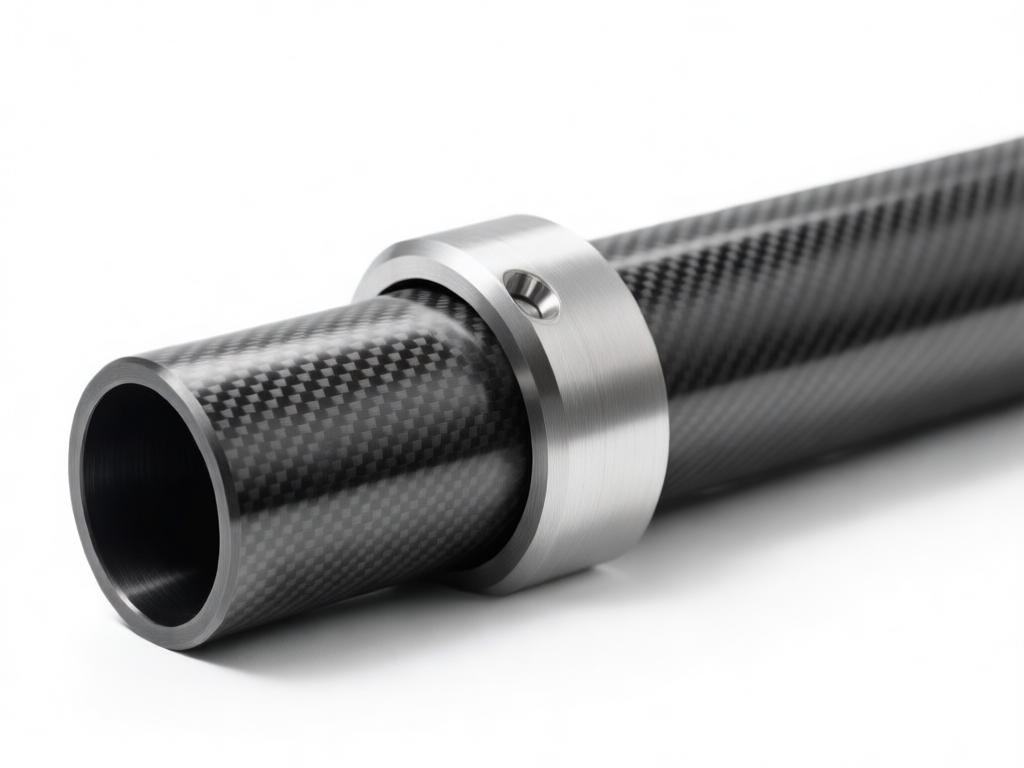
A step-diameter carbon tube features multiple outer or inner diameters along its length, creating transitions that serve as stops, mounting points, or aerodynamic contours. These tubes are widely used in aerospace, robotics, motorsports, and high-end consumer products. The manufacturing method significantly impacts their mechanical properties and cost.
## One-Time Molding: Process and Advantages
One-time molding, also known as net-shape molding, involves laying up carbon fiber prepreg over a mandrel with the final step geometry. The tube is then cured in an autoclave or via resin transfer molding (RTM). This approach eliminates secondary operations.
### Key Benefits
– **Continuous Fiber Architecture:** Fibers follow the step contours without interruption, maximizing strength and stiffness.
– **Superior Surface Finish:** Molded surfaces are smooth and require no sanding or coating.
– **Consistent Quality:** Automated processes reduce human error, ensuring tight tolerances.
– **Weight Savings:** No material removal means optimized fiber placement and minimal resin-rich areas.
### Limitations
– **High Tooling Costs:** Custom molds for each step configuration are expensive.
– **Design Complexity:** Steps with sharp corners or undercuts may be challenging to mold.
– **Lead Times:** Tooling fabrication can take weeks, delaying production.
## Post-Machining: Process and Advantages
Post-machining starts with a uniform carbon tube, which is then machined (typically CNC) to create the step diameters. This method is common for low-volume or prototype runs.
### Key Benefits
– **Flexibility:** Any step profile can be machined from standard tubing, ideal for design iterations.
– **Lower Initial Cost:** No need for custom molds; standard tubes are readily available.
– **Quick Turnaround:** Machining can begin immediately, reducing lead time for small batches.
### Limitations
– **Fiber Breakage:** Machining cuts continuous fibers, creating stress concentrations and reducing strength.
– **Surface Imperfections:** Exposed fibers and micro-cracks can lead to delamination and poor fatigue life.
– **Material Waste:** Significant material removal increases cost and waste.
– **Tolerance Challenges:** Achieving tight tolerances on thin-walled tubes can be difficult.
## Performance Comparison
### Mechanical Properties
One-time molded tubes exhibit up to 30% higher tensile and flexural strength due to uninterrupted fibers. Post-machined tubes are prone to failure at step transitions, especially under cyclic loading.
### Dimensional Accuracy
Molding achieves tolerances of ±0.05 mm, while machining can hold ±0.1 mm but with higher variability due to tool wear and fixturing.
### Cost Analysis
For high volumes (>1000 units), one-time molding becomes cost-effective as tooling costs are amortized. For low volumes (<100 units), post-machining is more economical despite higher per-part labor.
## Applications and Best Fit
- **Aerospace & Defense:** One-time molding is preferred for critical load-bearing step tubes.
- **Prototyping & Custom Projects:** Post-machining offers speed and flexibility.
- **Motorsports:** Both methods are used; molded for production parts, machined for rapid iterations.
## Conclusion
The choice between one-time molding and post-machining for custom step-diameter carbon tubes hinges on volume, performance requirements, and budget. One-time molding delivers superior mechanical properties and consistency, making it ideal for high-performance, high-volume applications. Post-machining provides agility and lower upfront costs for prototypes and low-volume runs. Engineers must weigh these factors carefully to optimize their carbon tube components.