
## Introduction
Carbon fiber tubes have become a cornerstone in modern engineering, offering an exceptional strength-to-weight ratio, high stiffness, and excellent corrosion resistance. When these tubes are threaded, they enable direct integration into bolt assembly structures, eliminating the need for heavy metal inserts and simplifying assembly. However, procuring customized threaded carbon fiber tubes requires careful consideration of design, manufacturing, and quality assurance. This guide provides a comprehensive roadmap for engineers and procurement specialists to source threaded carbon fiber tubes that meet exact specifications and perform reliably in demanding applications.
## Understanding Threaded Carbon Fiber Tubes
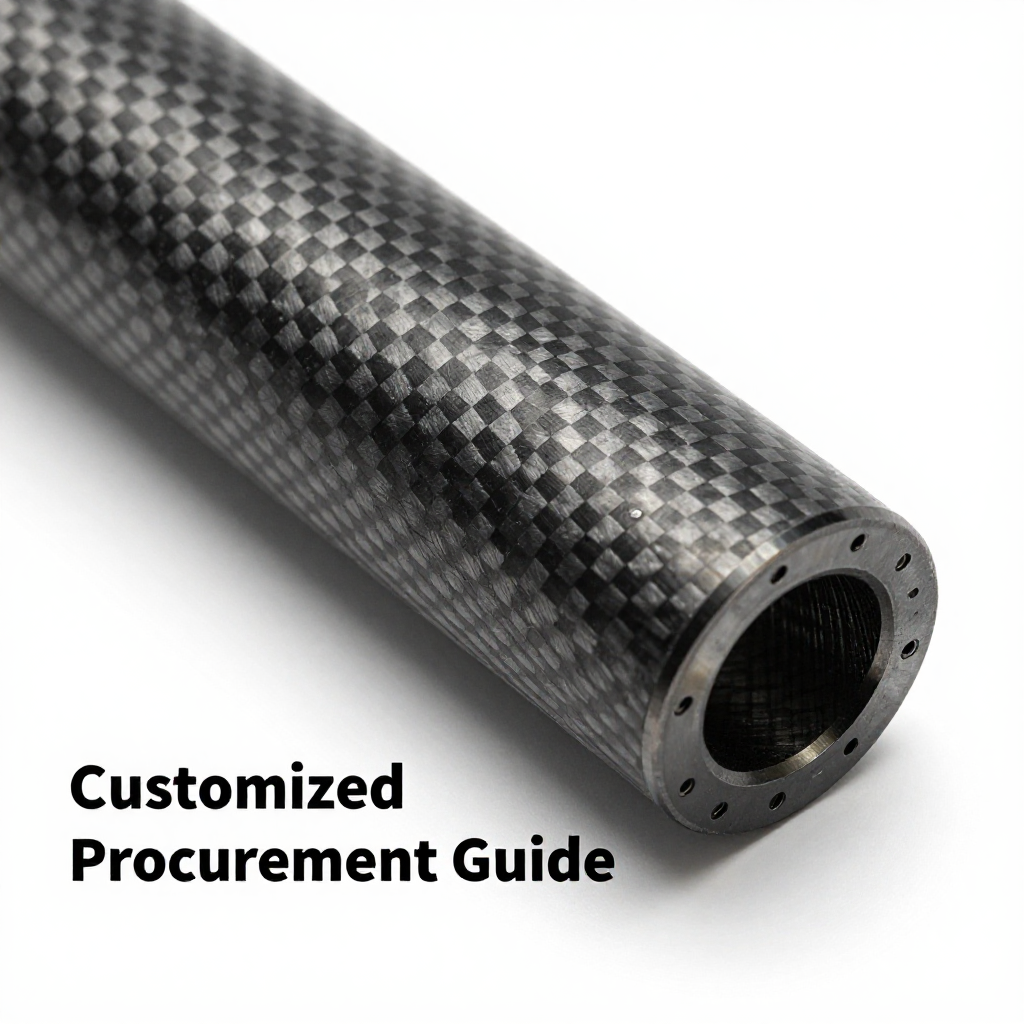
Threaded carbon fiber tubes are hollow cylindrical profiles with machined or molded threads at one or both ends. These threads allow the tube to be directly bolted to other components, creating a secure, lightweight connection. The threads can be external (male) or internal (female), depending on the application. The manufacturing process involves laying carbon fiber filaments in a resin matrix, curing under heat and pressure, and then machining the threads with precision. The result is a component that combines the mechanical benefits of carbon fiber with the convenience of threaded fastening.
## Key Considerations for Customization
### 1. Load Requirements and Thread Design
The first step in customization is defining the mechanical loads the tube will experience. This includes tensile, compressive, torsional, and bending forces. The thread design must be selected to handle these loads without failure. Common thread types include metric (ISO), unified (UNC/UNF), and custom profiles. The thread pitch and depth affect load distribution and stress concentration. For high-load applications, a deeper thread with a larger pitch may be necessary, but this also reduces the effective wall thickness of the tube. Finite element analysis (FEA) is often used to optimize thread geometry for specific load cases.
### 2. Material and Layup Schedule
The carbon fiber material and layup schedule determine the tube’s mechanical properties. Unidirectional (UD) fibers provide maximum strength along the tube axis, while woven fabrics offer better impact resistance and torsional stiffness. A hybrid layup, combining UD and woven layers, can balance axial and hoop strength. The resin system (epoxy, vinyl ester, etc.) also influences temperature resistance and chemical compatibility. For threaded ends, additional reinforcement may be required to prevent thread stripping. This can be achieved by increasing the wall thickness at the ends or incorporating a metal insert, though the latter adds weight.
### 3. Dimensional Tolerances and Fit
Precision is critical for threaded connections. The outer diameter, inner diameter, and thread dimensions must be held to tight tolerances to ensure proper fit with mating components. Typical tolerances for carbon fiber tubes are ±0.1 mm for outer diameter and ±0.05 mm for thread pitch. However, carbon fiber’s anisotropic nature can cause slight variations during curing. Therefore, post-curing machining is often necessary to achieve the required accuracy. It is essential to specify the tolerance class (e.g., 6g for external threads) and the fit (e.g., clearance, transition, or interference) based on the assembly requirements.
### 4. End Configurations
Threaded ends can be designed in various configurations: single-threaded, double-threaded, or with a threaded collar. The length of the threaded section must be sufficient to engage the mating bolt or nut fully. For applications where the tube is subjected to vibration, a locking mechanism (e.g., thread-locking adhesive or a locking nut) may be needed. Additionally, the transition from the threaded section to the unthreaded body should be smooth to avoid stress concentrations. A fillet radius or a gradual taper can reduce the risk of cracking.
## Manufacturing Processes for Threaded Carbon Fiber Tubes
### 1. Filament Winding
Filament winding is a common method for producing carbon fiber tubes. Continuous fibers are wound around a mandrel in a precise pattern, then cured. This process allows for high fiber volume fractions and excellent alignment, resulting in strong, stiff tubes. Threads can be formed by machining after curing or by using a threaded mandrel that creates internal threads during winding. The latter is less common due to difficulty in demolding.
### 2. Pultrusion
Pultrusion involves pulling continuous fibers through a resin bath and then through a heated die to shape and cure the profile. This process is ideal for producing long, straight tubes with constant cross-sections. However, pultruded tubes typically have lower shear strength, which may affect thread performance. Threads are usually machined after pultrusion.
### 3. Compression Molding
For complex geometries or high-volume production, compression molding can be used. Pre-preg carbon fiber sheets are placed in a mold and compressed under heat and pressure. This method allows for precise control of wall thickness and can incorporate threaded features directly into the mold. However, tooling costs are high, making it suitable for large production runs.
## Quality Assurance and Testing
### 1. Non-Destructive Testing (NDT)
To ensure the integrity of threaded carbon fiber tubes, NDT methods such as ultrasonic testing, X-ray inspection, and thermography are employed. These techniques detect internal voids, delaminations, or fiber misalignment that could compromise thread strength. Ultrasonic testing is particularly effective for measuring wall thickness and detecting defects near the threaded areas.
### 2. Mechanical Testing
Sample tubes should undergo mechanical testing to verify load capacity. Tensile tests, torque tests, and fatigue tests simulate real-world conditions. For threaded tubes, the pull-out strength (the force required to strip the threads) is a critical parameter. It is advisable to request test reports from the manufacturer or conduct independent testing.
### 3. Dimensional Inspection
Precision measuring instruments, such as coordinate measuring machines (CMM) and thread gauges, are used to verify that the threads meet specifications. A go/no-go gauge set can quickly check thread fit. Dimensional inspection should be performed on every batch to ensure consistency.
## Supplier Selection and Communication
Choosing the right manufacturer is crucial. Look for suppliers with experience in aerospace, automotive, or sporting goods industries, as they are likely to have rigorous quality standards. When requesting quotes, provide a detailed specification sheet that includes:
– Outer and inner diameters
– Wall thickness
– Thread type, pitch, and length
– Load requirements
– Environmental conditions (temperature, humidity, chemicals)
– Quantity and lead time
Clear communication with the supplier’s engineering team is essential. They can offer valuable insights into design optimization and manufacturability. Ask for samples or prototypes before committing to full-scale production.
## Cost Considerations and Lead Times
Customized threaded carbon fiber tubes are not off-the-shelf items. Costs depend on material grade, manufacturing process, tolerances, and quantity. Filament winding is generally more expensive than pultrusion but offers better mechanical properties. Tooling costs for compression molding can be significant but amortize over large volumes. Lead times typically range from 4 to 12 weeks, depending on complexity and supplier workload. To reduce costs, consider standardizing thread sizes and using existing molds where possible.
## Applications and Case Studies
Threaded carbon fiber tubes are used in a wide range of industries:
– **Aerospace**: Actuator rods, control linkages, and structural supports where weight reduction is critical.
– **Automotive**: Drive shafts, suspension components, and roll cages.
– **Robotics**: Lightweight arms and end-effectors that require precise bolt connections.
– **Sporting goods**: Bicycle frames, golf shafts, and fishing rods.
For example, a robotics manufacturer replaced aluminum tubes with threaded carbon fiber tubes in a robotic arm, reducing weight by 40% while maintaining the same load capacity. The threaded ends allowed for quick assembly and disassembly, improving maintenance efficiency.
## Conclusion
Procuring customized threaded carbon fiber tubes for bolt assembly structures requires a systematic approach. By understanding load requirements, material properties, manufacturing processes, and quality assurance, you can ensure that the final product meets your performance and durability needs. Partner with a reputable supplier, communicate your specifications clearly, and validate the product through testing. With careful planning, threaded carbon fiber tubes can significantly enhance the performance and efficiency of your assemblies, offering a lightweight, high-strength solution that is both practical and reliable.