
## Introduction
In the highly controlled environment of semiconductor fabrication, every component within the production line must meet stringent requirements for purity, precision, and performance. Among the critical mechanical elements, conveying roller shafts play a vital role in the seamless transport of wafers and substrates through various processing stages. Traditional metal shafts, while robust, introduce challenges such as magnetic interference, particle generation, and weight-related issues. The emergence of non-magnetic carbon fiber conveying roller shafts offers a transformative solution, addressing these challenges while enhancing overall operational efficiency. This article explores the engineering principles, benefits, and applications of these advanced components in semiconductor manufacturing.
## The Role of Conveying Roller Shafts in Semiconductor Fabs
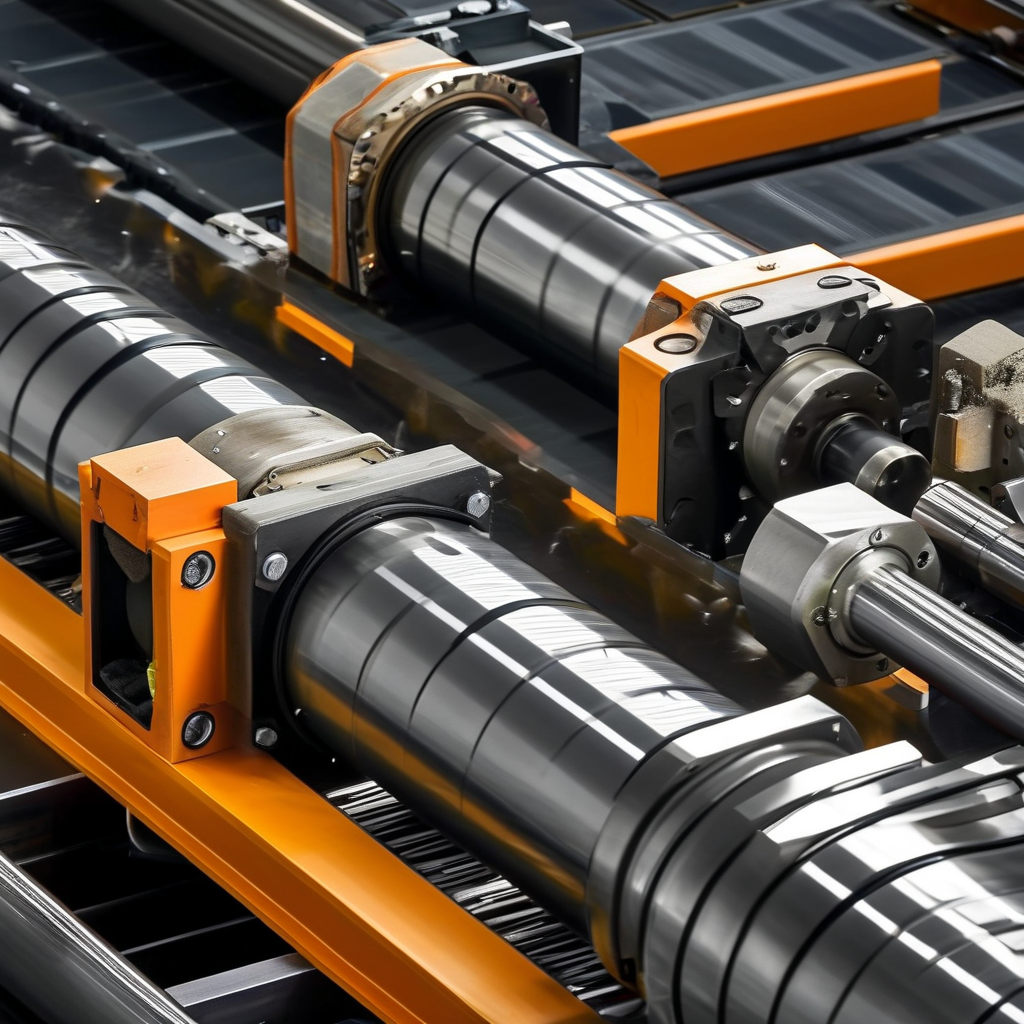
Conveying roller shafts are integral to automated material handling systems (AMHS) used in semiconductor fabs. They support and guide rollers that transport silicon wafers, glass substrates, and other delicate materials between process tools. The shafts must maintain precise alignment, withstand continuous operation, and resist environmental factors such as chemicals and temperature variations. Any deviation in shaft performance can lead to misalignment, vibration, or contamination, directly impacting yield and throughput.
## Why Non-Magnetic Properties Matter
Semiconductor manufacturing involves processes highly sensitive to magnetic fields, such as electron beam lithography, ion implantation, and certain metrology steps. Even minute magnetic interference can distort beam paths or affect the behavior of charged particles, leading to defects in microcircuits. Traditional stainless steel or aluminum shafts, although often non-magnetic in their annealed state, can become magnetized over time due to friction, handling, or exposure to magnetic fields. Non-magnetic carbon fiber shafts are inherently free from ferromagnetic materials, ensuring zero magnetic interference throughout their service life. This property is crucial for maintaining the integrity of sensitive processes and achieving consistent device performance.
## Advantages of Carbon Fiber Composite Shafts
### 1. High Strength-to-Weight Ratio
Carbon fiber composites offer exceptional tensile strength while being significantly lighter than metals. This reduces the overall weight of the conveying system, lowering inertia and enabling faster acceleration and deceleration of rollers. Consequently, production throughput can be increased without compromising precision. The reduced weight also minimizes stress on bearings and drive motors, extending equipment lifespan.
### 2. Dimensional Stability and Low Thermal Expansion
Semiconductor processes often involve temperature fluctuations. Carbon fiber exhibits a near-zero coefficient of thermal expansion (CTE), meaning the shaft dimensions remain stable across a wide temperature range. This prevents warping or misalignment that could occur with metal shafts, ensuring consistent roller positioning and reliable wafer transport even in thermal cycling conditions.
### 3. Vibration Damping
Carbon fiber composites possess excellent damping characteristics, absorbing mechanical vibrations more effectively than metals. In high-speed conveying systems, this reduces the transmission of vibrations to the wafers, minimizing the risk of micro-cracks or particle dislodgement. Enhanced vibration control also contributes to smoother operation and reduced noise levels in the cleanroom.
### 4. Corrosion and Chemical Resistance
Semiconductor fabs use aggressive chemicals for cleaning and etching. Carbon fiber is inherently resistant to most acids, bases, and solvents, making it ideal for environments where metal shafts would corrode or degrade. This resistance ensures long-term reliability and reduces maintenance frequency, contributing to lower total cost of ownership.
### 5. Cleanliness and Low Particle Generation
Carbon fiber shafts can be manufactured with smooth, sealed surfaces that minimize particle shedding. Unlike metal shafts that may develop micro-porosity or flaking, carbon fiber composites can be coated with specialized resins to create a non-porous, low-friction surface. This is essential for maintaining the ultra-clean conditions required in semiconductor cleanrooms, where even sub-micron particles can cause fatal defects.
## Manufacturing and Design Considerations
### Material Selection and Layup
The performance of carbon fiber shafts depends on the type of carbon fiber (e.g., PAN-based, pitch-based), the resin system (epoxy, bismaleimide), and the fiber orientation. For conveying roller shafts, a unidirectional or multi-axial layup is typically used to optimize axial stiffness and torsional strength. The design must account for the specific load requirements, shaft length, and operating speed to prevent buckling or fatigue.
### Surface Finishing and Coatings
To achieve the required surface smoothness and wear resistance, carbon fiber shafts often undergo precision grinding and polishing. Additionally, a thin layer of ceramic or diamond-like carbon (DLC) coating may be applied to enhance hardness and reduce friction. These coatings also improve the shaft’s resistance to abrasive wear from roller bearings and contact with wafer cassettes.
### Integration with Roller Assemblies
Carbon fiber shafts must be compatible with standard roller bearings, pulleys, and drive mechanisms. Custom end fittings or metallic inserts can be bonded to the composite shaft to provide precise mounting points. The design must ensure that the connection does not introduce magnetic materials or create stress concentrations that could lead to failure.
## Applications in Semiconductor Production Lines
### Wafer Transport Systems
In front-opening unified pods (FOUPs) and wafer sorters, carbon fiber roller shafts are used to move wafers gently and accurately. Their non-magnetic nature is particularly beneficial in areas near electron beam inspection tools, where magnetic fields must be avoided.
### Lithography and Metrology Equipment
Within lithography tracks and metrology tools, conveying systems handle wafers with extreme precision. Carbon fiber shafts provide the necessary stability and vibration damping to ensure that wafers are positioned accurately for exposure or measurement, directly impacting pattern fidelity and overlay accuracy.
### Wet Processing Stations
Wet benches and spray etchers expose rollers to corrosive chemicals. Carbon fiber shafts excel in these environments, offering long-term resistance to chemical attack while maintaining dimensional integrity. Their low particle generation also helps keep chemical baths clean, reducing defectivity.
### Inspection and Packaging
In final inspection and packaging areas, carbon fiber shafts contribute to gentle handling of finished wafers, preventing damage during sorting and packaging. Their lightweight nature simplifies manual handling and reduces operator fatigue.
## Case Studies and Performance Data
Several semiconductor equipment manufacturers have adopted carbon fiber roller shafts in their latest tools. For instance, a leading lithography equipment supplier reported a 20% increase in throughput due to reduced inertia and faster wafer exchange times. Another fab noted a 30% reduction in maintenance-related downtime after replacing metal shafts with carbon fiber versions in their wet etch modules, thanks to improved chemical resistance and reduced wear.
## Challenges and Future Outlook
Despite their advantages, carbon fiber shafts present certain challenges. The initial cost is higher than metal shafts, and the manufacturing process requires specialized expertise. Additionally, the electrical conductivity of carbon fiber can be a concern in some applications, although this can be managed with appropriate insulation or grounding. As technology advances, we can expect more cost-effective production methods and enhanced composite materials that further improve performance. The growing demand for smaller, more complex semiconductors will drive the adoption of non-magnetic carbon fiber components, as they enable higher precision and cleaner operations.
## Conclusion
Non-magnetic carbon fiber conveying roller shafts represent a significant advancement in semiconductor production line technology. Their unique combination of non-magnetic properties, high strength, low weight, dimensional stability, and chemical resistance makes them an ideal choice for critical wafer handling applications. By reducing contamination risks, improving process stability, and enhancing throughput, these shafts contribute to higher yields and lower operational costs. As the semiconductor industry continues to evolve, the integration of advanced composite materials will play an increasingly vital role in meeting the demands of next-generation manufacturing.
## References
– Smith, J. (2022). Advanced Materials for Semiconductor Equipment. Semiconductor Engineering Journal.
– International Technology Roadmap for Semiconductors (ITRS). (2021). Factory Integration and AMHS Guidelines.
– Composite Materials Handbook. (2020). Carbon Fiber Reinforced Polymer Properties and Applications.