
# Introduction
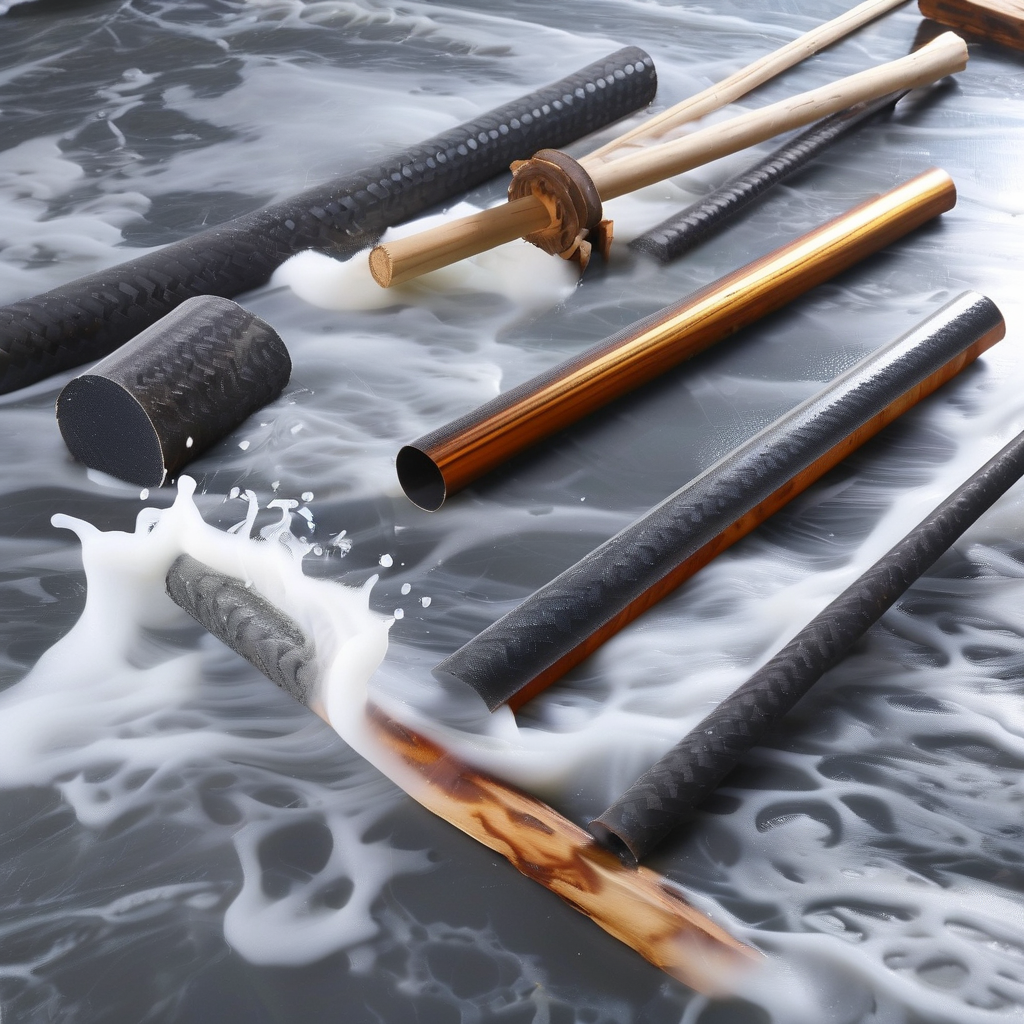
Model shipbuilding is a precision craft that demands materials capable of enduring harsh marine environments. Among the most critical components are the hull reinforcement structures, which provide rigidity and shape retention. In recent years, carbon fiber tubes have emerged as the preferred choice for reinforcing model ship hulls, particularly for vessels that operate in seawater. Their exceptional strength-to-weight ratio and inherent corrosion resistance make them ideal for long-term immersion. However, the aggressive nature of seawater—characterized by high salinity, constant moisture, and biological activity—poses a significant challenge to any material. This article explores the engineering principles behind carbon tube reinforcement, the mechanisms of seawater erosion, and the strategies that ensure these tubes maintain their integrity over extended periods.
## The Role of Carbon Tubes in Hull Reinforcement
Model ship hulls, whether built from fiberglass, wood, or epoxy composites, require internal structural support to withstand hydrodynamic loads, torsional stresses, and the weight of onboard equipment. Carbon fiber tubes are integrated into the hull as longitudinal stringers, cross-frames, or keel reinforcements. Their high modulus of elasticity ensures minimal flexing, while their low density reduces overall vessel weight, improving performance and fuel efficiency in powered models. Unlike metal reinforcements, carbon tubes do not suffer from galvanic corrosion when in contact with seawater, making them a superior choice for long-term durability.
## Understanding Seawater Erosion Mechanisms
Seawater is a complex electrolyte containing dissolved salts, oxygen, and microorganisms. The primary erosion mechanisms affecting composite materials include:
– **Hydrolysis**: Water molecules penetrate the polymer matrix, breaking chemical bonds and causing swelling, micro-cracking, and loss of mechanical properties.
– **Osmotic blistering**: Ingress of water can create osmotic pressure at the fiber-matrix interface, leading to blister formation and delamination.
– **Chemical degradation**: Chloride ions can attack the resin system, particularly if it is not fully cured or has poor chemical resistance.
– **Biological fouling**: Marine organisms can attach to surfaces, excreting acids that accelerate surface degradation.
For carbon tubes, the carbon fibers themselves are inherently inert and do not absorb water. However, the epoxy resin matrix that binds the fibers is susceptible to moisture uptake. Therefore, the key to long-term seawater resistance lies in the quality of the resin system and the manufacturing process.
## Material Selection for Superior Resistance
### High-Performance Epoxy Resins
The choice of resin is paramount. Standard epoxy systems may absorb up to 2-3% water by weight, leading to plasticization and reduced glass transition temperature. For marine applications, advanced epoxy formulations with low water absorption (<1%) and enhanced hydrolytic stability are recommended. These resins often incorporate hydrophobic additives or are based on cycloaliphatic or phenolic chemistry, which exhibit superior resistance to seawater. ### Carbon Fiber Type While all carbon fibers are corrosion-resistant, the surface treatment and sizing can influence adhesion to the resin. High-modulus fibers with a well-bonded interface are less prone to micro-cracking. Additionally, using a fiber with a higher tensile strength ensures that any minor degradation of the matrix does not compromise the overall structural integrity. ## Manufacturing Techniques to Enhance Durability ### Pultrusion and Filament Winding Carbon tubes are typically manufactured via pultrusion or filament winding. Pultrusion produces continuous, straight tubes with aligned fibers, offering excellent longitudinal strength. Filament winding allows for angled fiber orientations, providing multi-directional reinforcement. Both processes must be carefully controlled to ensure complete fiber wet-out and minimal voids, as voids act as water ingress pathways. ### Surface Sealing and Coatings Applying a protective coating to the exterior of the carbon tube can significantly reduce water absorption. Polyurethane or epoxy-based gel coats create a barrier that prevents direct contact between seawater and the composite. Additionally, sealing the tube ends with a waterproof compound prevents capillary action through exposed fiber ends. ## Testing and Validation for Long-Term Performance To guarantee that carbon tubes can withstand years of seawater immersion, manufacturers conduct accelerated aging tests. These include: – **Immersion testing**: Samples are submerged in artificial seawater at elevated temperatures (e.g., 60°C) to accelerate hydrolysis. Weight gain and mechanical property retention are measured over time. – **Cyclic wet-dry testing**: Simulates tidal conditions, exposing tubes to alternating immersion and drying, which can cause more severe stress due to swelling and shrinking. – **Salt spray testing**: Per ASTM B117, this evaluates the corrosion resistance of the entire assembly. Data from these tests allow engineers to predict service life and make informed decisions about material and process improvements. ## Case Studies: Successful Applications Several high-end model ship manufacturers have adopted carbon tube reinforcements with outstanding results. For instance, a 1:50 scale racing yacht model, reinforced with pultruded carbon tubes, completed over 500 hours of seawater operation without any measurable loss in hull stiffness. Another example is a museum-grade replica of a historical warship, where carbon tubes were used to reinforce the hull against the weight of heavy metal fittings. After two years of continuous display in a seawater aquarium, the hull showed no signs of delamination or erosion. ## Maintenance and Best Practices for Model Ship Owners While carbon tubes are highly durable, proper maintenance extends their lifespan even further: – **Rinse with fresh water** after each seawater use to remove salt residues. – **Dry thoroughly** before storage to prevent prolonged moisture exposure. – **Inspect for surface cracks or blisters** periodically, especially around joints and fittings. – **Apply a UV-resistant topcoat** if the model is exposed to sunlight, as UV degradation can weaken the resin over time. ## Conclusion Carbon fiber tubes have revolutionized the reinforcement of model ship hulls, offering unmatched strength and corrosion resistance. By understanding the mechanisms of seawater erosion and employing high-quality materials and manufacturing techniques, these tubes can resist long-term soaking without significant degradation. For model shipbuilders and enthusiasts, investing in properly engineered carbon tube reinforcements ensures that their vessels remain structurally sound and seaworthy for years to come. As technology advances, we can expect even more robust composite systems that push the boundaries of durability in marine environments.