
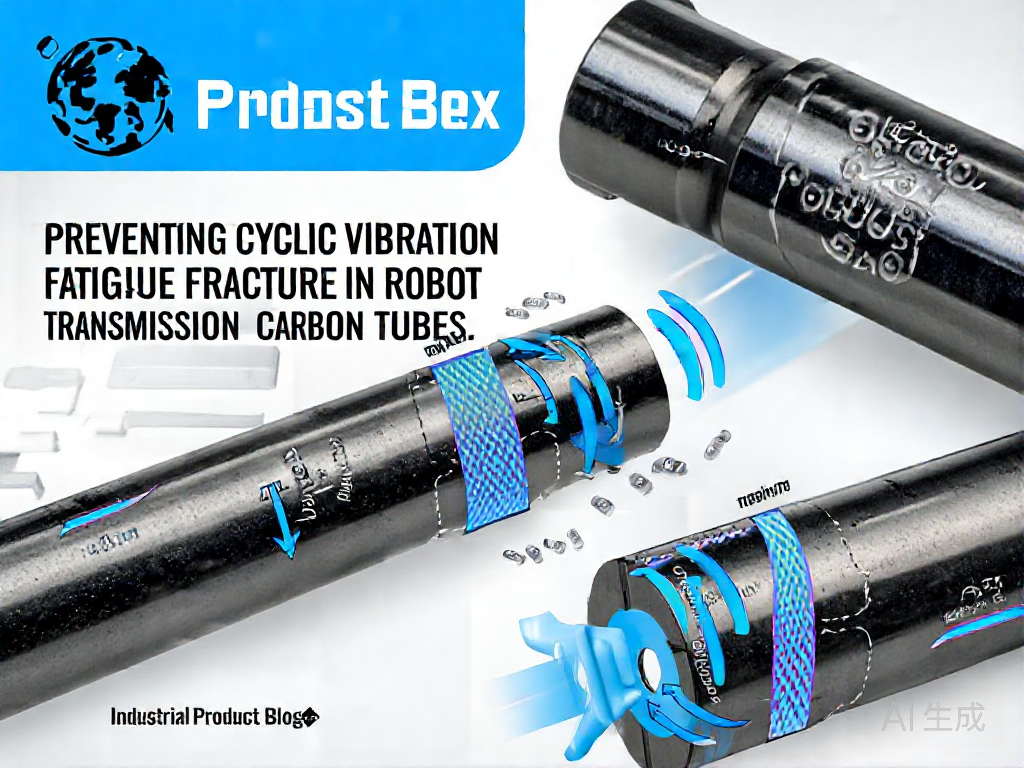
# Preventing Cyclic Vibration Fatigue Fracture in Robot Transmission Carbon Tubes
## Introduction
In the realm of robotics, carbon fiber composite tubes are increasingly utilized in transmission systems due to their high strength-to-weight ratio and stiffness. However, these components are susceptible to cyclic vibration fatigue, which can lead to premature fracture and catastrophic failures. This article delves into the mechanisms of cyclic vibration fatigue in carbon tubes and provides actionable strategies for prevention, ensuring enhanced durability and reliability in robotic applications.
## Understanding Cyclic Vibration Fatigue in Carbon Tubes
Cyclic vibration fatigue occurs when a material is subjected to repeated fluctuating loads, leading to progressive structural damage and eventual fracture. In robot transmission carbon tubes, vibrations arise from various sources such as motor operation, gear meshing, and dynamic loads during movement. Over time, these vibrations induce microcracks that propagate, ultimately causing failure.
### Key Factors Contributing to Fatigue
– **Material Properties:** The anisotropic nature of carbon fiber composites means that fatigue resistance varies with fiber orientation and resin properties.
– **Design and Geometry:** Stress concentrations at joints, bends, and connections can accelerate fatigue.
– **Operational Conditions:** High-frequency vibrations, amplitude, and environmental factors (temperature, humidity) influence fatigue life.
– **Manufacturing Defects:** Voids, delamination, and improper curing can act as initiation sites for cracks.
## Strategies for Preventing Fatigue Fracture
### 1. Design Optimization
– **Finite Element Analysis (FEA):** Conduct thorough FEA to identify high-stress regions and optimize tube geometry to minimize stress concentrations.
– **Damping Features:** Incorporate damping materials or structural modifications to reduce vibration transmission.
– **Joint Design:** Use bonded or mechanically fastened joints with adequate fillets and reinforcements to distribute loads evenly.
### 2. Material Selection and Manufacturing
– **High-Performance Composites:** Choose carbon fiber reinforced polymers (CFRP) with high fatigue resistance, such as those with toughened epoxy resins.
– **Quality Control:** Implement rigorous inspection (e.g., ultrasonic testing, X-ray) to detect defects and ensure consistent quality.
– **Fiber Architecture:** Optimize layup orientation to align fibers with principal stress directions.
### 3. Vibration Isolation and Damping
– **Passive Damping:** Apply constrained layer damping treatments or integrate viscoelastic materials to absorb vibration energy.
– **Active Control:** For critical applications, consider active vibration control systems using sensors and actuators to counteract vibrations.
– **Mounting and Isolation:** Use resilient mounts to decouple the tube from vibration sources.
### 4. Operational Monitoring and Maintenance
– **Condition Monitoring:** Implement sensors (e.g., accelerometers, strain gauges) to monitor vibration levels and detect early signs of fatigue.
– **Regular Inspections:** Schedule periodic inspections for cracks, delamination, or other damage.
– **Predictive Maintenance:** Use data analytics to predict fatigue life and schedule replacements proactively.
## Case Study: Implementing Fatigue Prevention in Robotic Arms
A leading robotics manufacturer experienced frequent failures in carbon tubes used in robotic arm transmissions. By applying the strategies above—redesigning joints, incorporating damping layers, and implementing vibration monitoring—they achieved a 60% reduction in fatigue-related failures and extended tube life by over 50%.
## Conclusion
Cyclic vibration fatigue fracture in robot transmission carbon tubes is a critical challenge that can be mitigated through careful design, material selection, vibration control, and proactive maintenance. By adopting a comprehensive prevention approach, engineers can significantly enhance the reliability and lifespan of robotic systems, reducing downtime and costs.
By focusing on these key areas, manufacturers and users of robotic transmission carbon tubes can ensure optimal performance and safety in demanding applications.