
## Introduction
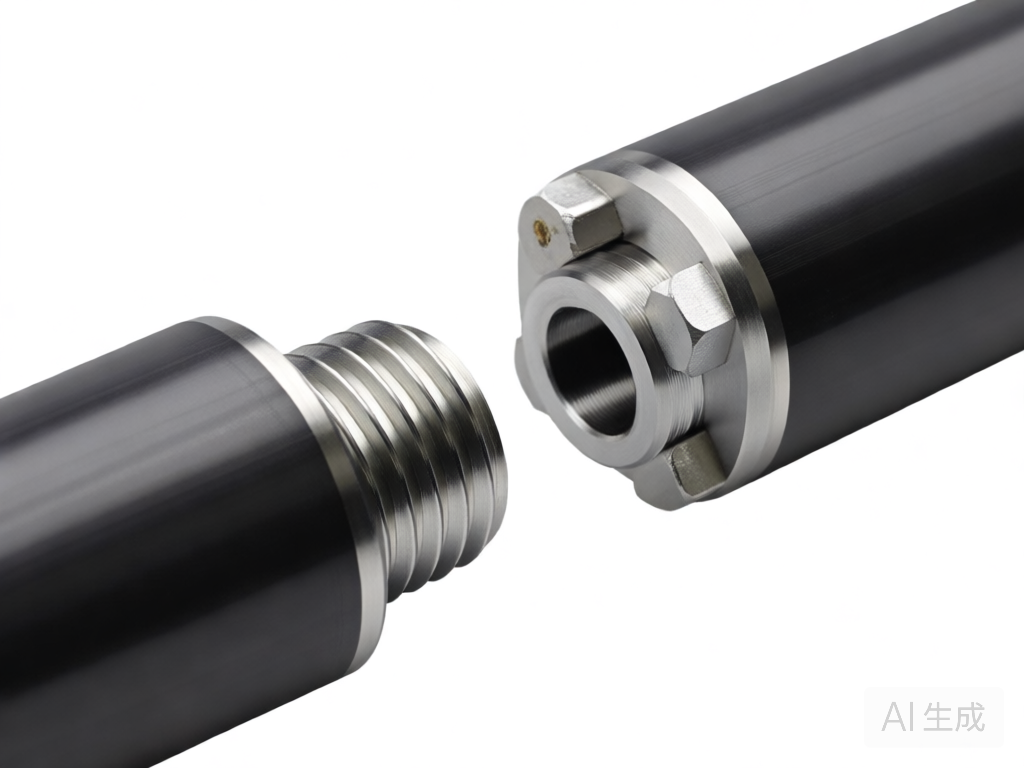
Carbon fiber tubes are increasingly used in aerospace, automotive, and sports equipment due to their high strength-to-weight ratio. However, connecting carbon tubes to metal inserts presents unique challenges. The dissimilar materials—carbon fiber reinforced polymer (CFRP) and metals like aluminum or titanium—exhibit different thermal expansion coefficients and galvanic corrosion risks. Thread locking glue (also known as threadlocker) plays a critical role in securing these connections. This article outlines the matching rules for selecting the right thread locking glue for carbon tube metal insert connections, ensuring durable and reliable assemblies.
## Understanding the Carbon Tube–Metal Insert Interface
### Material Characteristics
Carbon tubes are anisotropic and brittle, while metal inserts are ductile and isotropic. The bond must accommodate differential expansion and contraction without cracking the carbon or loosening the metal. Threadlockers fill the gaps between threads, cure to a thermoset plastic, and prevent vibration-induced loosening.
### Common Insert Types
Metal inserts may be bonded, riveted, or threaded into the carbon tube. Threaded inserts are most common when disassembly is required. The insert’s material (e.g., stainless steel, aluminum, titanium) influences threadlocker selection due to galvanic compatibility.
## Key Selection Criteria for Thread Locking Glue
### 1. Chemical Compatibility with Carbon Fiber
Threadlockers are anaerobic acrylics. They must not degrade the epoxy matrix of the carbon tube. Solvent-based primers or activators can attack epoxy; thus, use only compatible primers or rely on surface preparation.
### 2. Galvanic Corrosion Prevention
When carbon fiber contacts metal, galvanic corrosion can occur if moisture is present. The threadlocker should act as a barrier. Choose threadlockers filled with anti-seize or corrosion inhibitors, or use a primer that passivates the metal.
### 3. Thermal Expansion Mismatch
Carbon fiber has a low coefficient of thermal expansion (CTE), while metals have higher CTE. The threadlocker must remain flexible enough to absorb stresses. High-strength, high-temperature threadlockers (e.g., Loctite 271) may be too rigid; medium-strength formulations (e.g., Loctite 243) offer better elasticity.
### 4. Strength Requirements
– **Low strength (e.g., Loctite 222)**: For small threads (<1/4") or where disassembly is frequent.
- **Medium strength (e.g., Loctite 243)**: General purpose, removable with hand tools.
- **High strength (e.g., Loctite 271)**: Permanent, requires heat for removal. Use with caution on carbon tubes due to potential cracking during removal.
### 5. Temperature Resistance
Carbon tube assemblies may experience elevated temperatures (e.g., automotive engine bays). Select threadlockers rated for continuous service above the maximum expected temperature. Typical ratings: 150°C for standard, 200°C+ for high-temp versions.
### 6. Cure Speed and Gap Fill
Anaerobic threadlockers cure in the absence of air and presence of metal ions. Carbon fiber is not a metal, so cure may be slow or incomplete. Use a primer (e.g., Loctite 7649) to accelerate cure on inactive surfaces. Gap fill capability up to 0.25 mm is common; ensure the thread clearance is within spec.
## Matching Rules: A Step-by-Step Guide
### Step 1: Identify the Metal Insert Material
- **Stainless steel**: Compatible with most threadlockers; no primer needed.
- **Aluminum**: May require primer for cure; avoid high-strength threadlockers that can cause galling.
- **Titanium**: Similar to stainless; use medium strength.
### Step 2: Determine the Thread Size and Clearance
- For threads ≤ M6, use low-to-medium strength.
- For threads > M6, medium-to-high strength.
– Ensure clearance is within threadlocker’s gap fill (typically 0.05–0.25 mm).
### Step 3: Assess Environmental Conditions
– **Temperature**: Choose high-temp if >150°C.
– **Chemicals**: Select chemical-resistant grades if exposed to fuels, oils, or solvents.
– **Moisture**: Use corrosion-inhibiting threadlockers.
### Step 4: Select the Threadlocker
Based on the above, refer to manufacturer’s selection charts. For carbon tube metal inserts, medium-strength anaerobic threadlockers with primer are often optimal.
### Step 5: Surface Preparation
– Clean threads with a degreaser (e.g., isopropyl alcohol).
– Apply primer to both metal and carbon threads if using an inactive metal or carbon.
– Allow primer to dry before applying threadlocker.
### Step 6: Application and Cure
– Apply threadlocker to the insert threads, filling the roots.
– Assemble and torque to specification.
– Allow full cure (typically 24 hours) before subjecting to load.
## Common Pitfalls and Solutions
### Pitfall 1: Using High-Strength Threadlocker on Carbon
High-strength threadlockers can cause carbon tube cracking during disassembly due to excessive force. Solution: Use medium strength or apply heat to soften the threadlocker before removal.
### Pitfall 2: Ignoring Galvanic Corrosion
Carbon and aluminum create a strong galvanic couple. Solution: Use a threadlocker with corrosion inhibitors or apply a barrier layer (e.g., zinc-rich primer) on the metal insert.
### Pitfall 3: Inadequate Cure on Carbon
Carbon fiber does not provide metal ions for anaerobic cure. Solution: Always use a primer or choose a threadlocker formulated for inactive surfaces.
## Conclusion
Selecting the right thread locking glue for carbon tube metal insert connections is critical for structural integrity and longevity. By following the matching rules—considering material compatibility, thermal expansion, strength, and environmental factors—engineers can ensure reliable, vibration-resistant assemblies. Always consult the threadlocker manufacturer’s technical data and perform validation testing to confirm performance in the specific application.