
## Introduction
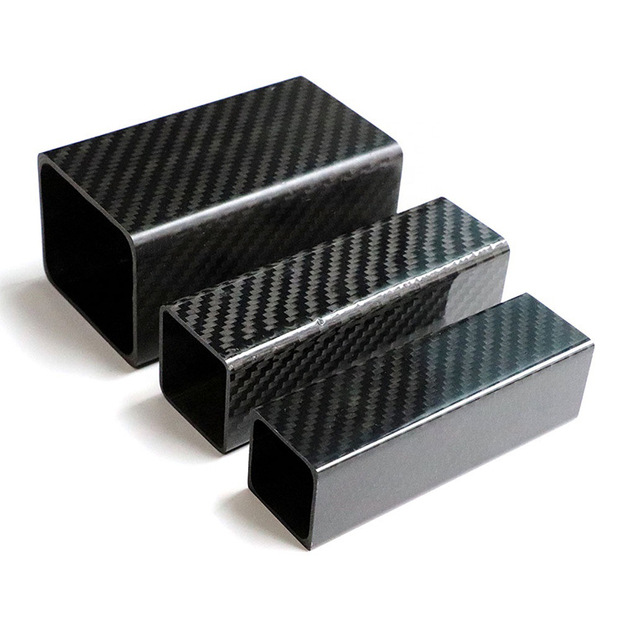
In the realm of industrial automation, the pursuit of precision and efficiency has increasingly converged with the need for quieter operation. Silent automation equipment, essential in environments such as medical device manufacturing, semiconductor fabrication, and precision assembly, demands components that minimize noise generation and transmission. Among the advanced materials reshaping this landscape, carbon fiber square tubes have emerged as a superior alternative to traditional metals. Their unique combination of mechanical strength and acoustic damping properties makes them ideal for structural frames, guide rails, and support elements in noise-sensitive machinery. This article explores the sound insulation characteristics of carbon fiber square tubes, detailing how their material composition, structural design, and manufacturing processes contribute to quieter, more efficient automation systems.
## The Acoustic Challenges in Automation Equipment
Automation equipment inherently generates noise through various mechanisms: vibration from motors and drives, impact forces in moving parts, and resonance in structural components. In conventional designs, aluminum or steel square tubes are commonly used for frames and supports. However, these metals possess low internal damping, meaning they transmit vibrations efficiently and can amplify sound through resonance. This results in elevated noise levels that not only violate workplace safety standards but also compromise the precision of sensitive operations, as vibrations can cause micro-displacements in tooling and measurement systems.
## Fundamentals of Sound Insulation and Damping
Sound insulation in structural materials is governed by two primary mechanisms: sound absorption and vibration damping. Sound absorption refers to the material’s ability to dissipate acoustic energy as heat, reducing reflected sound waves. Vibration damping, on the other hand, involves the conversion of mechanical vibrational energy into heat through internal friction. Effective noise control in automation requires materials that excel in both areas. Carbon fiber composites, particularly in tubular forms, offer a unique advantage: their anisotropic properties allow for tailored damping behavior along the tube’s axis, which is critical for structural applications.
## Why Carbon Fiber Square Tubes Excel in Sound Insulation
### High Internal Damping
Carbon fiber reinforced polymers (CFRP) exhibit significantly higher internal damping than metals. The viscoelastic nature of the polymer matrix, combined with the frictional sliding between carbon fibers and the matrix, dissipates vibrational energy efficiently. When a carbon fiber square tube is subjected to mechanical excitation, the energy is absorbed and converted into heat rather than being transmitted as sound. Studies have shown that CFRP can achieve damping ratios up to 10 times higher than aluminum, making them exceptionally effective in reducing structure-borne noise.
### Reduced Resonance and Ringing
Metallic tubes often produce a characteristic ‘ringing’ sound when struck or vibrated, due to their low damping and high stiffness. Carbon fiber square tubes, conversely, exhibit a dull, muted response. The layered construction of carbon fiber laminates creates numerous interfaces that scatter and absorb acoustic waves, preventing the buildup of standing waves that cause resonance. This property is particularly valuable in automation equipment where repetitive motions, such as those in pick-and-place machines, can excite resonant frequencies in structural members.
### Lightweight and Stiffness Balance
The specific stiffness (stiffness-to-weight ratio) of carbon fiber is superior to that of steel and aluminum. This allows for the design of lighter structures that are equally rigid, reducing the overall mass that needs to be accelerated and decelerated. Lower mass translates to lower inertial forces, which in turn reduces the excitation forces transmitted to the structure. Consequently, carbon fiber square tubes contribute to quieter operation by minimizing the source of vibration generation, not just its transmission.
## Structural Design and Acoustic Performance
### Cross-Section Geometry
The square cross-section of carbon fiber tubes offers inherent torsional rigidity, which is beneficial for resisting twisting forces in automation frames. From an acoustic perspective, the flat surfaces of a square tube can be more prone to panel vibration compared to round tubes. However, by optimizing the laminate stacking sequence and incorporating sandwich structures with foam or honeycomb cores, manufacturers can enhance the bending stiffness and damping simultaneously. This design flexibility is a key advantage over metal extrusions, which have limited geometric variations.
### Wall Thickness and Laminate Layup
The sound insulation performance of carbon fiber square tubes is highly dependent on wall thickness and the orientation of the carbon fiber layers. Thicker walls increase mass, which improves sound transmission loss (STL) according to the mass law. However, excessive thickness adds weight and cost. A more effective approach is to use a multi-layer laminate with alternating fiber orientations (e.g., 0°, ±45°, 90°). The ±45° layers are particularly effective in shear damping, while 0° layers provide axial stiffness. This tailored layup allows for the optimization of both mechanical and acoustic properties without unnecessary weight.
### Surface Treatments and Coatings
Additional sound insulation can be achieved through surface treatments. Applying a thin viscoelastic damping layer to the exterior of the carbon fiber square tube, followed by a protective coating, can further increase energy dissipation. Some manufacturers integrate such damping layers directly into the composite during the curing process, creating a built-in acoustic barrier. This is especially useful in applications where space is limited and external insulation wraps are impractical.
## Manufacturing Processes and Their Impact on Acoustic Properties
### Pultrusion vs. Roll Wrapping
Carbon fiber square tubes are manufactured using various methods, each affecting the final acoustic performance. Pultrusion, a continuous process, produces tubes with unidirectional fibers aligned along the length. While these tubes offer excellent axial stiffness, their damping is relatively lower due to the lack of off-axis fibers. Roll wrapping, on the other hand, allows for multi-axial layups, resulting in better damping characteristics. For silent automation equipment, roll-wrapped tubes with a balanced layup are often preferred, despite being more labor-intensive.
### Resin System Selection
The choice of resin matrix significantly influences damping. Epoxy resins are common due to their high strength and good adhesion to carbon fibers. However, thermoplastic resins, such as polyether ether ketone (PEEK) or polyamide, exhibit higher intrinsic damping because of their viscoelastic behavior. While thermoplastics are more expensive, they offer superior acoustic performance and can be recycled, aligning with sustainability goals in modern manufacturing.
### Quality Control and Consistency
Achieving consistent acoustic properties requires rigorous quality control during manufacturing. Variations in fiber volume fraction, void content, and curing conditions can alter damping performance. Non-destructive testing methods, such as ultrasonic scanning, are employed to detect internal defects that could compromise sound insulation. For automation equipment manufacturers, partnering with suppliers who maintain tight tolerances is crucial to ensure predictable noise reduction.
## Comparative Analysis: Carbon Fiber vs. Traditional Materials
### Aluminum Square Tubes
Aluminum is lightweight and corrosion-resistant, but its low damping coefficient (around 0.001-0.002) makes it a poor choice for noise-sensitive applications. Aluminum tubes tend to resonate and transmit vibrations effectively, leading to higher noise levels. In contrast, carbon fiber square tubes have damping coefficients in the range of 0.01-0.05, a 10- to 25-fold improvement, resulting in significantly quieter operation.
### Steel Square Tubes
Steel offers high stiffness and damping slightly better than aluminum, but its density is three times that of aluminum and four times that of carbon fiber. The added weight increases inertial forces, contributing to more vibration generation. Additionally, steel is prone to corrosion, requiring protective coatings that can degrade over time. Carbon fiber’s combination of low weight and high damping makes it superior for silent automation, despite its higher initial cost.
### Cost-Benefit Considerations
While carbon fiber square tubes are more expensive than metal counterparts, the total cost of ownership can be lower in silent automation applications. Reduced noise levels eliminate the need for additional acoustic enclosures or soundproofing materials, which can be costly and space-consuming. Moreover, the improved damping can enhance the precision and lifespan of machinery by reducing wear and tear caused by vibrations. For high-value automation systems, the investment in carbon fiber is often justified.
## Applications in Silent Automation Equipment
### Precision Measurement and Inspection Machines
In coordinate measuring machines (CMMs) and optical inspection systems, vibrations can cause measurement errors. Carbon fiber square tubes are used in the gantry structures to dampen vibrations from servo motors and linear guides, ensuring accurate readings. The material’s low thermal expansion also contributes to dimensional stability, further enhancing precision.
### Semiconductor Manufacturing Equipment
Semiconductor fabrication requires ultra-clean and vibration-free environments. Carbon fiber square tubes are employed in wafer handling robots and lithography systems to minimize particle generation and acoustic noise. Their non-magnetic and non-corrosive nature makes them ideal for cleanroom applications.
### Medical Device Assembly Lines
Automated assembly of delicate medical devices, such as syringes or implantable components, benefits from silent operation to avoid disturbing sensitive electronic components or causing micro-damage. Carbon fiber frames reduce noise and vibration, improving the reliability of the assembly process.
### Laboratory Automation
Liquid handling systems and robotic arms in laboratories operate in close proximity to researchers. The use of carbon fiber square tubes in their construction reduces noise pollution, creating a more comfortable working environment and preventing interference with sensitive experiments.
## Installation and Integration Best Practices
To fully leverage the sound insulation properties of carbon fiber square tubes, proper installation is essential. When connecting tubes to other components, use damping mounts or rubber gaskets to isolate vibrations at joints. Avoid metal-to-metal contact, as this can create acoustic bridges. Additionally, ensure that the tubes are not over-tightened, as excessive stress can reduce damping efficiency. Regular inspection for delamination or surface damage is also recommended, as any structural compromise can degrade acoustic performance.
## Future Trends and Innovations
Research is ongoing to further enhance the acoustic properties of carbon fiber composites. One promising area is the incorporation of piezoelectric materials into the laminate, allowing for active vibration control. By embedding sensors and actuators, the tube can actively counteract vibrations in real time, achieving even lower noise levels. Another trend is the development of hybrid composites, where carbon fiber is combined with natural fibers or recycled materials to improve damping while reducing cost and environmental impact.
## Conclusion
The sound insulation characteristics of carbon fiber square tubes make them an exceptional choice for silent automation equipment. Their high internal damping, reduced resonance, and lightweight stiffness provide a multifaceted approach to noise control, addressing both vibration generation and transmission. While the initial cost is higher than traditional metals, the benefits in terms of precision, reliability, and workplace comfort often outweigh the investment. As automation continues to advance into noise-sensitive fields, carbon fiber square tubes will play an increasingly vital role in enabling quieter, more efficient machinery. Manufacturers and engineers should consider these advanced composites not just as structural components, but as integral elements of acoustic design in the next generation of automation technology.