
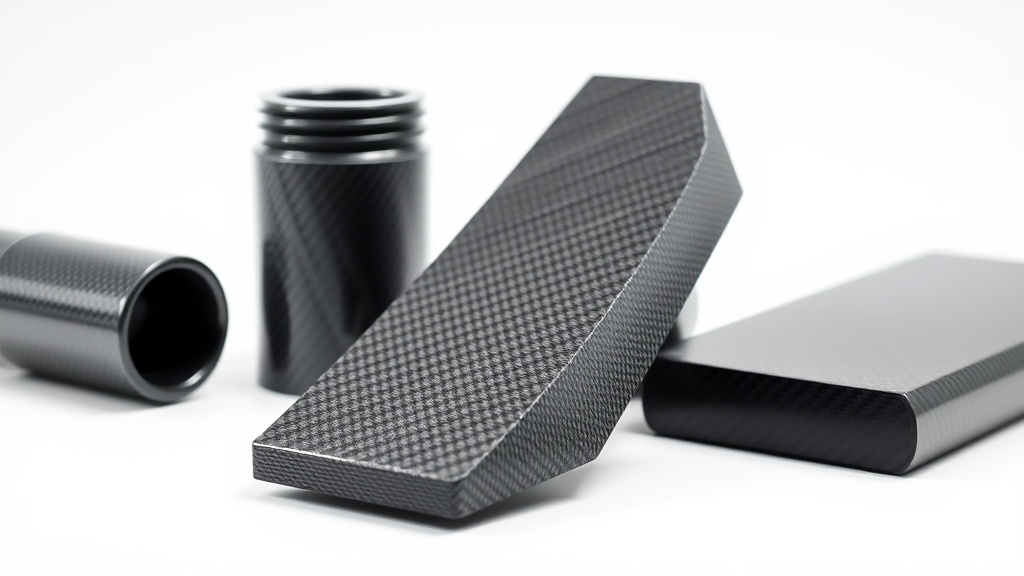
Introduction
High-frequency vibration equipment places extreme demands on structural components, requiring materials that can endure millions of cyclic loads without degradation. In industries ranging from aerospace testing to industrial screening and medical imaging, the structural elements must maintain stiffness, dimensional stability, and integrity over long service lives. Traditional metals, while robust, often fall short when weight reduction, corrosion resistance, and vibration damping are prioritized. This is where anti-fatigue carbon fiber tubes emerge as a transformative solution. Engineered with advanced composite layups and resin systems, these tubes offer a unique combination of high specific strength, exceptional fatigue resistance, and tunable dynamic properties. This post explores the science behind anti-fatigue carbon fiber tubes, their advantages, key applications, and design considerations for high-frequency vibration environments.
Understanding Anti-Fatigue Properties in Composites
Fatigue failure in materials occurs due to the accumulation of microscopic damage under repeated loading. In metals, this typically manifests as crack initiation and propagation, which can be difficult to predict. Carbon fiber composites behave differently. The fibers themselves exhibit virtually infinite fatigue life when loaded in tension along their axis, as they do not suffer from the dislocation-based damage mechanisms that affect metals. However, the matrix resin and the fiber-matrix interface are susceptible to cyclic degradation, particularly under shear or off-axis loads.
Anti-fatigue carbon fiber tubes are specifically designed to suppress these damage modes. Manufacturers optimize fiber orientation, often employing a multi-axial layup that includes hoop and helical plies, to distribute stresses and minimize interlaminar shear. High-toughness epoxy or thermoplastic matrix systems are selected to resist micro-cracking and to dissipate energy through viscoelastic damping. Furthermore, proprietary surface treatments and sizing agents enhance fiber-matrix adhesion, preventing debonding under cyclic stress. The result is a component that exhibits a fatigue endurance limit significantly higher than that of aluminum or steel on a specific strength basis, often exceeding 10⁷ cycles without measurable stiffness loss when properly designed.
Advantages of Carbon Fiber Tubes for Vibratory Environments
Comparing carbon fiber tubes to conventional metallic options reveals several game-changing advantages for high-frequency applications. First, the density of carbon fiber composites is approximately 1.6 g/cm³, compared to 2.7 for aluminum and 7.8 for steel. This translates to weight savings of 40–80%, reducing inertia forces and enabling higher operational speeds with lower energy consumption. In vibrating equipment, lower moving mass directly decreases bearing loads and drive power requirements.
Second, carbon fiber composites possess superior damping capacity. The viscoelastic nature of the polymer matrix converts vibrational energy into heat, attenuating resonance amplitudes and protecting adjacent components. While metals rely on external dampers or constrained-layer treatments, carbon fiber combines structural and damping functions. The material’s damping ratio can be tailored through fiber angles and matrix selection, typically ranging from 0.5% to 2% compared to 0.05–0.1% for aluminum.
Third, the high fatigue strength and damage tolerance extend maintenance intervals and prevent catastrophic failures. Carbon fiber tubes do not corrode, eliminating pitting corrosion that can initiate fatigue cracks in steel. They also exhibit negligible thermal expansion, maintaining tight tolerances across temperature swings. For equipment operating in cleanrooms, chemical processing, or marine environments, this inertness is a critical reliability factor.
Key Applications in High-Frequency Vibration Equipment
Industrial Screening and Conveying
Vibratory screens, feeders, and conveyors in mining, recycling, and food processing rely on robust support frames and drive shafts that oscillate at frequencies from 10 Hz to over 50 Hz. Anti-fatigue carbon fiber tubes are increasingly used for screen decks and support arms, reducing weight so that larger screening areas can be driven by smaller motors. The damping properties also reduce noise transmission, improving workplace safety.
Aerospace and Defense Test Systems
Modal shakers and electrodynamic vibration test systems must impart controlled vibrations up to kilohertz frequencies to components and assemblies. The armature shafts and thrust rods in these machines benefit from carbon fiber tubes’ high stiffness-to-weight ratio, which raises mechanical resonance frequencies beyond the test range, ensuring faithful reproduction of commanded profiles. Additionally, the tubes’ fatigue resistance guarantees long-term accuracy in mission-critical testing.
Medical Imaging and Therapeutic Devices
Magnetic resonance imaging (MRI) gradient coils and high-intensity focused ultrasound (HIFU) transducers involve rapid, precise oscillations. Carbon fiber tubes are non-magnetic and radiolucent, allowing them to function without interference in imaging fields while handling cyclic stresses. Their stiffness ensures the positional accuracy required for high-resolution diagnostics and treatments.
Precision Robotics and Optoelectronics
In semiconductor manufacturing, pick-and-place robots and optical alignment stages use high-frequency reciprocal motion. Carbon fiber tubes serve as lightweight, fatigue-resistant linkages that reduce overshoot and settling time, improving throughput in chip packaging and lens assembly operations.
Design Considerations for Anti-Fatigue Tubes
Selecting the appropriate carbon fiber tube for a vibrating application requires careful attention to several factors. The fiber architecture is paramount: a quasi-isotropic layup (e.g., 0°/±45°/90°) provides balanced strength in all directions, while a tailored layup with more 0° fibers maximizes axial stiffness for push-pull rods. Hoop plies are essential for tubes subjected to internal pressure or to prevent splitting under compressive bending.
The matrix system must match the operating environment. For temperatures above 120°C, bismaleimide (BMI) or polyimide resins are preferred; for cryogenic or ambient conditions, toughened epoxies offer the best fatigue performance. Thermoplastic matrices like polyetheretherketone (PEEK) are gaining traction due to their inherent toughness and weldability, though processing costs remain higher.
Joint design is critical because fatigue failures often initiate at connections. Bonded inserts with controlled adhesive thickness distribute loads evenly, outperforming mechanical fasteners that create stress concentrations. Tapered or scarfed joint geometries further mitigate peel stresses. Finite element analysis (FEA) should guide the optimization of wall thickness and fiber angles to shift resonance frequencies away from excitation bands, and laminate stacking should incorporate interleaved toughening veils at stress-critical locations.
Surface protection might be required in highly abrasive environments, though carbon fiber’s inherent wear resistance is good. A thin sacrificial layer or ceramic coating can be added without compromising fatigue life.
Comparing Performance: A Hypothetical Case
Consider a section of a large vibratory conveyor replacing a conventional steel support beam with an anti-fatigue carbon fiber tube. The steel beam weighs 45 kg and has a first bending mode at 80 Hz, dangerously close to the 60 Hz