
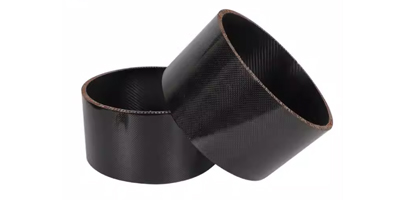
The Silent Enemy of Outdoor Materials: UV Radiation
For engineers and project managers specifying materials for outdoor applications, the elements are a constant adversary. While rain, wind, and temperature fluctuations are obvious challenges, the most insidious threat is often invisible: ultraviolet (UV) radiation. Over time, UV rays degrade the molecular structure of most polymers and composite materials, leading to a process called photodegradation. This manifests as surface chalking, micro-cracking, loss of mechanical strength, and—most critically for structural components—warping and deformation. For industries ranging from drone manufacturing to architectural shading, this aging process has historically meant a limited service life and costly maintenance cycles.
The Composite Solution and Its Historic Achilles' Heel
Carbon fiber composites have long been the material of choice for high-performance structural applications due to their exceptional strength-to-weight ratio and stiffness. However, standard epoxy-based carbon fiber tubes share a vulnerability with other plastics: the epoxy resin matrix is susceptible to UV degradation. When exposed to direct sunlight, the resin begins to oxidize and become brittle. This leads to a phenomenon known as "fiber bloom," where the protective resin erodes, exposing the delicate carbon filaments to moisture and mechanical abrasion. The result? A tube that may look weathered but has actually suffered a significant reduction in its structural integrity, potentially leading to unexpected failure.
Advancements in UV-Resistant Resin Technology
The seventh generation of carbon fiber tube manufacturing has addressed this critical limitation head-on. The introduction of advanced UV-resistant resin systems—often incorporating nano-modified additives and specialized aliphatic urethanes—has created a fundamental shift in outdoor durability. Unlike traditional epoxy formulations that absorb high-energy UV photons, these new resins are engineered to either reflect or safely dissipate that energy. They achieve this through a combination of sacrificial UV absorbers (which convert harmful radiation into harmless heat) and hindered amine light stabilizers (HALS) that neutralize the free radicals formed during the degradation process.
No Aging: Maintaining Mechanical Integrity Over Decades
What does "no aging" actually mean in real-world performance? For a standard carbon fiber tube, you might expect a 20-30% loss in flexural strength after just five years of continuous Florida sunlight exposure. A UV-resistant tube, by contrast, is designed to retain over 95% of its original mechanical properties—tensile strength, modulus, and impact resistance—after the same period. This is not merely a cosmetic improvement. The molecular bonds within the resin remain intact, preventing the micro-cracks that act as stress concentrators. As a result, the tube’s performance curve remains essentially flat over its service life, providing predictable and reliable structural behavior that is critical for safety-sensitive applications like telescoping masts or robotic arms.
No Deformation: Resisting Thermal and Moisture Induced Warping
Deformation in non-UV-resistant tubes is often a secondary effect of UV damage. As the surface resin degrades, it loses its hydrophobic properties. Moisture ingresses into the microscopic gaps, and when combined with thermal cycling, this causes differential swelling and shrinking within the composite. This uneven expansion leads to warping, bowing, and a loss of dimensional accuracy. UV-resistant carbon fiber tubes, however, maintain their pristine surface finish. This impermeable barrier prevents moisture ingress, which in turn ensures that the coefficient of thermal expansion (CTE) remains stable and anisotropic (predictable along the fiber direction). The tube maintains its precise geometry—roundness, linearity, and outer diameter—even when subjected to extreme temperature swings from -40°C to +80°C.
Engineered for the Harshest Environments
These seventh-generation tubes are not just for sunny climates. They are specifically formulated to withstand the combined assault of UV radiation, high humidity, and salt spray. This makes them ideal for coastal infrastructure, marine robotics, and offshore sensor housings. In high-altitude applications, where UV intensity increases by roughly 10-12% per 1,000 meters of elevation, these tubes provide the necessary reliability for drone airframes and solar panel mounting systems. Unlike painted or gel-coated alternatives, the UV protection is inherent to the resin matrix itself—not a surface coating. This means that even if the tube is scratched or drilled during installation, the exposed edge retains its UV-resistant properties, preventing localized failure points.
A Long-Term Economic and Operational Advantage
The initial cost of a UV-resistant carbon fiber tube is marginally higher than a standard tube. However, a lifecycle cost analysis tells a different story. Consider a permanent outdoor installation such as a large-format printer frame or a solar tracker linkage. With a standard tube, you face replacement every three to five years, plus the labor and downtime costs. With a UV-resistant option, the expected service life extends to 20 years or more. This eliminates the need for painting, protective sleeves, or annual inspection for UV degradation. For project planners, this translates to a predictable total cost of ownership and a significantly reduced environmental footprint due to less frequent material replacement.
The Clear Choice for Uncompromising Reliability
In conclusion, the evolution of carbon fiber technology has effectively removed the last major barrier to its widespread outdoor adoption. The development of UV-resistant resin systems marks a distinct leap forward, ensuring that the material's legendary strength and stiffness are not compromised by solar exposure. For engineers who demand constant geometry and unwavering mechanical performance over decades of service, these tubes represent the definitive answer to material aging and deformation. They are not simply an incremental improvement; they are a new standard for long-term, maintenance-free outdoor structural performance. By specifying UV-resistant carbon fiber tubes, you are investing in a component that will outlast the machinery it is built into, providing enduring value and absolute peace of mind.