
## Introduction
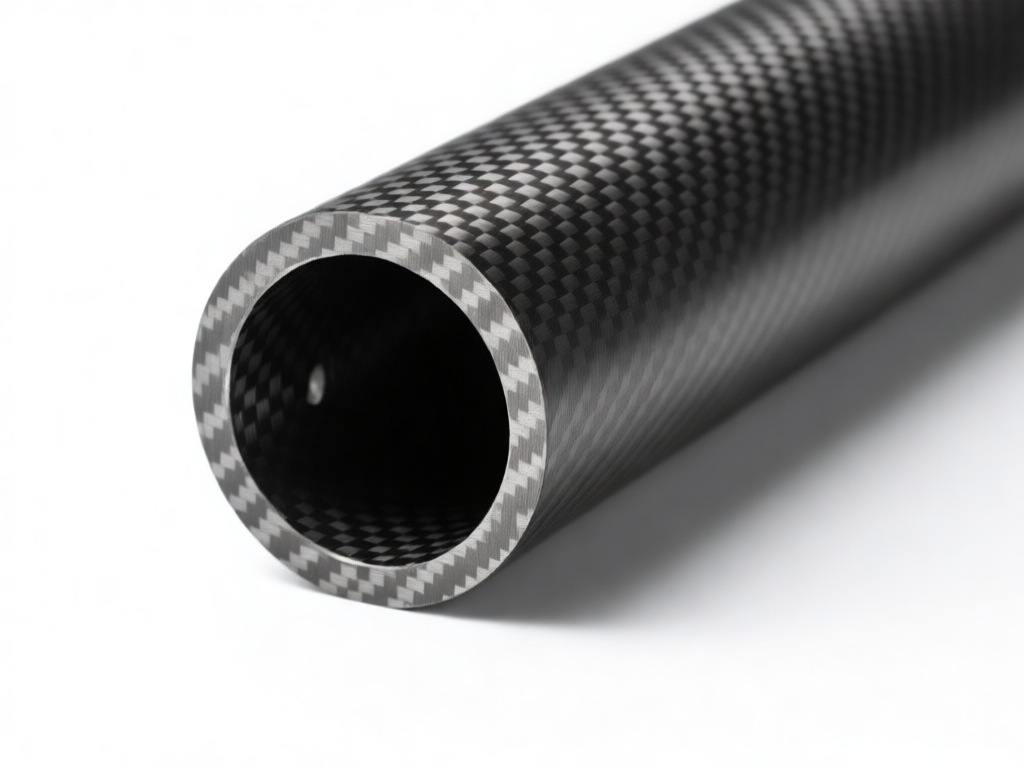
Square carbon fiber tubes are increasingly used in aerospace, automotive, and sports equipment due to their high strength-to-weight ratio. However, drilling holes in these tubes—whether for internal passages or external mounting—requires specialized skills to avoid delamination, fiber pull-out, and structural failure. This article provides a comprehensive guide to internal and external hole drilling techniques on square carbon fiber tubes, focusing on tool selection, drilling parameters, and best practices.
## Understanding Carbon Fiber Tube Drilling Challenges
Carbon fiber reinforced polymer (CFRP) is anisotropic and abrasive. Drilling generates heat that can degrade the resin matrix, while cutting forces can cause interlaminar cracks. Square tubes add complexity: flat surfaces and sharp corners create stress concentrations. Internal drilling (e.g., for wiring or fluid channels) is even more challenging due to limited access and chip evacuation.
### Key Issues:
– **Delamination:** Peeling of layers at entry and exit.
– **Fiber pull-out:** Uncut fibers protruding from hole edges.
– **Thermal damage:** Resin burning due to friction.
– **Tool wear:** Rapid dulling of drill bits.
## Tool Selection for Carbon Fiber Drilling
Choosing the right drill bit is critical. For both internal and external holes, use diamond-coated or carbide-tipped drills designed for composites. Avoid standard high-speed steel (HSS) bits.
### Recommended Tools:
– **External drilling:** Brad-point or dagger drills with a point angle of 60–90° reduce delamination.
– **Internal drilling:** Long, slender drills with through-coolant channels for chip removal and cooling.
– **Coring bits:** For larger holes, use diamond core drills to minimize edge damage.
## External Hole Drilling Techniques
External holes are drilled from the outside surface of the square tube. Follow these steps:
### 1. Marking and Fixturing
– Use a template or CNC to mark hole locations accurately.
– Support the tube internally with a mandrel or back-up plate to prevent crushing.
### 2. Drilling Parameters
– **Speed:** High spindle speed (2000–4000 RPM) with low feed (0.05–0.1 mm/rev).
– **Cooling:** Use compressed air or minimum quantity lubrication (MQL) to manage heat.
– **Peck drilling:** Retract the drill frequently to clear chips.
### 3. Entry and Exit Strategies
– Apply a sacrificial layer (e.g., FR4 or aluminum) on both sides to reduce delamination.
– For exit, reduce feed rate to 50% to prevent push-out delamination.
## Internal Hole Drilling Techniques
Internal drilling involves creating holes on the inside walls of the square tube, often for hidden fasteners or channels. Access is limited, requiring specialized approaches.
### 1. Access and Positioning
– Use a right-angle drill head or flexible shaft for hard-to-reach areas.
– Insert a borescope to verify hole location.
### 2. Tooling for Internal Drilling
– **Long-series drills:** Carbide drills with length-to-diameter ratio up to 10:1.
– **Coolant-through tools:** Essential for deep internal holes to flush chips and cool the cutting zone.
### 3. Step Drilling
– Start with a pilot hole (1–2 mm) to guide the main drill.
– Enlarge in steps to final diameter to reduce radial forces.
### 4. Chip Evacuation
– Use vacuum extraction or reverse flushing to remove debris from inside the tube.
– Avoid compressed air alone, as it may blow chips into sensitive areas.
## Quality Control and Inspection
After drilling, inspect holes for defects:
– **Visual:** Look for delamination, cracks, and fiber pull-out.
– **Non-destructive testing:** Use ultrasonic C-scan or X-ray for internal holes.
– **Dimensional checks:** Verify hole diameter and position with a coordinate measuring machine (CMM).
## Conclusion
Drilling internal and external holes in square carbon fiber tubes demands precision and the right techniques. By selecting appropriate tools, controlling drilling parameters, and implementing proper support and cooling, manufacturers can achieve clean holes without compromising structural integrity. Always prioritize quality control to ensure the final assembly meets performance requirements.