
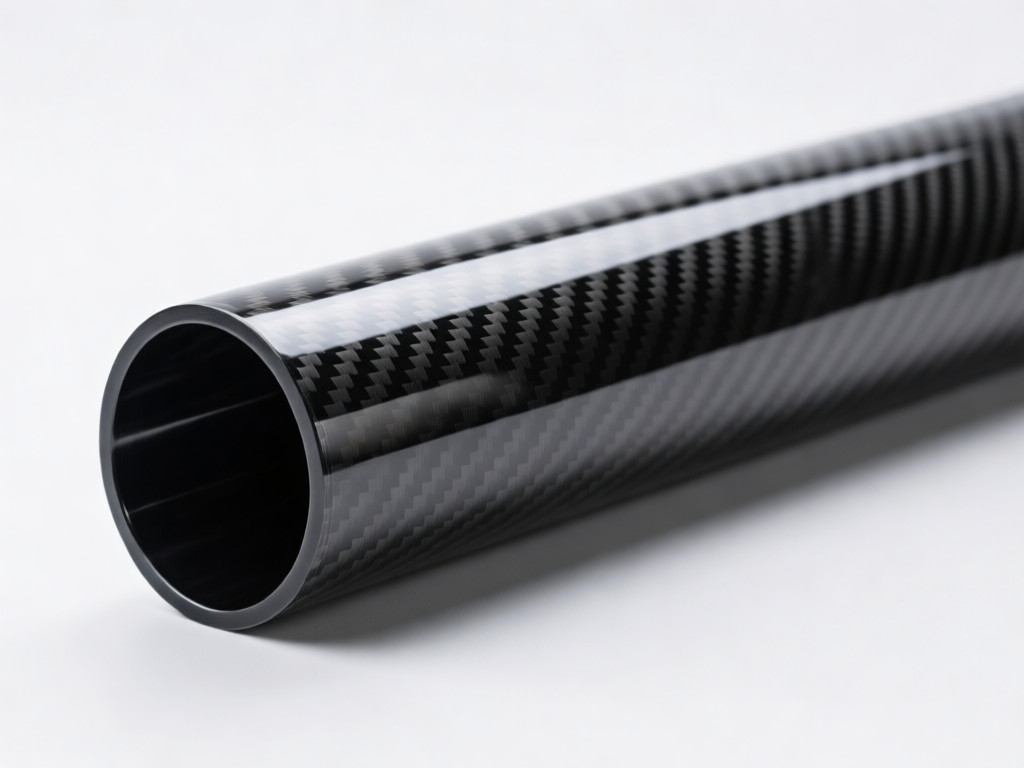
# Mirror High-Gloss Carbon Tube Polishing Process Parameter Standard Introduction
## Introduction
Mirror high-gloss carbon tubes are essential components in high-end applications such as aerospace, automotive, and luxury consumer goods. Achieving a flawless, mirror-like finish on carbon fiber tubes requires precise control of polishing parameters. This article provides a comprehensive introduction to the process parameter standards for mirror high-gloss carbon tube polishing, covering abrasive selection, rotational speed, pressure, and other critical factors. By adhering to these standards, manufacturers can ensure consistent, high-quality results.
## Understanding Mirror High-Gloss Polishing
Mirror high-gloss polishing is a multi-stage process that removes surface imperfections and creates a reflective, glass-like finish. Unlike standard polishing, mirror polishing demands sub-micron surface roughness (Ra < 0.05 µm). Carbon fiber reinforced polymer (CFRP) tubes present unique challenges due to their anisotropic properties and the risk of fiber pull-out or resin burn. ### Key Quality Metrics - **Surface Roughness (Ra):** ≤ 0.05 µm for mirror finish. - **Gloss Level:** ≥ 95 GU (gloss units) at 60° measurement. - **Surface Defects:** No visible scratches, pinholes, or haze. ## Critical Process Parameters ### 1. Abrasive Selection and Sequence The polishing sequence typically involves multiple stages with progressively finer abrasives. Standard parameters: | Stage | Abrasive Type | Grit Size | Purpose | |-------|---------------|-----------|---------| | 1 | Silicon Carbide | 320-600 | Remove major defects | | 2 | Alumina | 800-1200 | Smooth surface | | 3 | Diamond | 3-6 µm | Fine polishing | | 4 | Diamond | 0.5-1 µm | Mirror finish | | 5 | Colloidal Silica | 0.05 µm | Final gloss | ### 2. Rotational Speed Polishing speed affects material removal rate and heat generation. Recommended speeds: - **Coarse Polishing:** 1500-2000 RPM - **Fine Polishing:** 1000-1500 RPM - **Final Polishing:** 500-800 RPM Excessive speed can cause resin degradation; too low speed reduces efficiency. ### 3. Polishing Pressure Pressure must be controlled to avoid fiber damage. Standard parameters: - **Coarse Stage:** 0.2-0.3 MPa - **Intermediate Stage:** 0.1-0.2 MPa - **Final Stage:** 0.05-0.1 MPa Uniform pressure distribution is critical, often achieved with pneumatic or servo-controlled systems. ### 4. Polishing Time Time per stage depends on initial surface condition. Typical durations: - **Coarse:** 5-10 minutes - **Intermediate:** 3-5 minutes - **Fine:** 2-4 minutes - **Final:** 1-2 minutes Over-polishing can lead to edge rounding and fiber exposure. ### 5. Cooling and Lubrication Proper cooling prevents overheating and removes debris. Recommended: - **Coolant:** Water-based emulsion or dedicated polishing fluid. - **Flow Rate:** 5-10 L/min. - **Temperature:** Maintain below 30°C. ### 6. Environmental Conditions - **Temperature:** 20-25°C - **Humidity:** 40-60% RH - **Cleanliness:** ISO Class 7 or better to avoid contamination. ## Equipment and Consumables - **Polishing Machine:** Variable speed, pressure-controlled, with multi-axis motion. - **Pads:** Polyurethane or felt pads, depending on stage. - **Fixtures:** Custom mandrels to hold tubes securely without deformation. ## Quality Control and Inspection After polishing, inspect tubes for: - Surface roughness using profilometer. - Gloss level with gloss meter. - Visual defects under high-intensity light. Regular calibration of equipment and consumables ensures repeatability. ## Conclusion Mirror high-gloss carbon tube polishing is a precision process that requires strict adherence to parameter standards. By optimizing abrasive sequence, speed, pressure, time, and cooling, manufacturers can achieve a flawless mirror finish that meets the demands of high-performance industries. Implementing these standards ensures product consistency, reduces scrap, and enhances the aesthetic and functional value of carbon fiber tubes. For further information or customized solutions, consult with polishing experts and refer to industry standards such as ASTM D523 for gloss measurement.