
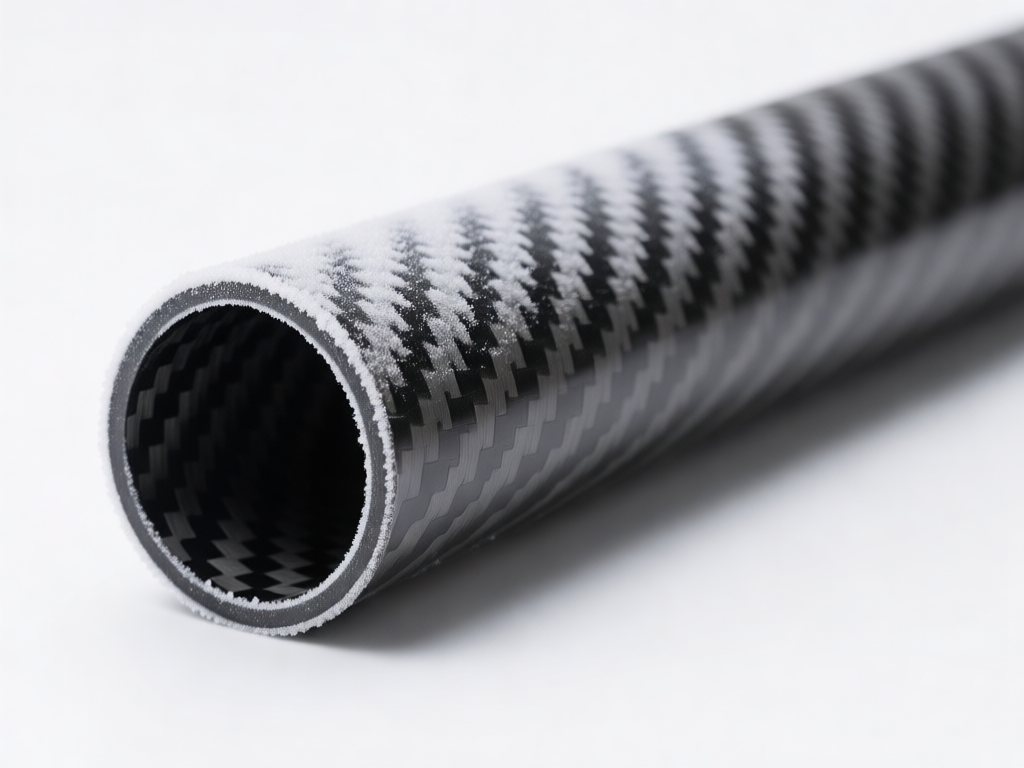
# Textured Frosted Carbon Tube Surface Treatment for Anti-Slip Handheld Equipment
## Introduction
In the realm of handheld equipment—from tactical flashlights and hiking poles to medical devices and sports gear—grip and durability are paramount. Carbon fiber tubes offer an exceptional strength-to-weight ratio, but their naturally smooth surface can be slippery, especially when wet or oily. To address this, manufacturers have developed textured frosted carbon tube surface treatments that enhance friction without compromising the material’s integrity. This article explores the techniques, benefits, and applications of textured frosted carbon tube surface treatment for anti-slip handheld equipment.
## Why Anti-Slip Matters for Handheld Equipment
Handheld equipment demands a secure grip to ensure user safety and performance. A slippery surface can lead to accidents, dropped devices, or inefficient operation. Whether in extreme sports, military operations, or everyday tools, anti-slip properties are critical. Textured frosted carbon tubes provide a solution by combining the lightweight strength of carbon fiber with a surface that offers reliable traction.
## What is Textured Frosted Carbon Tube Surface Treatment?
Textured frosted carbon tube surface treatment involves altering the surface of carbon fiber tubes to create a matte, frosted finish with microscopic or macroscopic textures. This is achieved through mechanical or chemical processes that etch or coat the surface, resulting in a non-reflective, grippy texture. Unlike smooth carbon tubes, these treated tubes offer enhanced friction, making them ideal for handheld applications where grip is essential.
### Key Characteristics
– **Matte Finish:** Reduces glare and provides a modern aesthetic.
– **Textured Surface:** Increases friction for better grip.
– **Durability:** Resists wear and environmental factors.
– **Lightweight:** Maintains the low weight of carbon fiber.
## Surface Treatment Techniques
Several methods are employed to create textured frosted surfaces on carbon tubes. Each technique offers distinct advantages and is chosen based on the desired texture, application, and production volume.
### 1. Mechanical Texturing
Mechanical methods involve physically altering the surface using abrasives or tools. Common techniques include:
– **Sandblasting:** High-pressure abrasive particles create a uniform frosted texture.
– **Grinding/Scuffing:** Controlled abrasion produces linear or random patterns.
– **Embossing:** Rollers or molds imprint patterns during curing.
### 2. Chemical Etching
Chemical etching uses acids or caustic solutions to selectively erode the resin matrix, exposing carbon fibers and creating a micro-textured surface. This method can produce very fine textures but requires careful control to avoid damaging the fibers.
### 3. Coatings and Films
Applying textured coatings or films is another approach. These can be:
– **Spray-on Textures:** Polyurethane or epoxy coatings with added particles (e.g., silica) for grip.
– **Heat-Shrink Sleeves:** Textured polymer sleeves shrunk onto the tube.
– **Laminated Films:** Adhesive-backed textured films for a consistent finish.
### 4. Laser Treatment
Laser ablation can create precise patterns on carbon tubes, offering high repeatability and minimal material stress. This method is gaining popularity for its precision and ability to create custom textures.
## Benefits of Textured Frosted Carbon Tubes
### Enhanced Grip and Safety
The primary benefit is improved grip. The textured surface increases friction, reducing the likelihood of slippage even in wet or oily conditions. This is crucial for equipment used in outdoor or high-stakes environments.
### Aesthetic Appeal
The frosted matte finish offers a sleek, modern look that is resistant to fingerprints and smudges. It also reduces glare, which can be advantageous in tactical or outdoor settings.
### Durability and Wear Resistance
Textured treatments often include hard coatings that protect the underlying carbon fiber from abrasion, UV radiation, and chemicals. This extends the lifespan of the equipment.
### Weight Neutrality
Unlike adding rubber grips, texturing the carbon tube itself adds negligible weight, preserving the lightweight advantage of carbon fiber.
### Design Flexibility
Textures can be customized in terms of pattern, depth, and coverage, allowing manufacturers to tailor the grip to specific applications.
## Applications in Handheld Equipment
Textured frosted carbon tubes are used across a wide range of handheld devices:
– **Tactical Gear:** Flashlight bodies, batons, and weapon components benefit from secure grips.
– **Sports Equipment:** Hiking poles, bicycle handlebars, and fishing rods require reliable grip for performance.
– **Medical Devices:** Surgical instruments and mobility aids need anti-slip surfaces for precision and safety.
– **Consumer Electronics:** Drone controllers, camera grips, and gaming accessories.
– **Industrial Tools:** Portable scanners, measurement devices, and power tool handles.
## Manufacturing Considerations
Implementing textured frosted surface treatment requires careful planning:
– **Material Compatibility:** Ensure the treatment does not compromise the carbon fiber’s structural integrity.
– **Process Control:** Maintain consistent texture depth and coverage for uniform grip.
– **Cost:** Mechanical methods are generally cost-effective for large volumes, while laser treatment offers precision at a higher cost.
– **Environmental Impact:** Choose eco-friendly processes and coatings where possible.
## Case Study: Textured Carbon Tubes in Hiking Poles
A leading outdoor gear manufacturer switched from smooth carbon tubes to textured frosted ones for their premium hiking poles. The result was a 30% reduction in grip-related complaints and a significant increase in customer satisfaction. The frosted finish also improved the poles’ appearance, aligning with the brand’s rugged aesthetic.
## Future Trends
Advancements in surface treatment technologies are leading to more sophisticated textures. Nanotexturing, for instance, can create surfaces that repel water while enhancing grip. Additionally, sustainable treatments using bio-based coatings are emerging. As handheld equipment becomes more specialized, the demand for customized anti-slip solutions will grow.
## Conclusion
Textured frosted carbon tube surface treatment is a vital innovation for anti-slip handheld equipment. By enhancing grip without adding weight, it improves safety, performance, and user experience. Manufacturers can choose from various techniques to achieve the desired texture, ensuring that carbon fiber’s benefits are fully realized in demanding applications. As technology evolves, we can expect even more advanced treatments that further optimize grip and durability.