
## Introduction
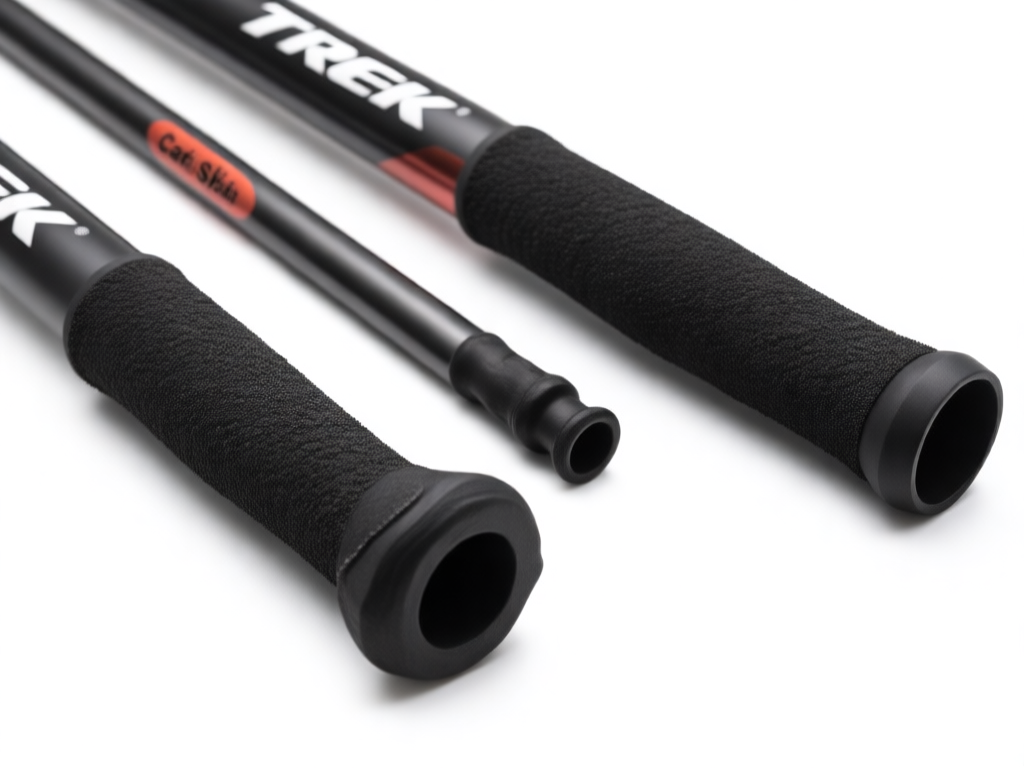
In the rugged world of outdoor exploration, trekking poles are indispensable for stability and endurance. The grip’s performance hinges on the carbon tube’s outer wall treatment, specifically the rough anti-slip surface that ensures a secure hold in diverse conditions. This article delves into the engineering behind rough anti-slip carbon tube outer wall treatments, their manufacturing processes, and their critical role in enhancing trekking pole grips.
## The Importance of Anti-Slip Treatment on Carbon Tubes
Carbon fiber tubes are favored for their exceptional strength-to-weight ratio, but their naturally smooth surface can be perilous when wet or muddy. A rough anti-slip treatment transforms the outer wall into a textured landscape that grips back, providing safety and confidence on treacherous trails. Without such treatment, even the most ergonomic grip would fail under stress.
### How Roughness Enhances Grip
The roughness increases friction between the hand (or grip material) and the tube, especially when moisture is present. Microscopic peaks and valleys channel water away, allowing direct contact and preventing hydroplaning. This is crucial for trekking poles, where a slip can lead to injury.
## Manufacturing Techniques for Rough Anti-Slip Carbon Tube Outer Walls
Creating a durable rough surface on carbon tubes involves specialized processes that must not compromise the tube’s structural integrity. Common methods include:
### 1. Grit Blasting
Fine particles (e.g., aluminum oxide) are propelled at high velocity onto the carbon tube’s surface, etching it to create a uniform roughness. This method is precise but requires careful control to avoid damaging fibers.
### 2. Chemical Etching
Controlled chemical exposure (e.g., using acids) selectively removes resin from the surface, exposing carbon fibers and creating a textured profile. This technique is ideal for complex geometries but demands stringent safety and waste management.
### 3. Abrasive Coating Application
A resin-based coating embedded with hard particles (e.g., silica or ceramic) is applied to the tube. Once cured, it forms a rugged, anti-slip layer. This method offers excellent durability and can be tailored for specific grip requirements.
### 4. Mechanical Texturing
Using CNC machining or laser ablation, patterns are carved directly into the tube’s surface. This approach provides consistent texture and can be customized for branding or ergonomic needs.
## Design Considerations for Trekking Pole Grips
When integrating rough anti-slip carbon tubes into trekking pole grips, several factors must be balanced:
– **Texture Depth and Pattern:** Too rough can cause discomfort or glove wear; too smooth defeats the purpose. Optimal depth ranges from 20 to 100 microns.
– **Material Compatibility:** The treatment must bond well with the grip material (e.g., EVA foam, rubber, cork) to prevent delamination.
– **Weight Impact:** The treatment should add minimal weight, preserving the pole’s lightweight advantage.
– **Durability:** The rough surface must withstand abrasion from rocks, dirt, and repeated use without degrading.
– **Environmental Resistance:** It should not corrode or degrade under UV exposure, moisture, or temperature fluctuations.
## Testing and Quality Assurance
Manufacturers employ rigorous tests to ensure the anti-slip treatment meets performance standards:
– **Coefficient of Friction (COF) Testing:** Measures slip resistance under dry, wet, and oily conditions.
– **Abrasion Testing:** Simulates wear using Taber or similar testers to assess longevity.
– **Adhesion Testing:** Ensures the treatment remains bonded to the carbon tube.
– **Field Testing:** Real-world trials by athletes and outdoor enthusiasts validate performance.
## Benefits of Rough Anti-Slip Carbon Tube Outer Walls
– **Enhanced Safety:** Reduces the risk of pole slippage, especially on wet or loose terrain.
– **Improved Comfort:** Allows for a lighter grip force, reducing hand fatigue.
– **Extended Product Life:** Durable treatment resists wear, maintaining performance over time.
– **Customization:** Textures can be tailored for different grip styles and user preferences.
## Conclusion
The rough anti-slip carbon tube outer wall treatment is a cornerstone of high-performance trekking pole grips. By combining advanced manufacturing techniques with thoughtful design, manufacturers can deliver poles that offer superior traction, safety, and durability. As outdoor enthusiasts demand more from their gear, innovations in surface treatment will continue to push the boundaries of what’s possible.
For businesses seeking to elevate their trekking pole offerings, investing in quality anti-slip treatments is not just an option—it’s a necessity. With the right technology and testing, carbon tubes can be transformed into reliable, slip-resistant companions for every adventure.