
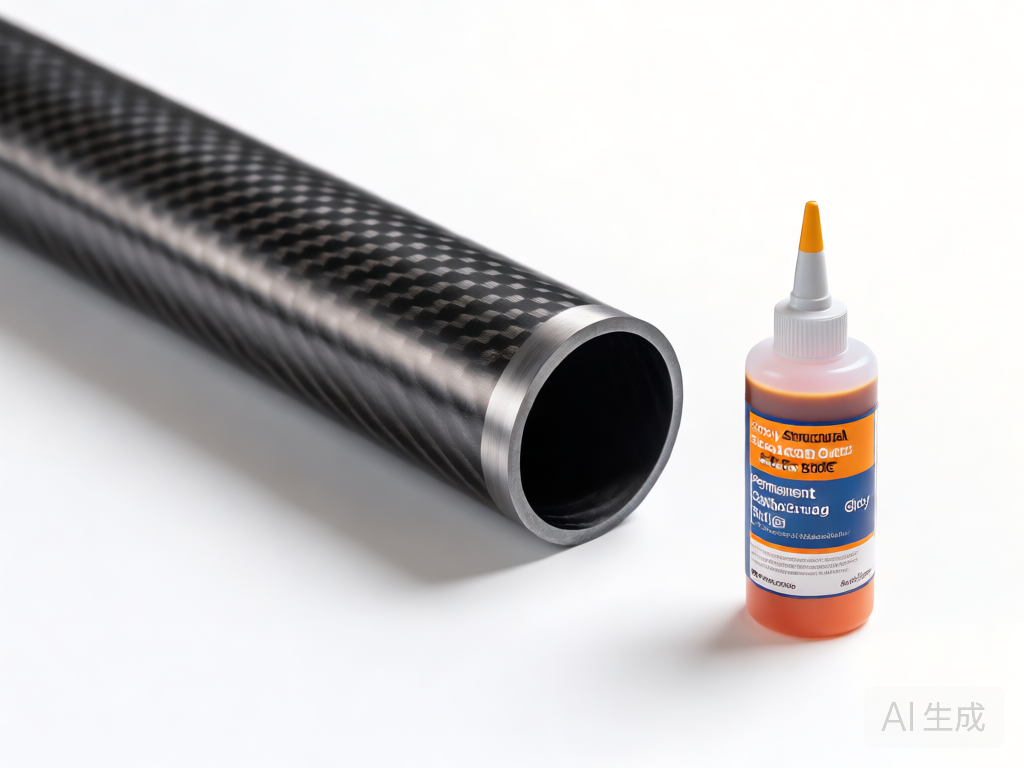
# Epoxy Structural Glue Selection Guide for Permanent Carbon Tube Assembly
## Introduction
Carbon fiber reinforced polymer (CFRP) tubes are increasingly used in aerospace, automotive, sports equipment, and industrial machinery due to their exceptional strength-to-weight ratio. However, assembling carbon tubes permanently requires a structural adhesive that can handle the unique challenges of bonding composites. Epoxy adhesives are the go-to choice for such applications, but not all epoxies are created equal. This guide provides a comprehensive framework for selecting the right epoxy structural glue for permanent carbon tube assembly, ensuring durable, high-strength joints that withstand demanding environments.
## Why Epoxy for Carbon Tube Bonding?
Epoxy adhesives offer superior adhesion to carbon fiber composites, excellent mechanical strength, and resistance to environmental factors. Unlike welding or mechanical fastening, adhesive bonding distributes stress uniformly, avoids damaging the carbon fibers, and eliminates galvanic corrosion. For permanent assemblies, epoxy creates a continuous bond that can match the performance of the substrates themselves.
## Key Selection Criteria
### 1. Mechanical Strength Requirements
The adhesive must have high shear and peel strength to handle static and dynamic loads. Look for tensile shear strength values above 20 MPa (2900 psi) for structural applications. For critical joints, consider toughened epoxies that provide high impact resistance and fatigue durability.
### 2. Substrate Compatibility
Carbon tubes are often bonded to metallic inserts (aluminum, titanium, steel) or other composite parts. The epoxy must adhere well to both carbon and the mating material. Surface preparation is crucial: abrade and clean carbon surfaces, and use primers or coupling agents for metals.
### 3. Cure Profile
Choose between room-temperature cure, heat-cure, or UV-cure epoxies based on production constraints and part size. Heat-cured epoxies generally offer higher strength and better chemical resistance, but require ovens or heating blankets. Room-temperature cure (e.g., 24-72 hours) is convenient for large assemblies but may have lower performance.
### 4. Environmental Resistance
Consider exposure to moisture, temperature extremes, chemicals, and UV radiation. For outdoor or high-humidity applications, select epoxies with low water absorption and hydrolytic stability. Aerospace-grade epoxies often meet stringent specifications like ASTM D1002 and D3163.
### 5. Working Time and Viscosity
Gap-filling capabilities are essential for carbon tube joints, which may have tolerances. Thixotropic pastes prevent sagging on vertical surfaces, while low-viscosity liquids penetrate tight gaps. Working time (pot life) must align with assembly complexity.
### 6. Thermal Expansion Mismatch
Carbon fiber has low coefficient of thermal expansion (CTE), while metals have higher CTE. The adhesive should be flexible enough to accommodate differential expansion without cracking. Toughened epoxies with elongation at break >5% are recommended.
## Types of Epoxy Structural Adhesives
### Two-Part Epoxies
– **Standard two-part:** High strength, room-temperature cure, good for general assembly.
– **Toughened two-part:** Added rubber or thermoplastic modifiers for impact resistance.
– **High-temperature two-part:** For elevated temperature service (up to 150°C+).
### One-Part Epoxies
– **Heat-cure one-part:** Require elevated temperatures (120-180°C) for curing; offer highest performance and storage stability.
– **Film adhesives:** Supported films for precise bondline control, often used in aerospace.
### Specialty Epoxies
– **Flexible epoxies:** For joints requiring vibration damping.
– **Conductive epoxies:** For EMI shielding or grounding.
– **Fast-cure epoxies:** For rapid assembly, but often lower strength.
## Surface Preparation for Carbon Tubes
Proper surface preparation is critical for permanent bonds:
1. **Abrasion:** Lightly sand with 220-400 grit to remove release agents and create a mechanical key.
2. **Cleaning:** Wipe with acetone or isopropyl alcohol to remove dust and oils.
3. **Priming:** For metal inserts, apply a silane coupling agent or epoxy primer.
4. **Surface treatment:** Plasma or corona treatment can enhance adhesion for critical applications.
## Application Techniques
– **Mixing:** Use precise ratios; automated mixing systems reduce errors.
– **Application:** Apply adhesive to both surfaces, ensuring uniform coverage. Avoid air entrapment.
– **Assembly:** Join parts within working time; apply pressure to achieve desired bondline thickness (0.1-0.5 mm).
– **Curing:** Follow manufacturer’s schedule; post-cure can improve properties.
## Quality Control and Testing
For permanent assemblies, validate the bond with:
– **Destructive tests:** Lap shear (ASTM D1002), peel (ASTM D903), and tensile tests on coupons.
– **Non-destructive tests:** Ultrasonic inspection, tap testing, or acoustic emission.
– **Environmental conditioning:** Humidity, thermal cycling, and salt spray to simulate service conditions.
## Common Pitfalls to Avoid
– Using general-purpose epoxy instead of structural grade.
– Inadequate surface preparation.
– Incorrect mix ratio or incomplete cure.
– Ignoring CTE mismatch.
– Overlooking environmental factors.
## Conclusion
Selecting the right epoxy structural glue for permanent carbon tube assembly is a critical engineering decision. By considering mechanical requirements, environmental exposure, cure profile, and substrate compatibility, you can achieve durable, high-performance bonds. Always consult adhesive manufacturers for specific recommendations and conduct thorough testing to ensure reliability in your application. With the right epoxy, carbon tube assemblies can deliver exceptional performance for years.