
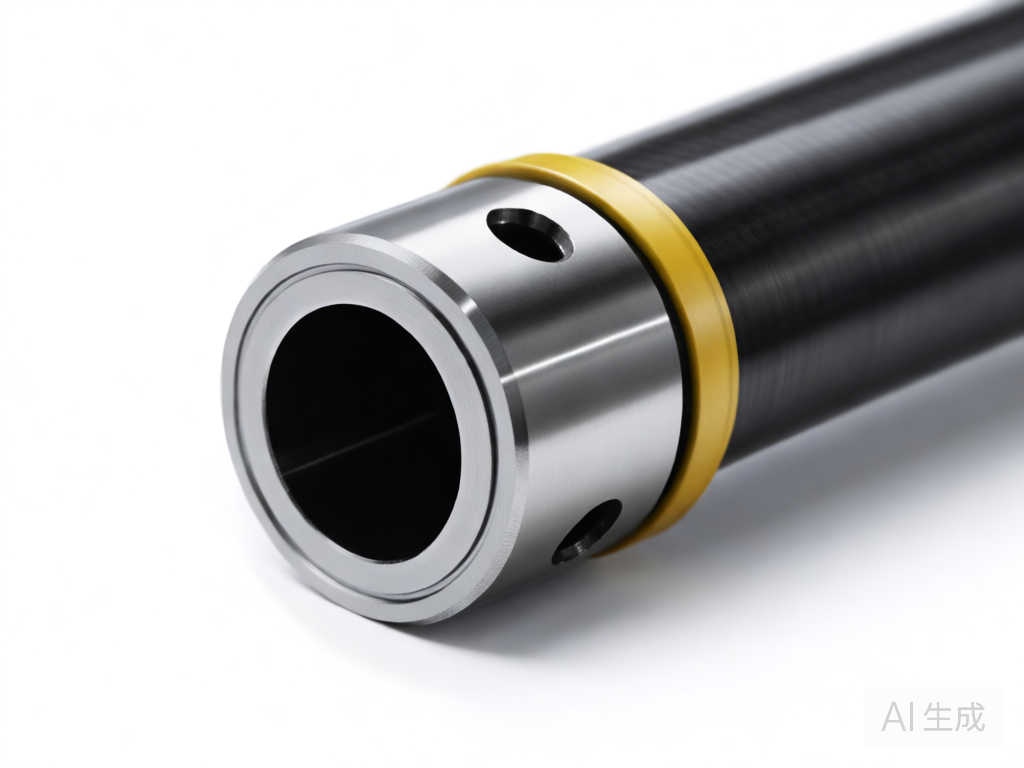
# Composite Carbon Tube Metal Embedded Part Precise Matching Machining Standards
Composite carbon tubes are increasingly used in aerospace, automotive, and high-performance sporting goods due to their exceptional strength-to-weight ratio. However, integrating metal embedded parts into these tubes requires precise matching to ensure structural integrity and performance. This article outlines the machining standards necessary for achieving precise matching between composite carbon tubes and metal embedded parts.
## Understanding the Importance of Precise Matching
Composite carbon tubes are anisotropic, meaning their properties vary with direction. Metal embedded parts, such as inserts, fittings, or fasteners, must be machined to exact tolerances to avoid stress concentrations, delamination, or galvanic corrosion. Precise matching ensures load transfer efficiency and prolongs the service life of the assembly.
## Key Machining Standards for Metal Embedded Parts
### Dimensional Tolerances
Metal embedded parts must be machined to tolerances typically within ±0.01 mm to ±0.05 mm, depending on the application. The mating surfaces should have a surface roughness (Ra) of 0.4 µm to 1.6 µm to ensure proper fit and adhesion. For critical applications, such as aerospace, tolerances may be as tight as ±0.005 mm.
### Material Selection
Common materials for embedded parts include stainless steel, titanium, and aluminum alloys. The choice depends on the composite matrix and environmental conditions. For carbon fiber composites, titanium or stainless steel is preferred to minimize galvanic corrosion. Aluminum should be avoided unless properly insulated.
### Surface Preparation
Before bonding or mechanical fastening, metal surfaces must be cleaned and treated. Abrasive blasting, anodizing, or primer application enhances adhesion. The surface should be free of oils, oxides, and contaminants. For adhesive bonding, a primer such as silane coupling agent is often used.
### Machining Processes
CNC machining is the standard for producing metal embedded parts with high precision. Processes include turning, milling, drilling, and grinding. For complex geometries, electrical discharge machining (EDM) may be employed. The machining must account for thermal expansion differences between metal and composite.
### Assembly and Fit
Embedded parts can be integrated during layup or post-cured. For co-cured or co-bonded assemblies, the metal part must be designed with features like knurling or flanges to mechanically interlock with the composite. For post-machined holes, clearance fits should be avoided; instead, interference fits or adhesive bonding is recommended.
## Quality Control and Inspection
Inspection of embedded parts includes dimensional verification using CMMs, surface roughness testers, and non-destructive testing (NDT) methods like ultrasonic inspection to detect voids or disbonds. Statistical process control (SPC) ensures consistency.
## Conclusion
Precise matching of metal embedded parts in composite carbon tubes is critical for performance and reliability. Adhering to strict machining standards, material selection, and quality control measures ensures successful integration. As composite applications grow, these standards will continue to evolve to meet demanding requirements.