
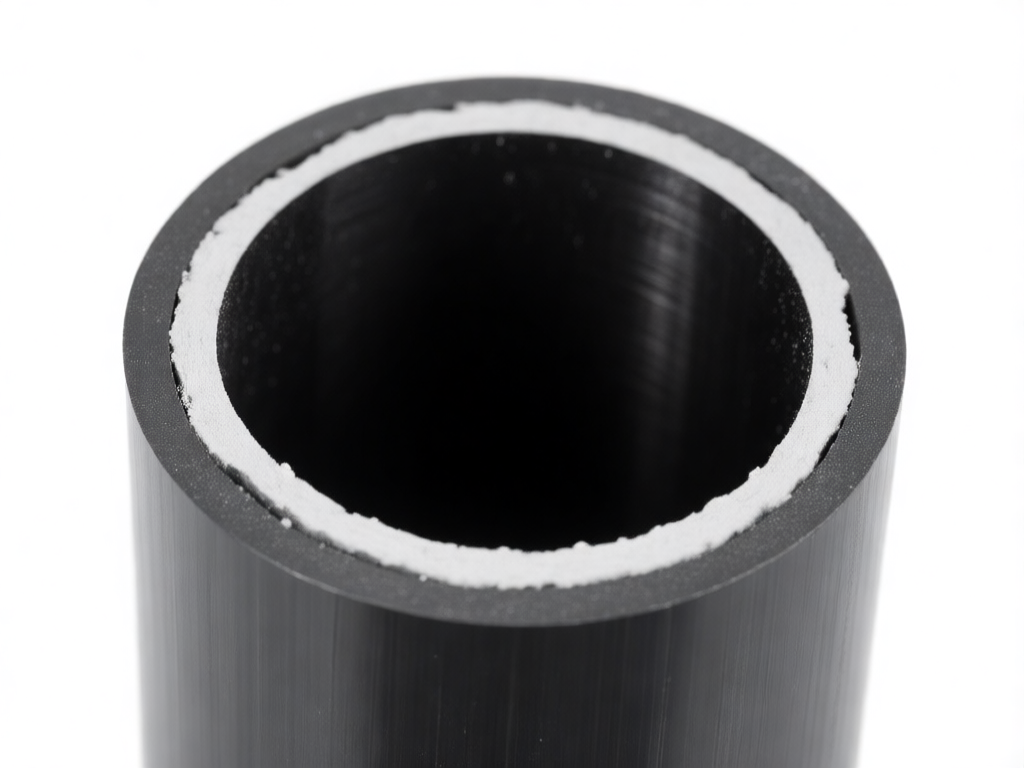
# Hollow Carbon Tube Inner Wall Deburring Process Without Scratching Resin Layer
## Introduction
Hollow carbon tubes are critical components in aerospace, automotive, and high-performance sporting goods, where a resin layer often coats the inner wall to enhance chemical resistance, electrical insulation, or bonding. Deburring the inner wall without scratching this resin layer is a precise challenge. Traditional mechanical methods risk damaging the soft resin, leading to delamination or failure. This article explores specialized deburring processes that effectively remove burrs while preserving the integrity of the resin layer.
## Understanding the Challenge
### The Nature of Burrs in Hollow Carbon Tubes
Burrs are small, unwanted protrusions of material left after machining, drilling, or cutting carbon fiber-reinforced polymer (CFRP) tubes. In hollow carbon tubes, burrs often form on the inner wall during mandrel removal or secondary operations. These burrs can impede fluid flow, cause wear, or create stress concentrations.
### The Delicate Resin Layer
The resin layer, typically epoxy or phenolic, is softer than the carbon fibers. It provides a smooth, protective barrier. Mechanical deburring tools like drills or reamers can easily scratch or gouge this layer, compromising its function. Therefore, the deburring process must be selective—removing only the burrs without touching the resin.
## Non-Contact Deburring Methods
### Thermal Deburring (TEM)
Thermal energy method (TEM) uses a controlled explosion of gas to burn off burrs. The process is quick and reaches all areas, but the high temperature can degrade the resin layer if not precisely controlled. It is suitable for carbon tubes with high-temperature-resistant resins.
### Electrochemical Deburring (ECD)
Electrochemical deburring removes burrs by anodic dissolution. The workpiece is immersed in an electrolyte, and a cathodic tool is positioned near the burrs. When current is applied, the burrs dissolve preferentially. ECD is effective for internal features and does not induce mechanical stress. However, the electrolyte must be compatible with the resin to avoid chemical attack.
### Abrasive Flow Machining (AFM)
Abrasive flow machining forces a viscoelastic abrasive media through the tube. The media flows over burrs, abrading them away. By adjusting media viscosity and pressure, the process can be tuned to remove burrs without scratching the resin. AFM is ideal for complex internal geometries and can achieve uniform results.
## Mechanical Deburring with Controlled Parameters
### Flexible Honing Tools
Flexible honing tools consist of abrasive globules on flexible filaments. When rotated inside the tube, they conform to the inner wall and deburr without removing base material. The key is to select the right abrasive size and apply minimal pressure to avoid scratching the resin.
### Micro-Blasting
Micro-blasting uses a fine abrasive stream directed at the burrs. By masking the resin layer or using a precisely focused nozzle, the abrasive impacts only the burrs. This method requires skilled operation to prevent overspray onto the resin.
## Process Optimization and Quality Control
### Parameter Selection
Critical parameters include abrasive size, pressure, duration, and tool speed. For resin-coated tubes, lower pressures and finer abrasives are preferred. Trials should be conducted to establish a window that removes burrs while leaving the resin intact.
### Inspection Techniques
After deburring, inspection is essential. Borescopes with high magnification can visually inspect the inner wall for burrs and scratches. Non-destructive methods like eddy current testing can detect resin layer damage. Regular inspection ensures process consistency.
## Case Study: Aerospace Fuel Line
A manufacturer of aerospace fuel lines faced burrs on the inner wall of carbon tubes coated with a resin layer. Mechanical deburring caused scratches, leading to fuel leaks. By switching to abrasive flow machining with a low-viscosity media, they achieved burr-free surfaces without damaging the resin. The process was validated through pressure testing and microscopic inspection.
## Conclusion
Deburring the inner wall of hollow carbon tubes without scratching the resin layer requires a careful selection of non-contact or controlled mechanical methods. Thermal, electrochemical, and abrasive flow machining offer viable solutions, each with specific advantages and limitations. By optimizing parameters and implementing rigorous quality control, manufacturers can ensure clean inner walls and preserve the critical resin layer, extending the service life of carbon tubes in demanding applications.
## Key Takeaways
– Non-contact methods like ECD and AFM minimize risk to the resin layer.
– Mechanical methods can be safe with flexible tools and precise control.
– Parameter optimization and inspection are crucial for success.
– The choice of method depends on resin type, burr size, and production volume.