
## Introduction
Carbon tubes are widely used in aerospace, automotive, sports equipment, and industrial machinery due to their high strength-to-weight ratio. After cutting carbon tubes to length, the cut edges and surfaces often have rough areas, burrs, and resin-rich zones that can compromise performance and appearance. Proper grinding and polishing are essential to achieve dimensional accuracy, smooth surface finish, and structural integrity. This article outlines the step-by-step process for grinding and polishing carbon tube surfaces after cutting.
## Why Grinding and Polishing Are Necessary After Cutting
Cutting processes such as sawing, milling, or abrasive waterjet cutting leave the carbon tube with rough edges, micro-cracks, and exposed fibers. These defects can lead to delamination, reduced fatigue life, and poor bonding in assemblies. Grinding and polishing remove damaged material, create a uniform surface, and prepare the tube for coating, bonding, or final use.
## Step 1: Inspection and Preparation
Before grinding, inspect the cut carbon tube for any visible defects such as cracks, delamination, or excessive burrs. Clean the surface with a lint-free cloth and a suitable solvent (e.g., isopropyl alcohol) to remove dust, oil, and contaminants. This step ensures that grinding debris does not get embedded into the surface.
## Step 2: Rough Grinding
Use a coarse abrasive (e.g., 80-120 grit) to remove large burrs and level the cut edge. A belt grinder or angle grinder with a diamond or silicon carbide wheel is recommended. Hold the tube securely and apply light, consistent pressure to avoid overheating. Overheating can burn the resin matrix, causing discoloration and weakening the tube. Move the tool along the edge in one direction to prevent fiber tear-out.
### 2.1 Edge Chamfering
After rough grinding, chamfer the cut edge to a 45-degree angle or a radius as specified. This reduces stress concentration and prevents injury during handling. Use a fine file or a chamfering tool for precision.
## Step 3: Intermediate Grinding
Switch to a medium grit (e.g., 180-320) to refine the surface and remove scratches left by the coarse abrasive. Use a random orbital sander or a drum sander with a diamond abrasive. Keep the tool moving to avoid creating flat spots. For cylindrical tubes, a lathe with abrasive paper can provide uniform material removal.
## Step 4: Fine Grinding
Fine grinding with 400-600 grit abrasive prepares the surface for polishing. At this stage, the surface should appear smooth and uniform. Use water or a lubricant to reduce dust and heat. Inspect the surface under good lighting to ensure all previous scratches are removed.
## Step 5: Polishing
Polishing is carried out in multiple stages, starting with a medium polish and progressing to a high-gloss finish.
### 5.1 Medium Polishing
Use a polishing compound with a grit equivalent of 800-1200. Apply the compound to a soft cloth or buffing wheel and work it into the surface with moderate pressure. Keep the wheel moving to avoid heat buildup. This step removes fine scratches and brings out the natural luster of the carbon fiber.
### 5.2 Final Polishing
For a mirror-like finish, use a fine polishing compound (e.g., 2000-3000 grit equivalent) and a clean, soft buffing pad. Work at low speed to prevent burning the resin. Wipe the surface clean with a soft cloth to remove any residue.
## Step 6: Cleaning and Inspection
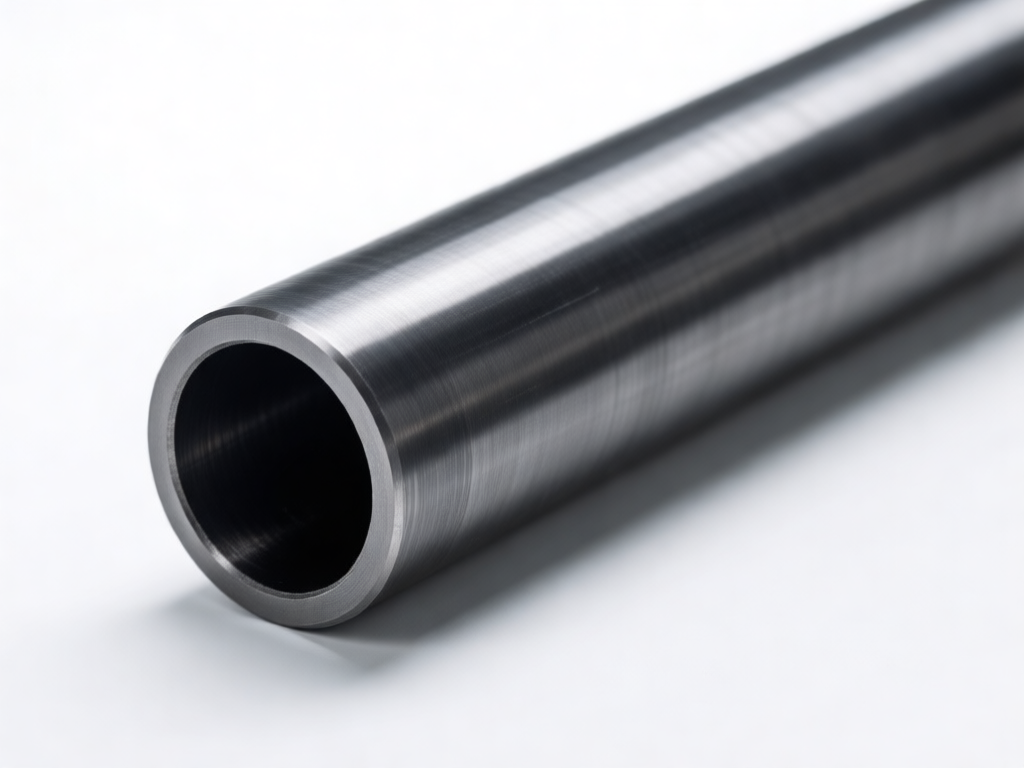
After polishing, clean the carbon tube with a mild solvent to remove polishing compound residue. Inspect the surface for any remaining scratches, pits, or burn marks. A properly polished carbon tube should have a uniform, glossy appearance with no visible defects.
## Step 7: Protective Coating (Optional)
To maintain the polished finish and protect against environmental degradation, apply a clear coat or a thin layer of epoxy resin. This step is optional but recommended for tubes exposed to UV light or harsh conditions.
## Safety Precautions
Carbon fiber dust is hazardous when inhaled. Always wear a NIOSH-approved respirator, safety glasses, and gloves. Work in a well-ventilated area or use a dust extraction system. Avoid using compressed air to clean dust, as it can spread fibers into the air.
## Conclusion
Grinding and polishing carbon tubes after cutting is a critical process that ensures dimensional accuracy, surface quality, and structural reliability. By following the steps outlined—inspection, rough grinding, intermediate grinding, fine grinding, polishing, and cleaning—you can achieve a professional finish that enhances the performance and lifespan of carbon fiber components. Always prioritize safety and use the appropriate tools and abrasives for each stage.