
## Introduction
Carbon fiber reinforced polymer (CFRP) tubes are widely used in aerospace, automotive, and sports equipment due to their high strength-to-weight ratio. However, machining these tubes often leads to a critical defect: end delamination. This occurs when the layers of carbon fiber separate at the cut edge, compromising structural integrity and fatigue life. Preventing delamination requires precise control of cutting parameters. This article provides a comprehensive guide to optimizing cutting parameters to achieve clean, delamination-free cuts in carbon tubes.
## Understanding End Delamination in Carbon Tubes
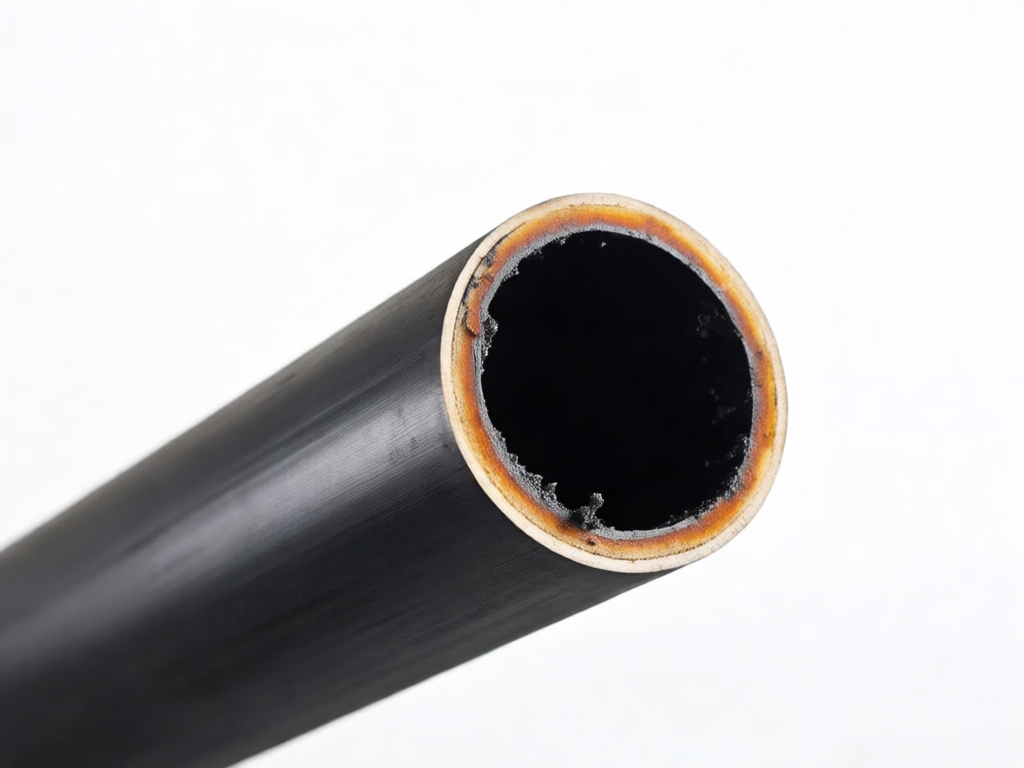
Delamination is the separation of adjacent plies in a composite laminate. At the tube end, it manifests as fraying, uncut fibers, or interlaminar cracks. The primary causes include excessive cutting forces, inadequate support, and improper tool geometry. When cutting parameters are not optimized, the tool pushes fibers instead of shearing them, leading to push-out delamination at the exit side and peel-up at the entry side.
## Key Cutting Parameters Affecting Delamination
### Cutting Speed (Spindle Speed)
Cutting speed significantly influences delamination. Higher speeds generally reduce cutting forces and improve surface finish, but excessive speeds can cause thermal damage to the resin matrix. For CFRP tubes, a spindle speed range of 3000–6000 RPM is often recommended, depending on tool diameter and material thickness. Always conduct trials to find the optimal speed for your specific tube.
### Feed Rate
Feed rate determines the chip load and cutting force. A low feed rate may cause rubbing and heat buildup, while a high feed rate increases thrust force, leading to delamination. The ideal feed rate balances productivity and quality. For carbon tubes, a feed rate of 0.05–0.15 mm/rev is typical. Use a constant feed rate to avoid sudden force spikes.
### Depth of Cut
Depth of cut (DOC) affects the mechanical load on the composite. A large DOC increases cutting forces and the risk of delamination. It is advisable to use multiple shallow passes rather than a single deep cut. For precision cutting, radial DOC should not exceed 0.5 mm, and axial DOC should be limited to 1–2 mm.
### Tool Geometry and Material
Tool geometry plays a vital role. Sharp cutting edges with a high rake angle reduce cutting forces. Diamond-coated or polycrystalline diamond (PCD) tools are preferred for their wear resistance and ability to maintain sharpness. A tool with a small helix angle and a low point angle can minimize delamination. Additionally, tool wear must be monitored; dull tools increase forces and cause delamination.
### Coolant and Lubrication
Proper cooling reduces heat generation and helps flush away chips. However, conventional flood coolant may not be suitable for CFRP due to moisture absorption. Instead, use minimum quantity lubrication (MQL) or compressed air to control temperature and remove debris without contaminating the composite.
## Optimizing Cutting Parameters: A Step-by-Step Approach
1. **Select the right tool**: Use a diamond-coated or PCD end mill designed for composites.
2. **Set conservative initial parameters**: Start with moderate speed, low feed, and shallow DOC.
3. **Conduct trial cuts**: Machine test pieces and inspect for delamination using microscopy or dye penetrant.
4. **Adjust one parameter at a time**: Increase speed gradually until delamination appears, then back off by 10–20%.
5. **Optimize feed and DOC**: Increase feed rate to reduce rubbing, but monitor thrust force. Adjust DOC to minimize deflection.
6. **Validate and document**: Once optimal parameters are found, document them for repeatability.
## Advanced Techniques for Delamination-Free Cutting
– **Backup support**: Use a sacrificial backing plate (e.g., aluminum or phenolic) to support the tube exit side, reducing push-out delamination.
– **Helical milling**: This technique distributes cutting forces and reduces delamination, especially for large diameters.
– **Ultrasonic-assisted machining**: Applying ultrasonic vibration to the tool reduces cutting forces and improves surface quality.
– **Cryogenic cooling**: Using liquid nitrogen can embrittle the resin, making it easier to cut cleanly, but requires specialized equipment.
## Conclusion
Preventing end delamination in carbon tubes demands a systematic approach to cutting parameter optimization. By carefully controlling spindle speed, feed rate, depth of cut, tool geometry, and cooling, manufacturers can achieve clean cuts and maintain the structural integrity of CFRP components. Remember that each carbon tube may require tailored parameters based on its layup and resin system. Continuous monitoring and adjustment are key to success. Implementing these precision cutting strategies will enhance product quality, reduce scrap, and extend the service life of critical composite parts.