
## Introduction
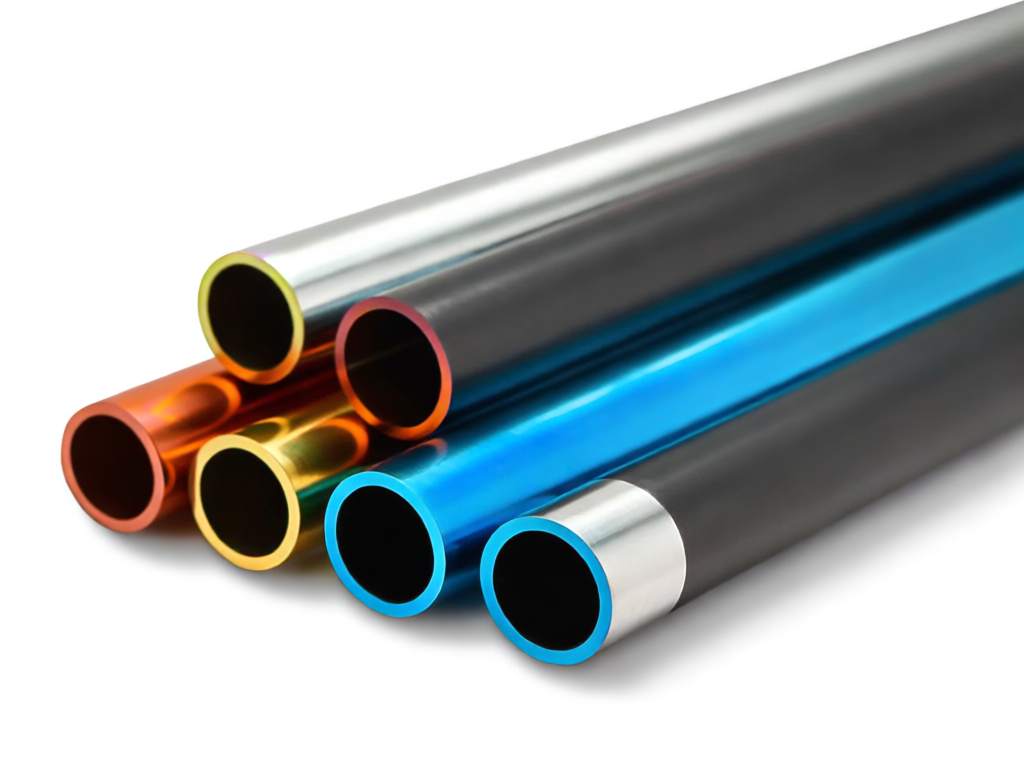
Carbon fiber tubes are renowned for their exceptional strength-to-weight ratio, making them indispensable in aerospace, automotive, sporting goods, and robotics. However, their characteristic black or dark gray appearance limits aesthetic versatility. Electroplating colored coatings onto carbon tubes not only enhances visual appeal but also adds a metallic layer that can improve surface hardness and corrosion resistance. This article details the industrial production process for electroplated colored carbon tubes and outlines rigorous color durability testing methods to ensure long-term performance.
## Production Process of Electroplated Colored Carbon Tubes
### 1. Surface Preparation
Before electroplating, the carbon tube surface must be meticulously prepared to ensure adhesion. The process begins with:
– **Degreasing**: Ultrasonic cleaning in alkaline solutions removes oils and contaminants.
– **Etching**: A mild acid etch (e.g., chromic-sulfuric acid) roughens the surface at a microscopic level, promoting mechanical interlocking.
– **Neutralization and Rinsing**: Residual acids are neutralized, followed by deionized water rinses.
### 2. Conductive Layer Deposition
Carbon fiber is electrically conductive, but its surface resistivity is often too high for uniform electroplating. Therefore, a thin conductive base layer is applied:
– **Electroless Nickel Plating**: A catalytic nickel layer (typically 0.5–2 µm) is deposited using a chemical reduction process. This layer ensures uniform current distribution during subsequent electroplating.
– **Alternative**: For higher conductivity, a silver or copper strike layer may be applied via physical vapor deposition (PVD) or electroless methods.
### 3. Electroplating of Color Coatings
The actual color is achieved by electroplating a metal that exhibits the desired hue, often followed by a clear protective topcoat. Common approaches include:
– **Decorative Chromium**: Produces a bright, silver-blue metallic finish.
– **Gold Plating**: Offers a rich yellow-gold color, often used for premium applications.
– **Black Nickel**: Provides a dark, elegant finish.
– **Colored Anodizing (on aluminum-coated tubes)**: If an aluminum layer is first electroplated, subsequent anodizing can introduce vibrant colors through dye absorption.
The electroplating bath composition (e.g., nickel sulfamate for nickel, gold cyanide for gold) and parameters (current density, temperature, pH) are tightly controlled to achieve uniform thickness and color consistency. Typical plating thickness ranges from 5 to 25 µm, depending on the metal and application.
### 4. Post-Treatment and Sealing
After electroplating, the tubes undergo:
– **Rinsing and Drying**: To remove any residual chemicals.
– **Sealing**: A clear lacquer or nano-ceramic sealant is applied to protect the colored layer from oxidation and abrasion. This step is critical for maintaining color vibrancy.
– **Curing**: The sealant is cured in an oven at controlled temperatures (e.g., 150°C for 30 minutes) to ensure full cross-linking.
## Color Durability Testing
Color durability is assessed through accelerated aging tests that simulate real-world exposure. The following tests are standard in the industry:
### 1. UV Resistance Test (ASTM G154)
Samples are exposed to cyclic UV radiation and condensation in a weathering chamber. Color change (ΔE) is measured using a spectrophotometer before and after exposure. A ΔE of less than 3 after 500 hours is typically acceptable for outdoor applications.
### 2. Salt Spray Test (ASTM B117)
To evaluate corrosion resistance, tubes are placed in a salt fog chamber for 24 to 200 hours. The appearance is inspected for blistering, pitting, or color fading. This test is crucial for marine or automotive environments.
### 3. Abrasion Resistance Test (Taber Abraser)
A rotating abrasive wheel applies controlled wear to the surface. The number of cycles until the color layer is visibly worn through is recorded. High-quality electroplated tubes should withstand at least 500 cycles with minimal color loss.
### 4. Adhesion Test (Cross-Cut Tape Test – ASTM D3359)
A lattice pattern is cut into the coating, and adhesive tape is applied and removed. The degree of peeling indicates adhesion strength. A rating of 4B or 5B is required for industrial acceptance.
### 5. Thermal Cycling Test
Tubes are subjected to repeated cycles from -40°C to +80°C for 100 cycles. This test checks for delamination or cracking due to differential thermal expansion between the carbon substrate and the metallic coating.
### 6. Chemical Resistance Test
Immersion in common chemicals (e.g., gasoline, brake fluid, cleaning agents) for specified durations helps ensure the color does not degrade or dissolve.
## Conclusion
The production of electroplated colored carbon tubes is a multi-step process that demands precision in surface preparation, conductive layer deposition, and electroplating. The resulting products combine the mechanical advantages of carbon fiber with the aesthetic and protective benefits of metallic coatings. However, the longevity of the color depends on robust post-treatment and rigorous durability testing. By adhering to standardized tests for UV, salt spray, abrasion, adhesion, thermal cycling, and chemical resistance, manufacturers can deliver electroplated colored carbon tubes that maintain their appearance and performance over years of service. As industries increasingly seek customized visual identities without compromising functionality, these processes and testing protocols will remain essential to quality assurance.