
## Introduction
Carbon fiber tubes are widely used in industries ranging from aerospace to sporting goods due to their high strength-to-weight ratio and stiffness. However, beyond mechanical properties, the surface finish—matte or glossy—plays a critical role in performance, durability, and aesthetics. This article explores the manufacturing processes, physical differences, and practical applications of matte and glossy carbon fiber tubes, helping engineers and product designers make informed choices.
## Surface Craft: How Matte and Glossy Finishes Are Achieved
### Glossy Finish: High-Gloss Coating and Polishing
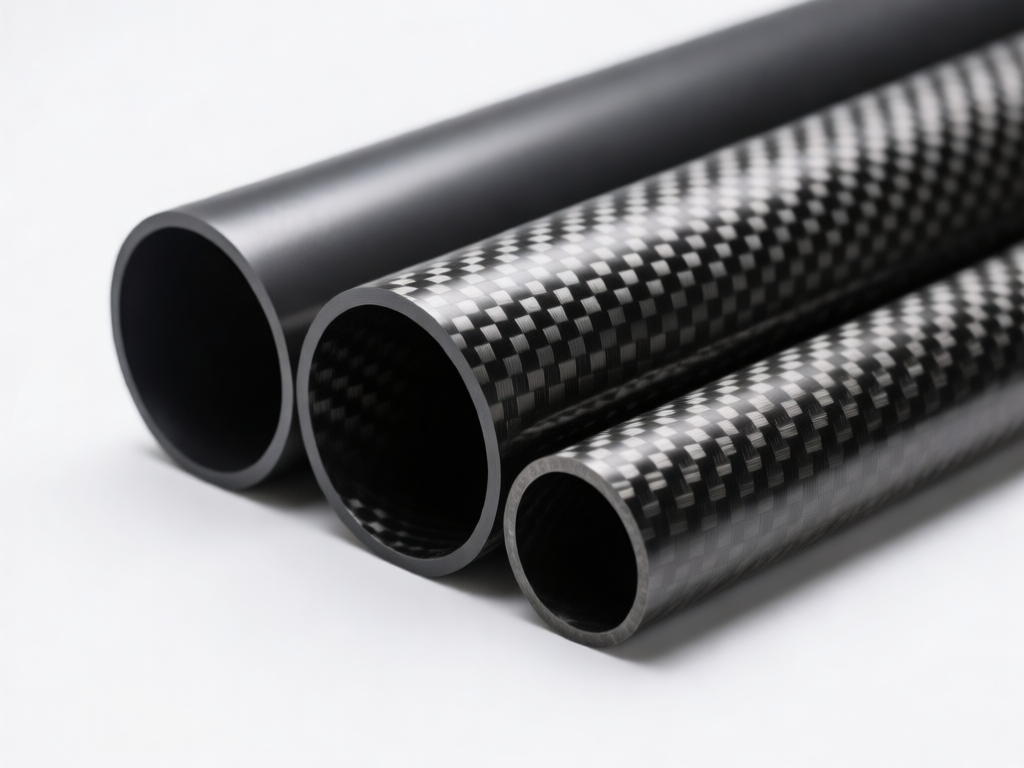
Glossy carbon fiber tubes are produced by applying a clear coat (usually polyurethane or epoxy) over the raw carbon fiber weave, followed by multiple polishing stages. The surface is sanded with progressively finer abrasives and then buffed to a mirror-like shine. This process fills micro-porosity and creates a smooth, reflective layer that enhances the visual depth of the weave.
### Matte Finish: Textured Coating or Sanding
Matte tubes are typically finished with a low-gloss clear coat that contains flattening agents, or by lightly sanding the glossy surface to diffuse light. The result is a non-reflective, slightly textured surface that reduces glare. Some manufacturers use a matte film or spray coating that also adds a subtle grip.
## Physical and Performance Differences
### Aesthetic and Light Reflection
Glossy tubes offer a high-end, wet-look appearance with pronounced weave patterns, often preferred in luxury automotive and consumer electronics. Matte tubes provide a stealthy, understated look that minimizes fingerprints and smudges, making them popular in professional sports and tactical equipment.
### Scratch and Abrasion Resistance
Glossy surfaces are more prone to visible scratches and micro-cracks because the clear coat is softer and more susceptible to marring. Matte finishes, due to their textured nature, hide minor abrasions better and are less likely to show wear over time.
### UV and Chemical Resistance
Both finishes use UV-stabilized clear coats, but glossy coatings tend to be thicker and more resistant to chemical attack. Matte coatings can be more porous, making them slightly less resistant to solvents and prolonged sun exposure, which may lead to yellowing or chalking.
### Friction and Grip
Matte surfaces have a higher coefficient of friction, providing better grip for handles, grips, and components that are held or clamped. Glossy surfaces are slicker, which can be advantageous in applications where low friction is needed, such as in bearing surfaces or sliding mechanisms.
## Applicable Scenarios: Where Each Finish Excels
### Glossy Carbon Fiber Tubes in Aerospace and Automotive
In aerospace and high-performance automotive, glossy tubes are often used for visible structural components like drive shafts, roll bars, and interior trims. The smooth surface reduces aerodynamic drag and is easier to clean, while the high-gloss finish complements premium vehicle aesthetics.
### Matte Carbon Fiber Tubes in Sporting Goods and Robotics
Matte tubes are favored in bicycle frames, fishing rods, and camera rigs because they reduce glare and provide a secure grip even when wet. In robotics, matte finishes help prevent light reflection that could interfere with sensors, and the textured surface improves clamping in joints.
### Industrial and Marine Applications
For marine environments, glossy tubes are preferred for masts and spars due to their superior UV and saltwater resistance. In industrial machinery, matte tubes are used in conveyor systems and handrails where slip resistance and low maintenance are key.
## Conclusion
Choosing between matte and glossy carbon fiber tubes depends on the specific requirements of the application. Glossy finishes offer superior chemical resistance and a premium look, making them ideal for visible, high-end products. Matte finishes provide better grip, hide wear, and reduce glare, suiting functional and outdoor uses. By understanding the surface craft differences, engineers can optimize both performance and aesthetics for their projects.