
## Introduction
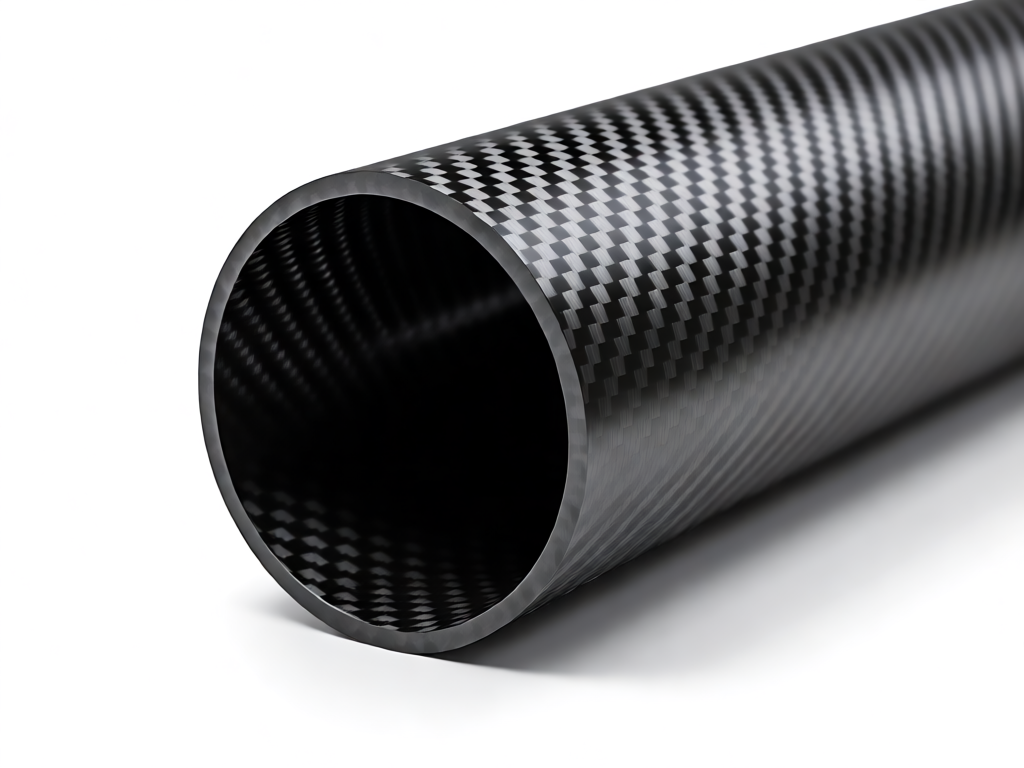
The relentless pursuit of lightweight, high-strength structural components has driven the evolution of composite materials. Among these, carbon fiber reinforced polymer (CFRP) tubes have long been celebrated for their exceptional specific strength and stiffness. However, no single material excels in every performance metric. Traditional carbon fiber tubes, while stiff and strong, often suffer from low impact resistance, poor energy absorption, and limited damping capacity. The latest frontier in composite engineering is the development of hybrid material systems that combine carbon fiber with other fibers, metals, or polymers to overcome these inherent limitations. This article explores how carbon fiber tube composite hybrid material innovation is breaking single performance limits, enabling a new generation of components tailored for demanding industrial applications.
## The Performance Ceiling of Pure Carbon Fiber Tubes
Pure carbon fiber tubes are anisotropic, meaning their properties are directionally dependent. They offer outstanding tensile strength and modulus along the fiber direction, but their transverse properties and interlaminar shear strength are comparatively weak. Additionally, carbon fibers are brittle, leading to sudden catastrophic failure under impact or overload. These characteristics create a performance ceiling: a tube optimized for axial stiffness may fail in bending or impact scenarios. The need to simultaneously satisfy conflicting requirements—such as high stiffness and high toughness—cannot be met by a single fiber system. This has prompted researchers and manufacturers to explore hybrid architectures that strategically combine different materials to achieve a balanced, multi-functional performance profile.
## Hybridization Strategies: Combining Fibers for Synergy
### Interlayer and Intralayer Hybrids
One of the most common approaches is fiber hybridization, where carbon fibers are combined with other high-performance fibers such as aramid (Kevlar), glass, or ultra-high molecular weight polyethylene (UHMWPE). In interlayer hybrids, layers of different fibers are stacked sequentially, while intralayer hybrids mix fibers within the same layer. These configurations allow designers to tailor the stress-strain response. For instance, adding aramid fibers to a carbon fiber tube improves impact resistance and energy absorption without significantly compromising stiffness. The aramid layers act as crack arrestors, preventing catastrophic failure by absorbing impact energy through plastic deformation and fibrillation.
### Metal-Carbon Hybrid Tubes
Another innovative route is the integration of metallic layers or inserts into carbon fiber tubes. For example, a thin aluminum or titanium sleeve can be co-cured with the carbon fiber laminate. This metal-carbon hybrid combines the lightweight stiffness of carbon fiber with the ductility and high energy dissipation of metals. Such tubes exhibit enhanced crush resistance and are particularly suited for automotive crash structures and aerospace energy-absorbing components. The metal layer also improves electrical conductivity and thermal management, which are often lacking in pure CFRP.
### Polymer Interleaving and Nanofiller Enhancement
At the micro-scale, the interlaminar region—the interface between plies—is a critical weak point. Hybrid innovation here involves interleaving thermoplastic polymer films or electrospun nanofiber veils between carbon fiber layers. These interlayers increase the fracture toughness and delamination resistance. Furthermore, incorporating nanofillers such as carbon nanotubes (CNTs) or graphene nanoplatelets into the matrix or onto the fiber surface enhances the interfacial bonding and provides additional multifunctionality, such as self-sensing capabilities.
## Breaking Specific Performance Limits
### Impact Resistance and Energy Absorption
Pure carbon fiber tubes have low impact tolerance. Hybridization with ductile fibers or metals dramatically improves their ability to absorb energy. For example, a carbon-aramid hybrid tube can absorb up to 50% more energy under axial crushing compared to an all-carbon tube, while maintaining a similar weight. This is critical in automotive crash management systems and protective structures.
### Damping and Vibration Control
Carbon fiber’s high stiffness often results in low damping, leading to undesirable vibrations in dynamic applications. By incorporating viscoelastic polymer layers or aramid fibers, hybrid tubes can achieve higher damping ratios. This is particularly valuable in robotics, aerospace control surfaces, and high-speed machinery where vibration suppression is essential for precision and longevity.
### Fatigue and Damage Tolerance
Hybrid systems can also enhance fatigue life. The presence of tougher fibers or metallic layers slows crack propagation and redistributes stress. This leads to a more gradual failure mode rather than sudden fracture, improving the safety and reliability of structural components over extended service life.
### Thermal and Electrical Properties
Carbon fiber tubes are poor electrical conductors in the transverse direction and have low thermal conductivity compared to metals. By integrating metallic meshes or conductive nanofillers, hybrid tubes can be engineered to dissipate heat and provide electromagnetic shielding, opening new applications in electronics housing and battery enclosures.
## Manufacturing and Design Considerations
### Co-Curing and Co-Bonding Processes
Hybrid tubes are typically manufactured using filament winding, pultrusion, or roll wrapping. Co-curing involves curing the entire hybrid stack in a single cycle, which reduces manufacturing time and cost. Co-bonding, where pre-cured metallic or thermoplastic components are bonded to the uncured carbon fiber layers, offers more design flexibility. Process parameters such as temperature, pressure, and cure cycle must be carefully optimized to avoid residual stresses and ensure proper adhesion between dissimilar materials.
### Interface Engineering
The interface between different materials is the most critical region. Poor adhesion can lead to premature failure. Surface treatments such as plasma etching, anodizing, or the application of coupling agents are used to enhance bonding. For metal-carbon interfaces, techniques like laser structuring or the use of adhesive films are common.
### Design Optimization Tools
Advanced finite element analysis (FEA) and machine learning algorithms are now used to optimize hybrid layup sequences and material combinations. These tools predict the mechanical response under various loading conditions, allowing engineers to virtually test numerous configurations before physical prototyping. This accelerates the development of hybrid tubes with tailored performance.
## Industrial Applications and Case Studies
### Aerospace and Defense
In aerospace, hybrid carbon-aramid tubes are used in helicopter landing gear and drive shafts, where high strength and impact resistance are required. The reduced weight contributes to fuel efficiency, while the enhanced damage tolerance ensures safety.
### Automotive and Motorsport
Formula 1 and high-performance sports cars employ hybrid carbon-metal tubes in roll cages and crash structures. These components must absorb immense energy during a crash while remaining lightweight. The metal layer provides a predictable crush mode, improving occupant protection.
### Robotics and Automation
Robotic arms and linear actuators benefit from hybrid tubes with high stiffness and damping. The reduced vibration allows for faster and more precise movements, increasing productivity in manufacturing lines.
### Renewable Energy
Wind turbine blades and tidal energy structures often use hybrid composite tubes for their spars. The combination of carbon and glass fibers balances cost and performance, while the improved fatigue resistance extends the operational life in harsh environmental conditions.
## Future Outlook and Challenges
Despite the significant advantages, hybrid carbon fiber tubes face challenges in cost, recyclability, and long-term durability. The integration of dissimilar materials complicates recycling processes. However, ongoing research into thermoplastic matrices and reversible bonding methods is addressing these issues. The development of smart hybrids with embedded sensors for structural health monitoring is another exciting avenue. As manufacturing techniques become more refined and cost-effective, hybrid carbon fiber tubes are poised to become the standard in high-performance engineering, breaking the single performance limits of conventional materials.
## Conclusion
Carbon fiber tube composite hybrid material innovation represents a paradigm shift in structural design. By strategically combining carbon fiber with other fibers, metals, and polymers, engineers can overcome the inherent limitations of pure CFRP. These hybrids offer a unique balance of stiffness, strength, toughness, damping, and multifunctionality, enabling applications that were previously impossible. As the industry continues to push the boundaries of material performance, hybrid carbon fiber tubes will play a pivotal role in the next generation of lightweight, resilient, and intelligent structures.