
## Introduction
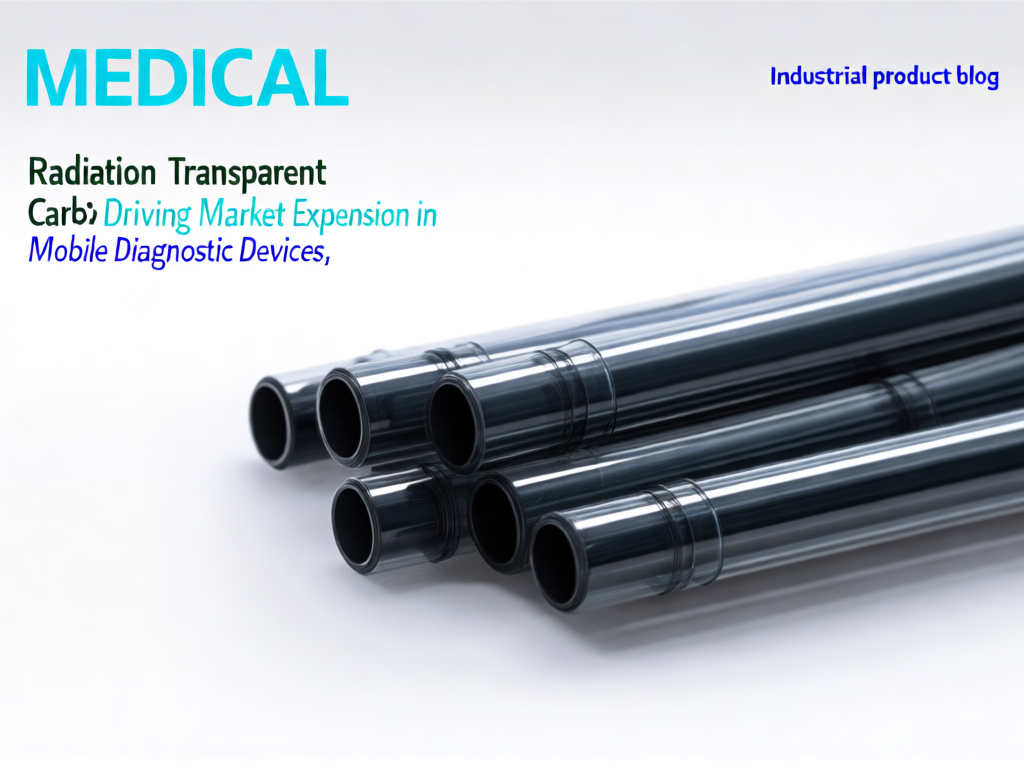
The global healthcare landscape is undergoing a paradigm shift toward point-of-care diagnostics and mobile imaging solutions. As hospitals and clinics strive for greater flexibility, the demand for lightweight, durable, and high-performance components has surged. Among these, medical grade radiation-transparent carbon tubes have emerged as a critical enabler for next-generation mobile diagnostic devices. These tubes, crafted from advanced carbon fiber composites, offer exceptional radiolucency, mechanical strength, and dimensional stability, making them indispensable for portable X-ray, CT, and fluoroscopy systems. This article explores the market expansion of these specialized carbon tubes, examining the technological drivers, clinical applications, and future growth opportunities within the mobile diagnostics sector.
## The Unique Value Proposition of Radiation-Transparent Carbon Tubes
Medical grade carbon tubes are engineered to meet stringent biocompatibility and imaging requirements. Unlike traditional metallic components, carbon fiber composites exhibit minimal X-ray attenuation, allowing radiation to pass through with negligible interference. This property is essential for imaging tables, support arms, and patient positioning devices that must not obstruct diagnostic views. Moreover, the high strength-to-weight ratio of carbon tubes enables the construction of lighter, more portable equipment without compromising structural integrity. These attributes directly address the core needs of mobile diagnostic devices, which require components that are both easy to transport and capable of delivering high-resolution images.
### Key Material Properties
– **Radiolucency:** Carbon fiber composites have an X-ray transmission rate exceeding 98%, ensuring clear imaging and reduced patient radiation dose.
– **Mechanical Strength:** Tensile strengths up to 3,500 MPa allow for thin-walled tubes that support significant loads while remaining lightweight.
– **Dimensional Stability:** Low thermal expansion coefficients ensure consistent performance across varying environmental conditions.
– **Biocompatibility:** Medical grade resins and surface treatments prevent adverse reactions during patient contact.
## Market Drivers for Mobile Diagnostic Devices
The expansion of the medical carbon tube market is closely tied to the broader growth of mobile diagnostics. Several factors are fueling this trend:
### 1. Rising Demand for Point-of-Care Imaging
With the increasing prevalence of chronic diseases and the need for rapid diagnosis, healthcare providers are adopting portable imaging systems for emergency rooms, intensive care units, and remote locations. Mobile X-ray machines and handheld ultrasound devices require components that are both portable and reliable. Carbon tubes enable the design of compact gantries and C-arms that can be easily maneuvered around patients, enhancing workflow efficiency.
### 2. Technological Advancements in Portable Imaging
Innovations in digital detectors and low-dose radiation technologies have made mobile devices more viable. However, these systems still rely on robust structural components to maintain alignment and stability. Radiation-transparent carbon tubes are now being integrated into the frames and columns of portable X-ray units, allowing for full articulation without compromising image quality.
### 3. Regulatory Emphasis on Patient Safety
Regulatory bodies worldwide are enforcing stricter radiation dose limits and requiring equipment to minimize patient exposure. Carbon tubes contribute to this by reducing scatter radiation and enabling the use of lower-energy X-ray beams. Their radiolucent nature also allows for more accurate positioning, reducing the need for repeat scans.
## Applications in Mobile Diagnostic Equipment
### Mobile X-Ray Systems
In mobile X-ray carts, carbon tubes are used for the vertical column and horizontal arm. These components must support the X-ray tube head while allowing precise positioning over the patient. The lightweight nature of carbon tubes reduces the force required to move the arm, making the system easier to operate for technicians. Additionally, the radiolucent properties ensure that the arm does not appear in the imaging field, even when extended over the patient.
### Portable CT Scanners
Portable CT scanners, such as those used in stroke units or operating rooms, require a gantry that can be tilted and rotated. Carbon tubes form the structural ring of the gantry, providing the necessary stiffness to maintain alignment of the X-ray source and detectors. Their low attenuation is critical because the gantry is in the direct path of the X-ray beam during scanning.
### C-Arm Fluoroscopy Systems
C-arm systems used in orthopedic and vascular procedures are becoming more mobile. The C-shaped arm, which holds the X-ray source and image intensifier, is now manufactured from carbon fiber composites. This allows for a larger imaging field and easier positioning around the patient. The radiolucent carbon tubes also enable the use of higher tube currents without overheating, as they dissipate heat effectively.
## Manufacturing and Quality Considerations
Producing medical grade carbon tubes requires specialized processes to ensure consistent quality and safety. Key considerations include:
– **Material Selection:** High-purity carbon fibers and medical-grade epoxy resins are essential to avoid contamination and ensure biocompatibility.
– **Fiber Orientation:** The alignment of carbon fibers is optimized to provide maximum strength in the direction of applied loads, often using a combination of unidirectional and woven layers.
– **Surface Finish:** Smooth, non-porous surfaces are necessary to prevent bacterial growth and facilitate cleaning with disinfectants.
– **Non-Destructive Testing:** Each tube undergoes ultrasonic or X-ray inspection to detect internal defects that could compromise performance.
Manufacturers must also comply with ISO 13485 and FDA regulations, ensuring traceability and rigorous testing of every batch.
## Challenges and Future Outlook
Despite the clear benefits, the market for medical grade carbon tubes faces challenges. The high cost of raw materials and complex manufacturing processes make these components more expensive than traditional metals. However, as production volumes increase and automation improves, costs are expected to decline. Additionally, the development of hybrid composites and recyclable resins may address environmental concerns.
Looking ahead, the integration of carbon tubes with smart sensors and IoT capabilities is a promising frontier. Embedded sensors could monitor structural health and provide real-time feedback on equipment usage, enhancing preventive maintenance. Furthermore, the rise of telemedicine and remote diagnostics will likely increase the demand for portable imaging devices, further driving the need for radiation-transparent carbon components.
## Conclusion
The expansion of medical grade radiation-transparent carbon tubes is intrinsically linked to the growth of mobile diagnostic devices. Their unique combination of radiolucency, strength, and lightweight properties makes them indispensable for modern portable imaging systems. As healthcare continues to evolve toward more accessible and efficient care, the adoption of these advanced materials will only accelerate. Manufacturers that invest in high-quality production and innovative designs will be well-positioned to capitalize on this expanding market, ultimately contributing to improved patient outcomes worldwide.