
## Introduction
The global manufacturing landscape is undergoing a profound transformation, driven by the twin engines of industrial automation and intelligent manufacturing. As factories evolve into smart facilities with robotic arms, automated guided vehicles (AGVs), and precision CNC machinery, the demand for advanced materials that can meet the rigorous performance requirements of these systems has skyrocketed. Among these materials, carbon fiber tubes have emerged as a critical component, offering an exceptional combination of high strength, low weight, and stiffness. This article explores the growing demand for carbon fiber tubes, examining how the rise of automation and intelligent manufacturing is reshaping the material landscape and creating new opportunities for manufacturers and engineers alike.
## The Role of Carbon Fiber Tubes in Modern Automation
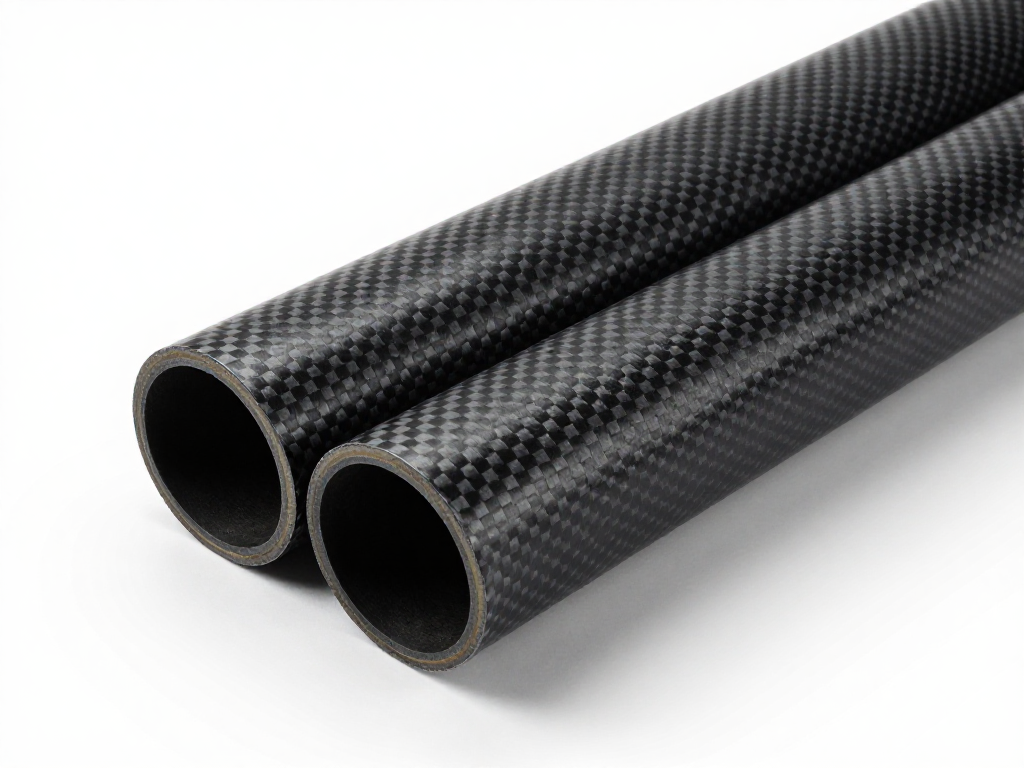
Carbon fiber tubes are cylindrical structures made from carbon fiber reinforced polymer (CFRP). They are renowned for their high specific strength and modulus, which means they are both strong and light. In the context of industrial automation, these properties are invaluable. Automated systems require components that can move quickly, precisely, and repeatedly without adding unnecessary mass. Carbon fiber tubes are now being used in a variety of automation applications, including:
– **Robotic Arms:** The arms of industrial robots must be rigid to maintain precision, yet lightweight to reduce inertia and energy consumption. Carbon fiber tubes provide the ideal solution, enabling faster cycle times and greater payload capacity.
– **Linear Motion Systems:** Guide rails, lead screws, and telescopic tubes in automated assembly lines benefit from carbon fiber’s low thermal expansion and high dimensional stability, ensuring consistent performance over long periods.
– **AGV and AMR Structures:** Automated guided vehicles and autonomous mobile robots use carbon fiber tubes in their frames and lifting mechanisms to reduce overall weight, thereby extending battery life and increasing maneuverability.
## Intelligent Manufacturing and the Need for Precision Materials
Intelligent manufacturing, also known as Industry 4.0, relies on the seamless integration of cyber-physical systems, the Internet of Things (IoT), and data analytics. In this environment, every component must not only perform its function but also contribute to the overall efficiency and reliability of the system. Carbon fiber tubes are uniquely suited to this paradigm for several reasons:
– **Dimensional Stability:** In precision manufacturing, even minor thermal expansion can lead to significant errors. Carbon fiber tubes have a near-zero coefficient of thermal expansion, making them ideal for applications where temperature fluctuations are common.
– **Vibration Damping:** Intelligent manufacturing often involves high-speed operations that generate vibrations. Carbon fiber’s natural damping properties reduce these vibrations, improving the accuracy of machining and measurement processes.
– **Fatigue Resistance:** Automated systems operate continuously, subjecting components to millions of load cycles. Carbon fiber tubes exhibit excellent fatigue resistance, ensuring long service life and reduced downtime.
## Key Industries Driving the Demand
Several key industries are at the forefront of adopting carbon fiber tubes in their automation and intelligent manufacturing initiatives:
### 1. Automotive Manufacturing
The automotive industry is a major consumer of carbon fiber tubes, particularly in the production of electric vehicles (EVs). Automated assembly lines for EVs use carbon fiber tubes in robotic welding and handling systems, as well as in the vehicles themselves for structural components. The push towards lightweighting to improve battery range is further accelerating the use of carbon fiber in automotive manufacturing.
### 2. Aerospace and Defense
Aerospace manufacturing is inherently precise and heavily automated. Carbon fiber tubes are used in the production of aircraft fuselage sections, wing spars, and control surfaces. In defense applications, they are found in unmanned aerial vehicles (UAVs) and missile guidance systems, where weight reduction is critical for performance.
### 3. Electronics and Semiconductor Manufacturing
The production of semiconductors and electronic components requires ultra-clean, vibration-free environments. Carbon fiber tubes are used in wafer handling robots and precision positioning stages, where their stiffness and thermal stability ensure the accuracy needed for micro-scale fabrication.
### 4. Medical Device Manufacturing
Automated production of medical devices, such as surgical robots and imaging equipment, relies on carbon fiber tubes for their radiolucency (transparency to X-rays) and strength. These tubes enable the creation of lightweight, durable instruments that can be precisely controlled by automated systems.
## Advantages of Carbon Fiber Tubes Over Traditional Materials
To understand the growing demand, it is essential to compare carbon fiber tubes with traditional materials like steel and aluminum:
– **Weight Reduction:** Carbon fiber is about 40% lighter than aluminum and 60% lighter than steel, yet it offers comparable or superior strength. This weight reduction directly translates to energy savings and increased speed in automated systems.
– **Higher Stiffness:** Carbon fiber tubes have a higher specific stiffness than steel, meaning they are less prone to bending under load. This property is crucial for maintaining precision in long-span applications.
– **Corrosion Resistance:** Unlike metals, carbon fiber does not corrode, making it suitable for harsh industrial environments where exposure to chemicals or moisture is common.
– **Design Flexibility:** Carbon fiber tubes can be manufactured in a wide range of diameters, wall thicknesses, and fiber orientations, allowing engineers to tailor the mechanical properties to specific applications.
## Manufacturing Processes for Carbon Fiber Tubes
The production of carbon fiber tubes has evolved to meet the growing demand. Several manufacturing processes are commonly used:
– **Pultrusion:** This continuous process produces constant cross-section tubes with high fiber volume fractions, offering excellent longitudinal strength. It is cost-effective for large volumes.
– **Filament Winding:** In this process, continuous carbon fiber tows are wound around a rotating mandrel in a precise pattern. This allows for optimization of hoop and axial strength, making it ideal for pressure vessels and structural tubes.
– **Roll Wrapping:** Pre-preg carbon fiber sheets are rolled around a mandrel and cured under heat and pressure. This method is versatile and produces tubes with excellent surface finish.
– **Braiding:** Braided carbon fiber tubes offer superior torsional strength and impact resistance, making them suitable for dynamic applications.
Each process has its advantages, and the choice depends on the required mechanical properties, production volume, and cost constraints.
## Challenges and Future Outlook
Despite the growing demand, there are challenges that need to be addressed to fully realize the potential of carbon fiber tubes in industrial automation:
– **Cost:** Carbon fiber remains more expensive than traditional materials. However, as manufacturing processes become more efficient and recycling methods improve, the cost is gradually decreasing.
– **Recycling:** The recycling of carbon fiber composites is still in its infancy. Developing effective recycling methods is crucial for sustainability and cost reduction.
– **Joining and Assembly:** Connecting carbon fiber tubes to other components can be challenging due to their anisotropic properties. Advanced joining techniques, such as adhesive bonding and mechanical fastening with inserts, are being developed.
Looking ahead, the demand for carbon fiber tubes is expected to grow exponentially. The global market for carbon fiber composites is projected to reach $XX billion by 2030, with the industrial sector being a major contributor. As automation and intelligent manufacturing continue to expand into new industries, the need for lightweight, high-performance materials will only intensify.
## Conclusion
The growing demand for carbon fiber tubes is a direct consequence of the rapid advancement of industrial automation and intelligent manufacturing. These tubes offer a unique combination of properties that are essential for the next generation of automated systems, from robotic arms to precision measurement equipment. While challenges remain, the benefits of carbon fiber tubes in terms of performance, efficiency, and reliability are undeniable. As technology continues to evolve, carbon fiber tubes will undoubtedly play a pivotal role in shaping the factories of the future, driving innovation and productivity across industries.