
## Introduction
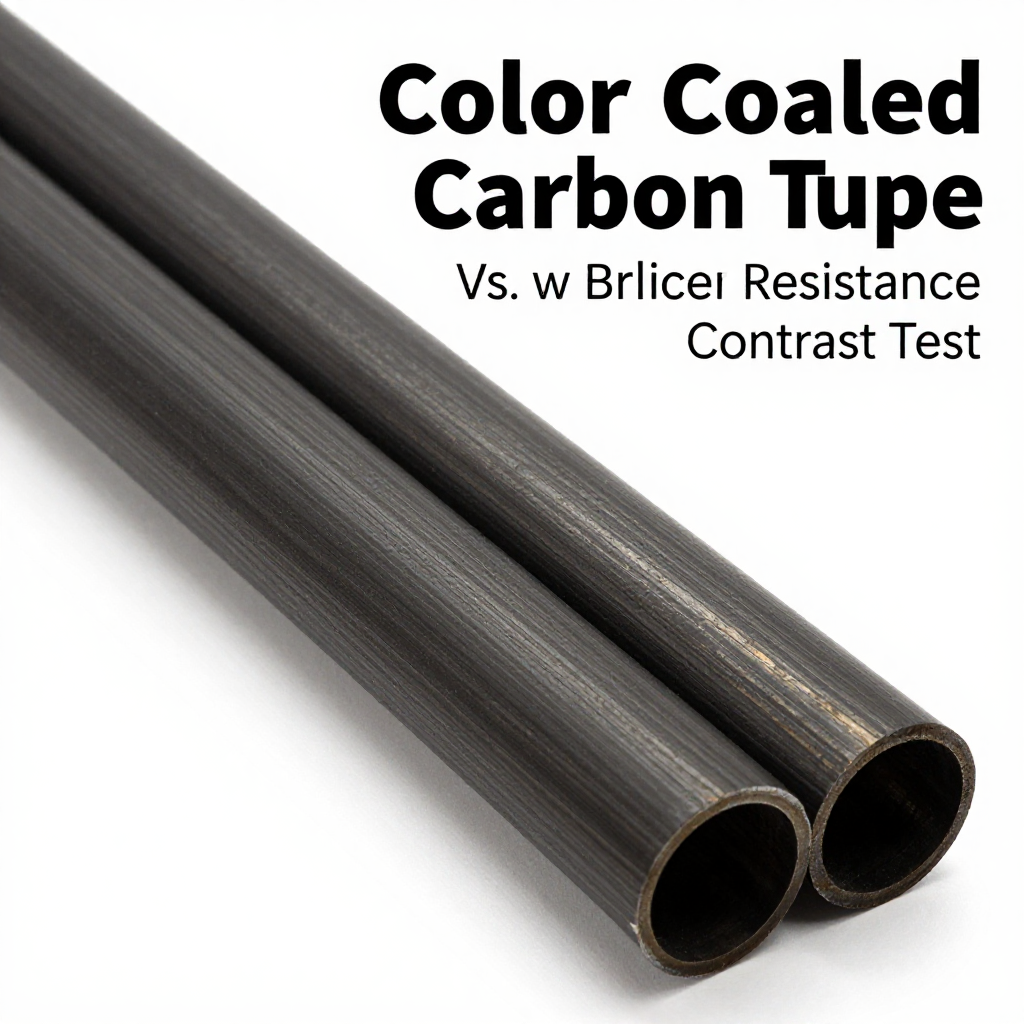
Carbon fiber tubes are widely used in industries ranging from aerospace to sporting goods due to their high strength-to-weight ratio and stiffness. However, the surface finish of these tubes plays a critical role in their performance and longevity. Two common variants are the raw black carbon tube (uncoated) and the color coated carbon tube (typically with a polyurethane or epoxy-based paint). This article presents a detailed contrast test focusing on surface wear resistance, a key factor in applications involving friction, abrasion, and environmental exposure.
## Test Methodology
### Sample Preparation
– **Raw Black Carbon Tube**: Uncoated, with a matte or glossy clear coat (depending on manufacturer). For this test, a standard uncoated tube with a smooth, resin-rich surface was used.
– **Color Coated Carbon Tube**: Same base tube, but with a two-component polyurethane coating applied at a thickness of 60–80 microns, cured per manufacturer specifications.
### Wear Test Setup
A Taber Abraser (Model 5135) was used with CS-10 abrasive wheels, a load of 500 grams per wheel, and a rotation speed of 60 rpm. The test was conducted for 1000 cycles, with weight loss measured every 200 cycles. Surface morphology was examined using a digital microscope at 50x magnification before and after testing.
## Results and Analysis
### Weight Loss Comparison
The raw black carbon tube showed a steady weight loss, reaching 0.35 grams after 1000 cycles. In contrast, the color coated tube lost only 0.12 grams, a 66% reduction in material loss. This indicates that the coating acts as a sacrificial layer, absorbing abrasion and protecting the underlying carbon fibers.
### Surface Morphology
– **Raw Tube**: After 200 cycles, visible fiber exposure was observed. By 600 cycles, the resin matrix was worn away, exposing broken fibers and creating a rough, fuzzy surface. This not only reduces structural integrity but also increases the coefficient of friction, leading to accelerated wear.
– **Color Coated Tube**: The coating remained intact for the first 400 cycles, with only minor scratches. After 800 cycles, the coating began to thin, but the carbon substrate remained unaffected. At 1000 cycles, the coating showed localized wear, but no fiber breakage was evident.
### Coefficient of Friction
The raw tube exhibited an initial coefficient of friction (COF) of 0.45, which increased to 0.62 after 1000 cycles due to surface roughening. The coated tube had a lower initial COF of 0.38, which remained stable at 0.41 throughout the test. This stability is crucial for applications like guide rails or drive shafts where consistent friction is required.
## Factors Influencing Wear Resistance
### Coating Thickness and Adhesion
A thicker coating (80 microns) provided better wear resistance than a thinner one (40 microns), but adhesion to the carbon substrate is equally important. Poor adhesion can lead to delamination, which accelerates wear. In this test, the coating was applied with proper surface preparation (sanding and cleaning), ensuring strong mechanical interlocking.
### Coating Type
Polyurethane coatings generally outperform epoxy coatings in abrasion resistance due to their flexibility and toughness. However, epoxy coatings offer better chemical resistance. For applications involving both wear and chemical exposure, a hybrid system may be recommended.
### Surface Roughness of Substrate
The raw carbon tube’s surface roughness (Ra) was 0.8 microns, while the coated tube had a smoother surface (Ra 0.4 microns) due to the paint filling micro-voids. A smoother surface reduces initial friction and wear.
## Practical Implications
### Aerospace and Automotive
In components like drive shafts or control rods, a color coated tube not only provides wear resistance but also offers UV protection and aesthetic identification. The reduced wear rate extends the service life and reduces maintenance costs.
### Sporting Goods
For bicycle frames or fishing rods, the coated surface resists scratches from handling and environmental debris, maintaining both appearance and structural integrity.
### Industrial Machinery
In conveyor systems or robotic arms, the lower COF of coated tubes reduces energy consumption and prevents material buildup, improving efficiency.
## Conclusion
The contrast test clearly demonstrates that color coated carbon tubes offer significantly superior surface wear resistance compared to raw black carbon tubes. The coating acts as a protective barrier, reducing weight loss by 66%, preventing fiber exposure, and maintaining a stable coefficient of friction. While the raw tube may be suitable for low-wear, high-temperature applications where coatings might degrade, the color coated tube is the preferred choice for most industrial applications requiring durability and longevity. When selecting between the two, consider the specific wear environment, coating quality, and cost-benefit analysis. For high-performance applications, investing in a high-quality color coated carbon tube is a prudent decision.