
## Introduction
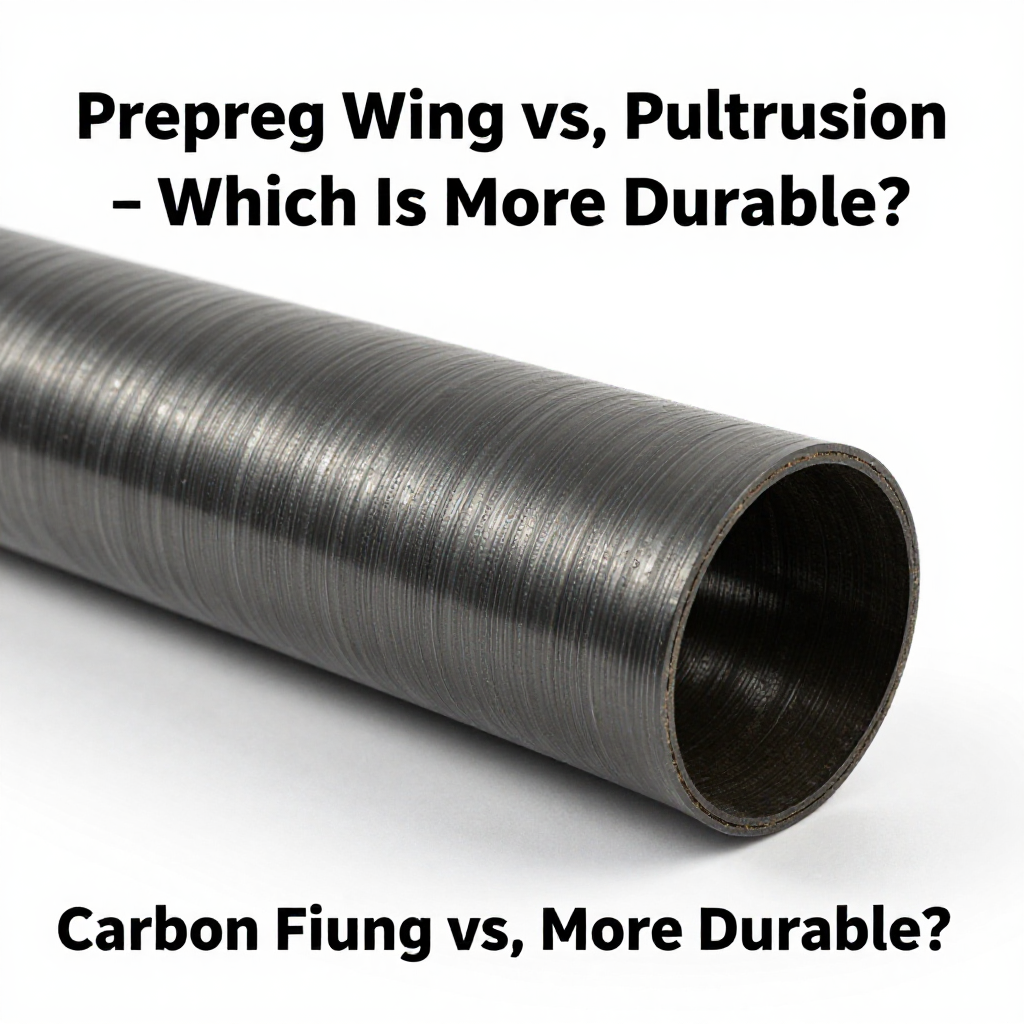
Carbon fiber tubes are critical components in industries ranging from aerospace and robotics to sporting goods and automotive. Their exceptional strength-to-weight ratio and stiffness make them ideal for applications demanding high performance. However, not all carbon fiber tubes are created equal. The manufacturing process significantly influences the final mechanical properties, durability, and overall performance. Two dominant production methods—prepreg winding and pultrusion—are widely used, yet they yield tubes with distinct characteristics. This article provides a comprehensive technical analysis of both processes, comparing their structural integrity, fatigue resistance, impact tolerance, and long-term durability to answer the pivotal question: which method produces more durable carbon fiber tubes?
## Understanding the Two Manufacturing Processes
### Prepreg Winding: Precision and Control
Prepreg winding involves wrapping layers of pre-impregnated carbon fiber sheets (prepreg) around a mandrel. The prepreg material consists of unidirectional or woven carbon fibers pre-impregnated with a partially cured epoxy resin. The winding process is typically automated, allowing precise control over fiber orientation and layer thickness. After winding, the tube is cured in an autoclave or oven under controlled heat and pressure, consolidating the layers and achieving the desired resin-to-fiber ratio.
**Key characteristics:**
– Fiber orientation can be tailored (e.g., 0°, ±45°, 90°) to optimize specific mechanical properties.
– High fiber volume fraction (60-70%) due to controlled resin content.
– Autoclave curing ensures low void content and excellent interlaminar properties.
– Process is labor-intensive and slower, leading to higher costs.
### Pultrusion: Continuous and Efficient
Pultrusion is a continuous manufacturing process where carbon fiber rovings are pulled through a resin bath and then through a heated die. The die shapes the profile and cures the resin as the material passes through. The result is a constant cross-section tube with unidirectional fiber alignment along the length. Pultrusion is highly automated, offering high production speeds and consistent quality.
**Key characteristics:**
– Fibers are primarily oriented longitudinally (0°), providing exceptional axial strength and stiffness.
– Fiber volume fraction typically ranges from 50-65%.
– Curing occurs rapidly in the die, reducing cycle times.
– Limited ability to incorporate off-axis fiber orientations.
## Comparative Analysis of Durability
Durability in carbon fiber tubes encompasses several factors: mechanical strength, fatigue resistance, impact tolerance, environmental resistance, and long-term stability. Let’s examine each aspect in detail.
### 1. Mechanical Strength and Stiffness
**Prepreg Winding:** The ability to orient fibers in multiple directions allows prepreg tubes to exhibit balanced strength in both axial and hoop directions. This is crucial for applications subjected to multi-axial loads, such as pressure vessels or structural frames. The optimized fiber architecture results in higher overall structural integrity.
**Pultrusion:** Pultruded tubes excel in axial loading due to the unidirectional fiber alignment. They offer superior tensile and compressive strength along the tube’s length. However, their transverse and shear strengths are significantly lower, making them susceptible to splitting or cracking under off-axis loads.
**Verdict:** Prepreg winding provides more isotropic mechanical properties, enhancing overall durability in complex loading scenarios.
### 2. Fatigue Resistance
**Prepreg Winding:** The layered structure with controlled fiber orientations and low void content (less than 1%) minimizes stress concentrations. The interlaminar shear strength is high, preventing delamination under cyclic loading. This makes prepreg tubes ideal for dynamic applications like drone arms or bicycle frames.
**Pultrusion:** While pultruded tubes have good axial fatigue performance, the lack of off-axis reinforcement can lead to matrix cracking under cyclic transverse loads. The rapid curing process may also introduce micro-voids, which can initiate fatigue cracks over time.
**Verdict:** Prepreg winding demonstrates superior fatigue resistance, especially in multi-directional loading conditions.
### 3. Impact Tolerance and Damage Resistance
**Prepreg Winding:** The multi-directional layup absorbs impact energy more effectively, distributing stresses across layers. The tougher interlaminar interface prevents catastrophic failure. Prepreg tubes can withstand localized impacts without significant loss of structural integrity.
**Pultrusion:** Unidirectional fibers are highly sensitive to transverse impacts. A single impact can cause matrix cracking and fiber breakage, leading to rapid strength degradation. The lack of energy-absorbing mechanisms makes pultruded tubes more brittle under impact.
**Verdict:** Prepreg winding offers significantly higher impact tolerance, a critical factor for durability in harsh environments.
### 4. Environmental Resistance
**Prepreg Winding:** The autoclave curing process ensures a dense, low-porosity matrix that resists moisture ingress and chemical attack. The high-quality resin system provides excellent UV stability and corrosion resistance, making prepreg tubes suitable for outdoor and marine applications.
**Pultrusion:** The rapid curing may result in a less uniform resin cure, potentially leaving unreacted components that are susceptible to moisture absorption. This can lead to micro-cracking and degradation over time, especially in humid or chemically aggressive environments.
**Verdict:** Prepreg winding exhibits better environmental durability, ensuring longer service life.
### 5. Long-Term Stability and Creep
**Prepreg Winding:** The optimized fiber-resin bond and low internal stresses contribute to minimal creep and dimensional stability over extended periods. The tube retains its shape and mechanical properties under sustained loads.
**Pultrusion:** While pultruded tubes have good axial creep resistance, the weaker transverse properties can lead to deformation under multi-axial sustained loads. Over time, this may result in warping or loss of structural integrity.
**Verdict:** Prepreg winding provides superior long-term stability.
## Cost and Production Efficiency Considerations
While durability is paramount, cost and production efficiency also influence material selection. Pultrusion is a high-speed, low-cost process, making it attractive for high-volume applications where axial strength is sufficient, such as in electrical insulation or structural supports. Prepreg winding, though more expensive and slower, offers premium performance for demanding applications where durability is non-negotiable.
## Application-Specific Durability Requirements
– **Aerospace:** Requires maximum durability under cyclic and impact loads. Prepreg winding is the standard due to its superior fatigue and impact resistance.
– **Automotive:** For drive shafts or roll cages, prepreg winding offers the necessary multi-axial strength and crashworthiness.
– **Robotics:** Lightweight and high-stiffness tubes with good fatigue life favor prepreg winding.
– **Construction:** Pultruded tubes may suffice for non-critical structural elements where axial loads dominate and cost is a factor.
– **Sports Equipment:** High-performance bicycles and fishing rods benefit from prepreg winding’s tailored properties.
## Conclusion
After a thorough analysis, it is evident that prepreg winding produces carbon fiber tubes with significantly higher durability compared to pultrusion. The ability to control fiber orientation, achieve low void content, and create a robust interlaminar bond results in superior mechanical strength, fatigue resistance, impact tolerance, and environmental stability. While pultrusion offers cost and speed advantages, its unidirectional fiber architecture and potential micro-defects limit its durability in demanding applications. Therefore, for engineers and manufacturers prioritizing long-term performance and reliability, prepreg winding is the definitive choice. However, the final decision should always consider the specific application requirements, load conditions, and budget constraints to select the most appropriate manufacturing process.