
# Introduction
Choosing the right composite tube for your application can be a daunting task. With a myriad of options available, carbon fiber and fiberglass tubes stand out as two of the most popular choices. Each material offers distinct advantages and trade-offs in terms of cost, mechanical strength, and long-term durability. This comprehensive comparison aims to eliminate the guesswork, providing engineers, manufacturers, and procurement specialists with the data-driven insights needed to make an informed decision. By the end of this article, you will have a clear understanding of which material aligns best with your project’s requirements, budget, and performance expectations.
## Understanding the Basics: Carbon Fiber and Fiberglass
Before diving into a head-to-head comparison, it’s essential to understand what each material is and how it’s manufactured.
### Carbon Fiber Tubes
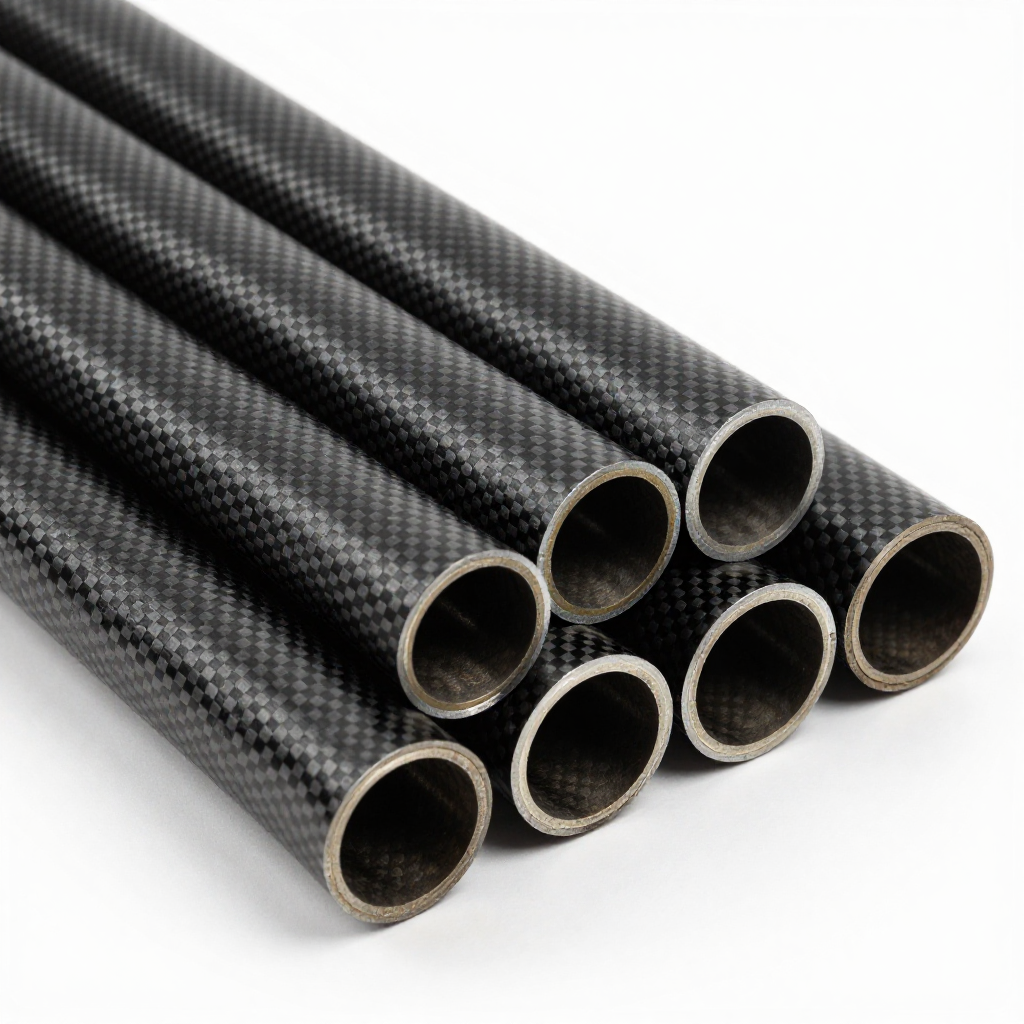
Carbon fiber tubes are made from carbon filaments, typically 5–10 micrometers in diameter, that are twisted together and woven into a fabric. This fabric is then impregnated with a resin (usually epoxy) and cured under heat and pressure to form a rigid, lightweight structure. The resulting composite boasts an exceptional strength-to-weight ratio, high stiffness, and excellent fatigue resistance.
### Fiberglass Tubes
Fiberglass tubes are manufactured using fine glass fibers, which are also woven and combined with a resin matrix. The glass fibers are less stiff and strong than carbon fibers but are significantly more affordable. Fiberglass tubes are known for their good impact resistance, electrical insulation properties, and corrosion resistance, making them a versatile choice for many industrial applications.
## Cost Comparison: Initial Investment vs. Long-Term Value
One of the most decisive factors in material selection is cost. Here, we break down both the upfront price and the total cost of ownership.
### Raw Material Costs
Carbon fiber is a high-tech material that requires energy-intensive manufacturing processes, resulting in a much higher raw material cost compared to fiberglass. On average, carbon fiber costs $15–$40 per kilogram, while fiberglass costs $2–$5 per kilogram. This price disparity directly translates to the final product, making carbon fiber tubes significantly more expensive—often 5 to 10 times the price of equivalent fiberglass tubes.
### Manufacturing and Fabrication Costs
Beyond raw materials, the manufacturing process for carbon fiber tubes is more complex. It often involves autoclave curing or filament winding with precise control, which increases labor and equipment costs. Fiberglass tubes can be produced using simpler methods like pultrusion or hand lay-up, which are less expensive and faster. For large-volume production, fiberglass offers a clear cost advantage.
### Total Cost of Ownership
While carbon fiber has a higher initial price, its superior strength and stiffness can lead to weight savings, which may reduce operational costs in applications like aerospace or automotive. Additionally, carbon fiber’s excellent fatigue resistance can extend the service life, potentially lowering replacement and maintenance costs over time. However, for many industrial applications where weight is not critical, fiberglass provides a more economical solution with adequate performance.
## Strength and Stiffness: Mechanical Performance
Strength and stiffness are critical parameters that determine a tube’s ability to withstand loads without deformation or failure.
### Tensile Strength and Modulus
Carbon fiber tubes exhibit a tensile strength ranging from 3,500 to 6,000 MPa, while fiberglass tubes typically range from 1,500 to 3,500 MPa. The tensile modulus (stiffness) of carbon fiber is also significantly higher—around 200–500 GPa compared to fiberglass’s 70–90 GPa. This means carbon fiber tubes are much stiffer, resisting bending and deflection better under load.
### Compressive and Flexural Strength
In compression, carbon fiber also outperforms fiberglass, though the difference is less pronounced. Flexural strength—the ability to resist bending—is another area where carbon fiber excels, making it ideal for applications requiring high rigidity, such as drone arms, bicycle frames, and robotic components.
### Impact Resistance
Fiberglass, however, has a higher elongation at break, meaning it can absorb more energy before fracturing. This makes fiberglass tubes more impact-resistant and less likely to shatter upon sudden impact. In environments where accidental impacts are common, fiberglass may be the safer choice.
## Service Life and Durability: Long-Term Performance
The service life of a composite tube depends on its resistance to environmental factors, fatigue, and degradation over time.
### Fatigue Resistance
Carbon fiber has excellent fatigue resistance, withstanding millions of load cycles without significant loss of strength. This is crucial for dynamic applications like wind turbine blades or aerospace components. Fiberglass also has good fatigue properties but is generally inferior to carbon fiber under high-cycle loading.
### Corrosion and Chemical Resistance
Both materials are inherently corrosion-resistant, but fiberglass has a slight edge in harsh chemical environments. Fiberglass is often used in chemical processing plants and marine applications where exposure to acids, alkalis, and saltwater is common. Carbon fiber, while also resistant, can suffer from galvanic corrosion when in contact with metals in a conductive environment.
### UV and Moisture Degradation
Prolonged exposure to ultraviolet (UV) radiation can degrade the resin matrix in both materials, leading to surface cracking and reduced strength. However, carbon fiber is more UV-resistant than fiberglass. Moisture absorption can also affect performance; fiberglass tends to absorb more water, which can lead to micro-cracking over time. Proper surface coatings or gel coats can mitigate these issues for both materials.
### Thermal Stability
Carbon fiber tubes maintain their mechanical properties at higher temperatures, with a glass transition temperature (Tg) often exceeding 150°C. Fiberglass has a lower Tg, typically around 100°C, above which it begins to soften and lose stiffness. For high-temperature applications, carbon fiber is the superior choice.
## Application-Specific Recommendations
To simplify your selection, here are guidelines based on common industrial uses.
### When to Choose Carbon Fiber Tubes
– **Aerospace and Drones:** Where weight reduction is paramount and high stiffness is required.
– **Robotics and Automation:** For precision arms and components that demand minimal deflection.
– **High-Performance Sports Equipment:** Such as bicycle frames, golf shafts, and fishing rods.
– **Medical Devices:** Where strength-to-weight ratio and radiolucency are critical.
– **High-Temperature Environments:** Where thermal stability is essential.
### When to Choose Fiberglass Tubes
– **Construction and Infrastructure:** For scaffolding, handrails, and structural supports where cost is a major factor.
– **Electrical Insulation:** Fiberglass is an excellent electrical insulator, making it ideal for switchgear and transformer components.
– **Chemical Processing:** Where exposure to corrosive chemicals is frequent.
– **Marine Applications:** For boat masts, railings, and underwater structures due to its saltwater resistance.
– **General Mechanical Applications:** Where moderate strength and low cost are sufficient.
## Cost-Benefit Analysis: A Practical Example
Consider a manufacturer producing 10,000 tubes per year for a lightweight structural application. Carbon fiber tubes cost $50 each, while fiberglass tubes cost $10 each. The initial cost difference is $400,000. However, if the carbon fiber tubes reduce the overall system weight by 30%, leading to energy savings of $20,000 per year, the payback period would be 20 years—often longer than the product’s lifecycle. In contrast, if the application requires high stiffness and the weight savings enable a new product category, the premium may be justified.
## Conclusion
Selecting between carbon fiber and fiberglass tubes does not have to be a source of hesitation. The decision hinges on your specific priorities: if you need the highest strength-to-weight ratio, stiffness, and long-term fatigue resistance, and your budget allows, carbon fiber is the clear winner. If cost-effectiveness, impact resistance, and corrosion resistance are your primary concerns, fiberglass offers a reliable and economical solution. By evaluating your application’s mechanical demands, environmental conditions, and lifecycle costs, you can confidently choose the material that delivers optimal performance and value. No more guesswork—use this comprehensive comparison as your guide to make the right choice.