
# Introduction
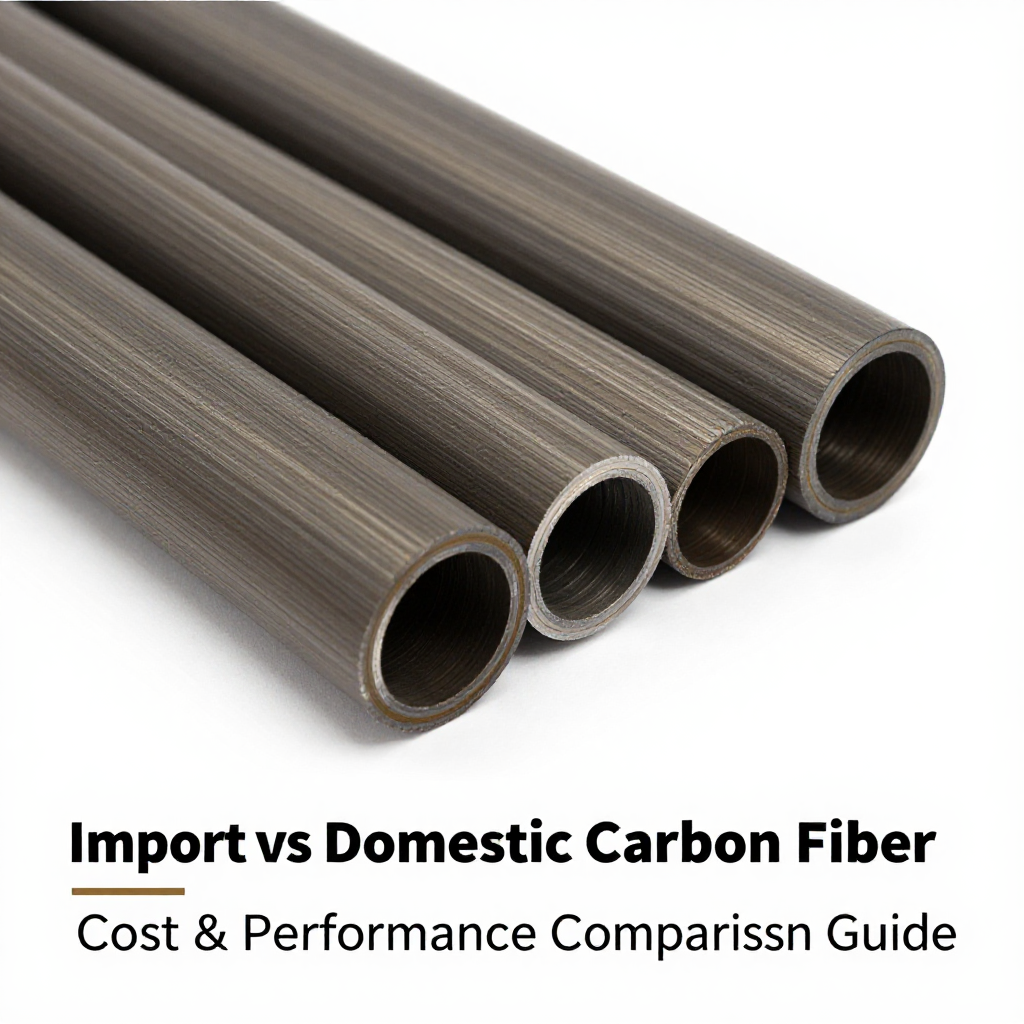
Carbon fiber tubes are critical components in industries ranging from aerospace and automotive to robotics and sporting goods. The choice between imported and domestic raw materials for carbon fiber tubes significantly impacts both cost and performance. This guide provides a comprehensive comparison of import vs domestic carbon fiber tube raw materials, focusing on cost structures, performance characteristics, supply chain considerations, and application suitability. By understanding these factors, manufacturers can make informed procurement decisions that balance budget constraints with engineering requirements.
## Understanding Carbon Fiber Tube Raw Materials
Carbon fiber tubes are manufactured from carbon fiber tows or rovings, which are bundles of thousands of microscopic carbon filaments. The primary raw materials include:
– **Carbon fiber tow** (3K, 6K, 12K, 24K, etc.)
– **Resin systems** (epoxy, vinyl ester, polyester)
– **Core materials** (foam, honeycomb) for sandwich structures
– **Release fabrics and peel plies**
These materials are processed through pultrusion, filament winding, or roll wrapping to produce tubes with specific mechanical properties. The quality and consistency of the raw carbon fiber directly influence the final tube’s tensile strength, modulus, and fatigue resistance.
## Cost Comparison: Import vs Domestic
### Price per Kilogram
Imported carbon fiber, particularly from established producers in Japan (Toray, Toho Tenax) and the United States (Hexcel), often commands a premium price per kilogram compared to domestic alternatives. For example, a standard 12K tow from an international supplier may cost $20–$30 per kg, while domestic equivalents from emerging producers in China or India might be priced at $12–$18 per kg. However, these price differences are narrowing as domestic manufacturers improve quality and scale up production.
### Tariffs and Shipping Costs
Importing carbon fiber raw materials incurs additional costs:
– **Customs duties** (ranging from 5% to 15% depending on country)
– **International freight** (air or sea, with sea freight being more economical but slower)
– **Insurance and handling fees**
– **Currency exchange fluctuations**
These add-ons can increase the effective cost of imported materials by 10–20%, reducing the initial price advantage. Domestic sourcing eliminates these costs, offering more predictable pricing.
### Minimum Order Quantities (MOQs)
Imported materials often require larger MOQs to justify shipping costs, which can tie up capital and increase inventory holding costs. Domestic suppliers typically offer more flexible MOQs, allowing smaller manufacturers to purchase just-in-time quantities, reducing waste and storage expenses.
### Total Cost of Ownership (TCO)
Beyond the purchase price, TCO includes logistics, lead times, quality control, and potential scrap rates. Imported materials may have longer lead times (4–8 weeks) compared to domestic (1–2 weeks), which can disrupt production schedules and increase expedited shipping costs. Domestic materials often result in lower TCO due to reduced logistics complexity and faster response times.
## Performance Comparison: Import vs Domestic
### Tensile Strength and Modulus
Imported carbon fibers, especially aerospace-grade fibers, offer superior tensile strength (up to 7,000 MPa) and modulus (up to 450 GPa). Domestic fibers have historically lagged, but recent advancements have closed the gap. For high-performance applications like aerospace structures or high-end automotive components, imported fibers may still be necessary to meet stringent specifications.
### Consistency and Quality Control
Imported materials from mature suppliers exhibit excellent batch-to-batch consistency, which is critical for maintaining uniform tube properties. Domestic suppliers, especially newer entrants, may have more variability in fiber diameter, tensile properties, and surface treatment. This variability can lead to higher scrap rates and inconsistent final products.
### Surface Finish and Compatibility
Carbon fiber surface treatment (sizing) affects adhesion to resin systems. Imported fibers often have optimized sizing for specific resin chemistries, ensuring strong interfacial bonding. Domestic fibers may require additional testing to ensure compatibility with existing resin systems, potentially adding development time and cost.
### Thermal and Chemical Resistance
For applications involving high temperatures or corrosive environments, imported fibers with specialized coatings (e.g., oxidation-resistant) may outperform domestic alternatives. However, for standard operating conditions, domestic fibers can provide adequate performance at a lower cost.
## Supply Chain and Lead Times
### Imported Materials
– **Pros**: Access to cutting-edge technology, established quality certifications (e.g., AS9100, ISO 9001), and global supply chain reliability.
– **Cons**: Longer lead times, higher inventory requirements, vulnerability to geopolitical disruptions, and potential trade restrictions.
### Domestic Materials
– **Pros**: Shorter lead times, lower minimum orders, easier communication, and support for local economies.
– **Cons**: May lack advanced grades, limited supplier options, and potential quality inconsistency.
## Application-Specific Recommendations
### Aerospace and Defense
For critical structural components where weight savings and reliability are paramount, imported aerospace-grade carbon fiber is often the only choice. The cost premium is justified by the need for certified materials and traceability.
### Automotive and Motorsports
Mid-range performance requirements can be met with either imported or domestic materials. Domestic fibers are increasingly viable for non-structural components like trim pieces or drive shafts, while imported fibers are recommended for chassis and safety-critical parts.
### Industrial and Consumer Goods
For applications like drone arms, fishing rods, or bicycle frames, domestic carbon fiber tubes offer a cost-effective solution without significant performance trade-offs. The key is to select a reputable domestic supplier with consistent quality.
## Conclusion
The decision between import and domestic carbon fiber tube raw materials hinges on a balance of cost, performance, and supply chain priorities. Imported materials offer superior performance and consistency but at a higher price and longer lead times. Domestic materials provide cost savings and agility but may require more rigorous quality assurance. Manufacturers should conduct a thorough cost-benefit analysis, considering total cost of ownership, application requirements, and risk tolerance. By leveraging the strengths of both sources, companies can optimize their procurement strategy and maintain a competitive edge in the market.