
## Introduction
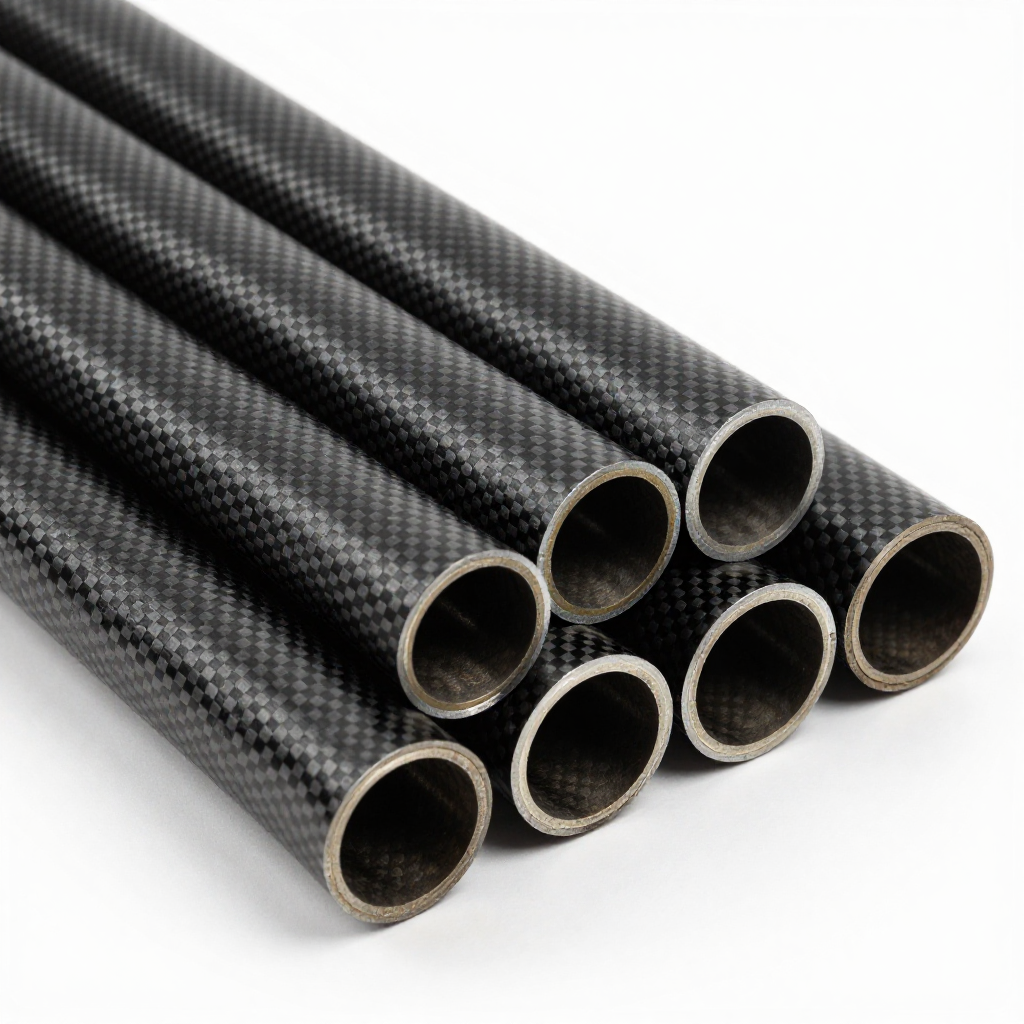
Carbon fiber tubes are prized for their high strength-to-weight ratio, stiffness, and corrosion resistance, making them essential in industries ranging from aerospace and automotive to robotics and sporting goods. However, the premium performance of carbon fiber often comes with a premium price tag. For procurement managers and engineers, the challenge is to source carbon fiber tubes that meet stringent quality standards without exceeding budget constraints. This article outlines a strategic, low-cost procurement plan that balances cost control with quality assurance, ensuring you get the best value for your investment.
## Understanding Carbon Fiber Tube Quality Parameters
Before diving into cost-saving strategies, it is crucial to understand what defines quality in carbon fiber tubes. Key parameters include:
– **Material Grade**: The type of carbon fiber (e.g., T300, T700, M40) affects tensile strength and modulus. Higher-grade fibers are more expensive but offer superior performance.
– **Manufacturing Process**: Tubes can be made via pultrusion, filament winding, or roll wrapping. Each method impacts mechanical properties, surface finish, and consistency.
– **Dimensional Tolerances**: Precision in outer diameter, inner diameter, and wall thickness is critical for fit and function.
– **Fiber Orientation**: The angle of the fibers relative to the tube axis determines stiffness and strength in different directions.
– **Resin System**: The type of epoxy resin influences temperature resistance, impact resistance, and durability.
Understanding these parameters allows you to specify the minimum acceptable quality for your application, avoiding over-specification that inflates costs.
## Cost Drivers in Carbon Fiber Tube Manufacturing
To control budget, you must know where costs originate. Major cost drivers include:
– **Raw Material Costs**: Carbon fiber tow and resin are the primary materials. Prices fluctuate based on global supply and demand.
– **Production Volume**: Small batch runs have higher per-unit costs due to setup and tooling. Larger orders reduce unit price.
– **Manufacturing Complexity**: Custom dimensions, tight tolerances, and specialized fiber orientations increase labor and waste.
– **Finishing Processes**: Cutting, sanding, drilling, and surface coating add labor and time.
– **Quality Control and Testing**: Non-destructive testing (e.g., ultrasonic, X-ray) and mechanical testing add cost but are essential for high-reliability applications.
## Strategies for Low-Cost Procurement Without Sacrificing Quality
### 1. Optimize Your Specifications
The most effective way to reduce cost is to avoid over-engineering. Review your application’s actual requirements:
– **Choose the Right Fiber Grade**: If your application does not require aerospace-grade T700, consider T300 or T700S, which offer good performance at lower cost.
– **Simplify Dimensions**: Use standard diameters and wall thicknesses whenever possible. Custom dimensions require custom tooling and increase cost.
– **Relax Tolerances Where Possible**: Tight tolerances (e.g., ±0.05 mm) are expensive. If your assembly allows ±0.1 mm, specify that.
– **Select Appropriate Resin**: Standard epoxy systems are cheaper than high-temperature or specialty resins. Only use premium resins if thermal or chemical conditions demand them.
### 2. Leverage Volume Purchasing and Long-Term Contracts
Suppliers often offer tiered pricing. By consolidating your orders or committing to a long-term contract, you can negotiate lower unit prices. Consider:
– **Bundling Orders**: Combine multiple projects’ requirements into a single purchase order.
– **Annual Agreements**: Negotiate a fixed price for a yearly volume, protecting against price fluctuations.
– **Group Purchasing**: If your company has multiple divisions, centralize procurement to increase order size.
### 3. Source from Low-Cost but Reliable Regions
Manufacturing costs vary globally. Countries like China, Taiwan, and India offer competitive pricing for carbon fiber tubes. However, ensure you:
– **Audit Suppliers**: Verify their manufacturing capabilities, quality certifications (ISO 9001, AS9100), and track record.
– **Request Samples**: Always test samples before bulk ordering.
– **Consider Lead Times and Shipping**: Lower unit costs may be offset by longer shipping times or higher freight charges. Factor these into total cost.
### 4. Build Strong Supplier Relationships
Developing a partnership with a supplier can yield benefits beyond price:
– **Early Involvement**: Engage suppliers in the design phase to get cost-reduction suggestions.
– **Transparent Communication**: Share your budget constraints and quality needs. A good supplier will help find cost-effective solutions.
– **Consistent Ordering**: Regular orders make you a valued customer, leading to better pricing and priority service.
### 5. Implement Rigorous Incoming Quality Inspection
Even with a low-cost supplier, quality must be verified. Establish an inspection protocol:
– **Visual Inspection**: Check for surface defects, cracks, or delamination.
– **Dimensional Measurement**: Use calipers and micrometers to verify tolerances.
– **Mechanical Testing**: For critical applications, perform tensile or flexural tests on sample tubes.
– **Ultrasonic Testing**: For high-stress applications, non-destructive testing can detect internal voids.
A robust inspection process prevents defective parts from entering your production line, saving rework costs and protecting your brand reputation.
### 6. Consider Alternative Manufacturing Processes
Different processes have different cost profiles:
– **Pultrusion**: Continuous process, low cost for long, straight tubes with constant cross-section. Good for basic applications.
– **Roll Wrapping**: More labor-intensive but allows for varied fiber orientations and better surface finish. Moderate cost.
– **Filament Winding**: Ideal for high-pressure or high-stiffness tubes, but setup costs are higher.
Choose the process that matches your performance needs at the lowest cost.
### 7. Optimize Logistics and Inventory Management
– **Consolidate Shipments**: Combine orders to reduce freight costs.
– **Use Local Warehousing**: If importing, consider a regional distributor to reduce lead times and shipping costs.
– **Just-in-Time (JIT) Inventory**: Reduce carrying costs by ordering smaller batches more frequently, but balance this against volume discounts.
## Case Study: Successful Low-Cost Procurement
A robotics manufacturer needed 1,000 carbon fiber tubes (10 mm OD, 8 mm ID, 500 mm length) for drone arms. Initially, they specified T700 fiber with ±0.02 mm tolerance, costing $15 per tube. By analyzing the application, they found T300 fiber with ±0.05 mm tolerance was sufficient. They sourced from a certified supplier in Taiwan, negotiated a 20% discount for a 2-year contract, and implemented incoming inspection. The final cost was $8 per tube, a 47% savings, with no quality issues.
## Conclusion
Procuring carbon fiber tubes at low cost does not mean compromising on quality. By understanding quality parameters, optimizing specifications, leveraging volume, sourcing strategically, and implementing rigorous inspection, you can achieve significant cost savings while maintaining performance and reliability. A well-planned procurement strategy not only reduces immediate expenses but also builds a sustainable supply chain that supports long-term business success.
Remember, the cheapest option is not always the best value. Focus on total cost of ownership, including quality failures, downtime, and warranty claims. With the right approach, you can secure high-quality carbon fiber tubes that meet your budget and performance goals.