
# Introduction
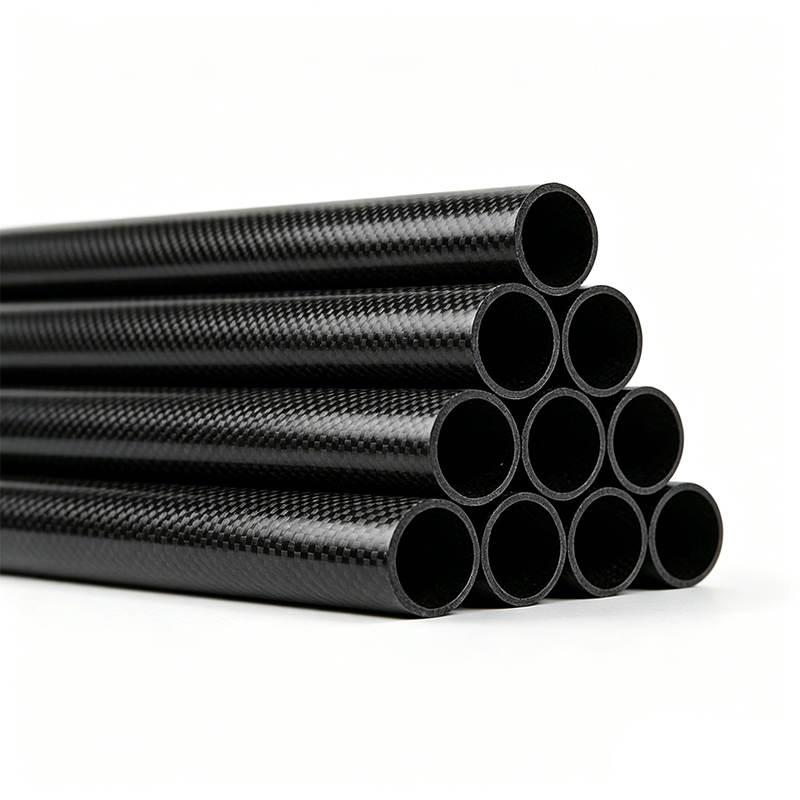
In the rapidly evolving field of robotics, small robots—ranging from compact inspection drones to agile surgical assistants—demand components that balance size, performance, and manufacturability. Among these, carbon fiber tubes serve as critical structural elements, providing the backbone for arms, frames, and actuation systems. However, selecting the right carbon fiber tube for small robots is not a trivial task. It requires a deep understanding of three core requirements: small diameter, high strength, and easy processability. This article explores these pillars, offering engineers and manufacturers a comprehensive guide to making informed choices that enhance robot performance and production efficiency.
## The Importance of Small Diameter in Compact Robot Design
Small robots are defined by their limited footprint and weight budget. Every millimeter of diameter and gram of mass directly impacts agility, payload capacity, and energy consumption. Carbon fiber tubes with small diameters—typically ranging from 3 mm to 10 mm—enable designers to create slender, lightweight structures that fit within tight enclosures while maintaining the necessary rigidity.
### Space Constraints and Miniaturization
In applications like endoscopic surgical robots or micro-drones, the available space for structural components is extremely limited. A tube with a larger diameter would not only violate spatial constraints but also add unnecessary weight, reducing maneuverability and battery life. Small-diameter tubes allow for intricate geometries, such as multi-link arms or compact chassis, without compromising the robot’s overall dimensions.
### Weight Reduction and Inertia
Lower diameter directly correlates with reduced cross-sectional area, and thus lower mass per unit length. This reduction in weight lowers the moment of inertia, enabling faster acceleration and deceleration of robot joints. For high-speed pick-and-place robots or exoskeletons, this translates into improved dynamic response and lower energy consumption. Moreover, a lighter structure reduces the load on actuators, extending their lifespan and allowing for smaller, more efficient motors.
## High Strength: Ensuring Structural Integrity Under Load
While small diameter is essential for miniaturization, it must not come at the expense of mechanical strength. Small robots often operate in dynamic environments, experiencing bending, torsion, and impact loads. A carbon fiber tube must exhibit high tensile and compressive strength to prevent failure, especially at joints and connection points.
### Material Properties and Fiber Orientation
The strength of a carbon fiber tube is determined by the type of carbon fiber (e.g., T300, T700, M40) and the orientation of the fibers. Unidirectional (UD) fibers provide maximum strength along the tube’s axis, ideal for axial loads. However, in small robots, loads are rarely purely axial; bending and torsion are common. Therefore, a combination of unidirectional and woven layers (e.g., 2×2 twill) is often used to achieve balanced strength in multiple directions. For small-diameter tubes, the wall thickness is limited, so optimizing fiber orientation is crucial to maximize strength without increasing diameter.
### Impact Resistance and Fatigue Life
Small robots may encounter unexpected collisions or repetitive cyclic loading. Carbon fiber composites are inherently brittle, but with proper resin systems (e.g., epoxy) and fiber architecture, they can offer excellent fatigue resistance. High-strength tubes also exhibit higher impact tolerance, reducing the risk of catastrophic failure. For example, in collaborative robots (cobots) that interact with humans, a sudden impact could cause injury; thus, the tube must absorb energy without shattering, a property that can be enhanced through hybrid layups or the addition of toughening agents.
## Easy Processability: Manufacturing and Assembly Considerations
Even the best-performing carbon fiber tube is useless if it cannot be easily integrated into a robot’s manufacturing process. Easy processability encompasses several aspects: cutting, drilling, bonding, and finishing. Small-diameter tubes are particularly challenging because their thin walls and small cross-sections are prone to delamination or cracking during machining.
### Cutting and Machining
Precision cutting is essential to achieve the required lengths for robot components. Traditional methods like sawing can cause fraying or splintering. Instead, diamond-coated abrasive cut-off wheels or waterjet cutting are recommended to produce clean, burr-free ends. For small-diameter tubes, laser cutting is also viable, but it must be carefully controlled to avoid heat-affected zones that could weaken the resin. After cutting, the ends may require chamfering or sanding to remove sharp edges and ensure a smooth fit with connectors.
### Drilling and Fastening
In many robot designs, tubes must be drilled to accommodate screws, pins, or rivets. Drilling carbon fiber requires specialized tooling, such as carbide or diamond-tipped drills, and must be performed at controlled speeds and feed rates to prevent delamination. For small-diameter tubes, the risk of cracking is higher due to the thin wall; therefore, using backing plates or drilling from both sides can mitigate this issue. Alternatively, adhesive bonding is often preferred over mechanical fasteners, as it distributes stress more evenly and eliminates stress concentrations caused by holes.
### Bonding and Joining
Adhesive bonding is a common method for joining carbon fiber tubes to metal or plastic fittings. The surface of the tube must be prepared by lightly sanding and cleaning with solvents to promote adhesion. Two-part epoxies or acrylic adhesives are typically used, offering high shear strength and good gap-filling properties. For small-diameter tubes, the bond area is limited, so the adhesive must be applied precisely to ensure full coverage. Additionally, the curing process must be controlled to avoid excessive heat, which could degrade the resin.
### Surface Finish and Tolerance
Small robots often require tight dimensional tolerances for mating parts. Carbon fiber tubes can be manufactured with a smooth outer surface (e.g., using a polished mandrel) to achieve consistent diameters. However, post-machining may be necessary to meet tolerance specifications. Grinding or turning with diamond tools can achieve tolerances of ±0.05 mm or better. A smooth surface also reduces friction in sliding applications, such as in linear actuators, and improves the aesthetic quality of the final product.
## Balancing the Three Core Requirements
Selecting the ideal carbon fiber tube for a small robot involves a trade-off among diameter, strength, and processability. For instance, a very small diameter may limit the wall thickness, reducing the load-bearing capacity. Conversely, increasing the wall thickness to boost strength might exceed the diameter constraint. Similarly, a tube with high fiber volume fraction may be stronger but more difficult to machine due to increased brittleness.
### Design Optimization Strategies
Engineers can employ finite element analysis (FEA) to simulate stress distributions and optimize the tube’s dimensions and layup. By iterating on the design, it is possible to find a configuration that meets all three requirements. For example, using a hybrid layup with a high-strength core and a tougher outer layer can enhance impact resistance without increasing diameter. Additionally, selecting a resin system with lower viscosity can improve fiber wet-out, leading to better mechanical properties and easier processing.
### Supplier Collaboration
Working closely with carbon fiber tube manufacturers is crucial. They can provide custom solutions, such as tubes with tailored fiber orientations or pre-drilled holes, to simplify assembly. They can also offer guidance on machining best practices and recommend suitable adhesives. Early collaboration ensures that the tube design is manufacturable and cost-effective, avoiding costly redesigns later in the development cycle.
## Case Studies: Real-World Applications
### Micro Aerial Vehicles (MAVs)
In MAVs, carbon fiber tubes are used for arms connecting the central body to the motors. A typical arm might be 6 mm in diameter with a 1 mm wall thickness. These tubes must be lightweight yet strong enough to withstand the vibrations and aerodynamic forces during flight. By using a unidirectional/woven hybrid layup, manufacturers achieve the required stiffness and impact resistance. The tubes are cut to precise lengths and bonded to aluminum motor mounts using epoxy, ensuring a secure and reliable connection.
### Surgical Robots
Surgical robots require extremely small-diameter tubes (e.g., 3 mm) for instruments that enter the body through small incisions. These tubes must have high torsional strength to transmit rotational motion from the actuator to the tool tip. They also need to be biocompatible and sterilizable. Carbon fiber tubes with a medical-grade epoxy resin are used, and the ends are precision-machined to fit into custom couplings. The processability is critical, as any burr or crack could compromise the instrument’s safety.
## Conclusion
Selecting the right carbon fiber tube for small robots is a multifaceted decision that hinges on three core requirements: small diameter, high strength, and easy processability. Each requirement is interconnected, and engineers must carefully balance them to achieve optimal performance. By understanding the material properties, manufacturing techniques, and design trade-offs, one can make informed choices that lead to robust, efficient, and cost-effective robot designs. As small robots continue to advance, the demand for specialized carbon fiber tubes will grow, making it essential for engineers to stay abreast of the latest materials and processing technologies. Ultimately, a well-selected carbon fiber tube not only enhances the robot’s capabilities but also simplifies its production, paving the way for innovation in the robotics industry.