
## Introduction
The demand for large-scale outdoor events—concerts, festivals, and theatrical productions—has surged, pushing stage engineering to new limits. Traditional steel and aluminum trusses, while reliable, are heavy, prone to corrosion, and require extensive logistics and assembly time. Enter carbon fiber special-shaped tubes: a revolutionary material solution that is transforming the design and construction of lightweight support trusses for large outdoor stages. This article explores the technical advantages, manufacturing considerations, and practical applications of carbon fiber special-shaped tubes in this demanding environment.
## Why Carbon Fiber for Outdoor Stage Trusses?
### Exceptional Strength-to-Weight Ratio
Carbon fiber composites offer a strength-to-weight ratio that is five times greater than steel and twice that of aluminum. For a truss system spanning 50 meters or more, this translates into a dramatic reduction in dead load. Lighter trusses mean smaller cranes, fewer rigging points, and faster assembly—critical factors for touring productions and temporary outdoor installations.
### Corrosion and Weather Resistance
Outdoor stages face rain, humidity, UV radiation, and temperature extremes. Unlike metals, carbon fiber does not corrode or rust. Its inherent resistance to environmental degradation ensures long-term structural integrity, reducing maintenance and replacement costs. Advanced resin systems also provide UV stability, preventing surface degradation over years of exposure.
### Fatigue Resistance and Durability
Carbon fiber exhibits excellent fatigue resistance, outperforming metals under cyclic loading. This is vital for trusses that are repeatedly assembled, disassembled, and transported. The material’s ability to withstand millions of load cycles without micro-crack propagation ensures a longer service life and enhanced safety.
## The Role of Special-Shaped Tubes
### What Are Special-Shaped Tubes?
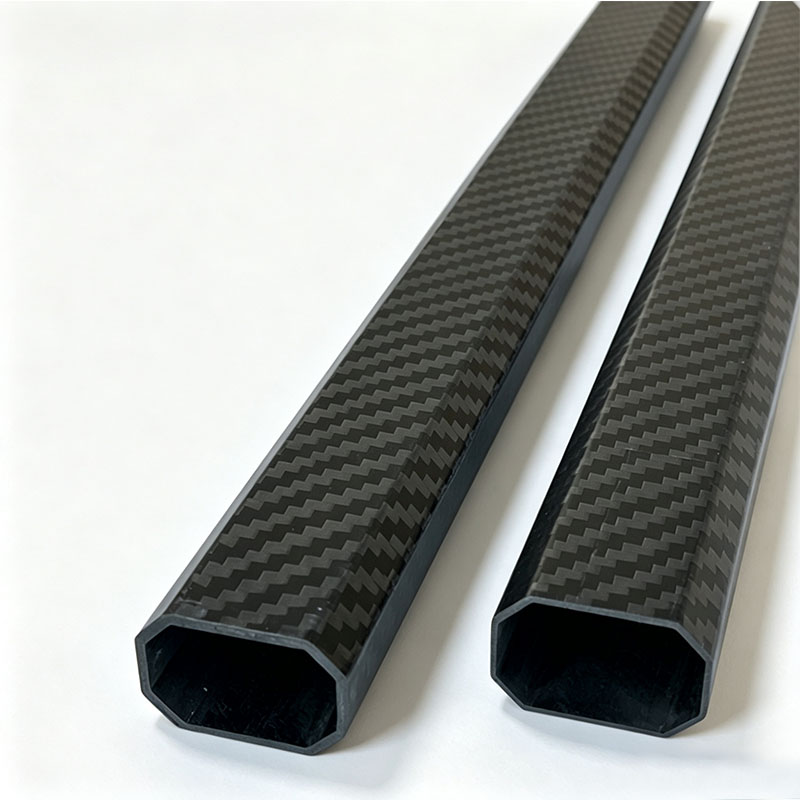
Unlike standard round or square tubes, special-shaped tubes are custom-extruded or pultruded profiles with non-uniform cross-sections. These can include I-beams, T-sections, hexagonal, or aerofoil shapes, each designed to optimize structural performance for specific load paths. In truss applications, special-shaped tubes allow for more efficient material distribution, reducing weight while maintaining or increasing load capacity.
### Design Flexibility and Aesthetics
Special-shaped tubes enable designers to create trusses with sleek, modern profiles that are both functional and visually appealing. For outdoor stages, where aesthetics matter, these tubes can be integrated into architectural designs without compromising strength. The ability to tailor cross-sections also allows for internal cable routing, reducing clutter and improving safety.
## Manufacturing Processes for Carbon Fiber Special-Shaped Tubes
### Pultrusion
Pultrusion is the most common method for producing continuous, constant cross-section profiles. Carbon fiber rovings are pulled through a resin bath and then through a heated die, which shapes and cures the composite. This process yields high fiber volume fractions (60-70%), resulting in excellent mechanical properties. For special-shaped tubes, custom dies are machined to achieve the desired geometry.
### Filament Winding
For tubes with varying diameters or complex shapes, filament winding is used. Continuous carbon fiber tows are wound around a mandrel in precise patterns, allowing for tailored fiber orientation. This method is ideal for producing high-strength, thin-walled tubes with excellent torsional properties, which are beneficial for truss diagonal bracing.
### Resin Transfer Molding (RTM)
RTM involves placing dry carbon fiber preforms into a closed mold and injecting resin under pressure. This process is suitable for complex, three-dimensional shapes that cannot be achieved by pultrusion or winding. RTM offers excellent surface finish and dimensional accuracy, making it ideal for special-shaped nodes and connectors.
## Structural Design Considerations
### Load-Bearing Capacity
Designing a carbon fiber truss requires a thorough understanding of load paths, including static loads (stage equipment, lighting, sound systems) and dynamic loads (wind, crowd movement). Finite element analysis (FEA) is essential to optimize the shape and fiber orientation of special-shaped tubes to ensure they can withstand these forces without buckling or delamination.
### Connection Systems
Joining carbon fiber tubes to each other and to metal fittings is a critical challenge. Adhesive bonding is often preferred over mechanical fasteners to avoid stress concentrations and fiber damage. Special-shaped tubes can be designed with integrated flanges or sockets that facilitate robust, reliable connections. In some designs, metal inserts are co-cured or bonded into the tube ends to allow for bolted connections.
### Thermal Expansion
Carbon fiber has a near-zero coefficient of thermal expansion, which is advantageous for maintaining dimensional stability in varying temperatures. However, when connected to metal components, differential expansion can cause stress. Designers must account for this by using flexible joints or slotted holes to accommodate movement.
## Case Studies: Large Outdoor Stage Applications
### Concert Touring Trusses
Major touring artists have adopted carbon fiber trusses to reduce transport weight and setup time. For example, a 30-meter-wide stage roof truss made from carbon fiber special-shaped tubes weighs approximately 40% less than an equivalent aluminum truss. This reduction allows for smaller trucks and quicker rigging, saving both time and money on a tour schedule.
### Festival Main Stages
At large music festivals, where stages are erected and dismantled within days, carbon fiber trusses offer significant logistical advantages. The lightweight nature of the material enables manual handling of components, reducing the need for heavy machinery. Additionally, the corrosion resistance ensures that the trusses remain in pristine condition even after exposure to rain and humidity.
### Architectural Stage Structures
For high-profile events like award shows or product launches, architects often demand unique, sculptural stage designs. Carbon fiber special-shaped tubes enable the creation of sweeping curves and unconventional geometries that would be impractical with metal. The material’s high stiffness allows for long unsupported spans, creating dramatic visual effects.
## Challenges and Solutions
### Cost Considerations
Carbon fiber composites are more expensive than aluminum or steel on a per-kilogram basis. However, the total cost of ownership can be lower when factoring in reduced transportation, assembly labor, and maintenance. For large-scale productions, the initial investment is often justified by the operational savings over multiple events.
### Impact and Damage Tolerance
While carbon fiber is strong, it is brittle and can suffer from impact damage. To mitigate this, designers incorporate protective coatings or sacrificial layers. Additionally, special-shaped tubes can be designed with thicker flanges in high-impact areas. Regular inspection protocols are essential to detect any hidden damage.
### Recycling and End-of-Life
As sustainability becomes a priority, the industry is developing recycling methods for carbon fiber composites. While not yet as mature as metal recycling, pyrolysis and solvolysis processes can recover carbon fibers for reuse in lower-grade applications. This is an area of active research and development.
## Future Trends
### Hybrid Structures
The future lies in hybrid structures that combine carbon fiber with metals or other composites. For example, carbon fiber tubes can be used for the main chords of a truss, while aluminum or steel nodes provide ductile connection points. This approach balances cost, performance, and ease of assembly.
### Smart Trusses with Embedded Sensors
Integrating fiber optic sensors or strain gauges into carbon fiber tubes can create “smart” trusses that monitor structural health in real-time. This is particularly valuable for outdoor stages where wind loads can be unpredictable. Data from these sensors can be used to adjust rigging or issue warnings before failure occurs.
### Advanced Manufacturing Techniques
Automated fiber placement (AFP) and 3D printing of composite materials are advancing rapidly. These technologies will enable even more complex special-shaped tubes with optimized fiber orientations, further enhancing performance and reducing waste.
## Conclusion
Carbon fiber special-shaped tubes represent a paradigm shift in the construction of large outdoor stage support trusses. Their exceptional strength-to-weight ratio, durability, and design flexibility make them an ideal choice for modern, demanding productions. While challenges such as cost and impact resistance remain, ongoing innovations in materials and manufacturing are steadily overcoming these barriers. As the entertainment industry continues to push the boundaries of scale and creativity, carbon fiber trusses will undoubtedly play a central role in shaping the stages of tomorrow.