
# Introduction
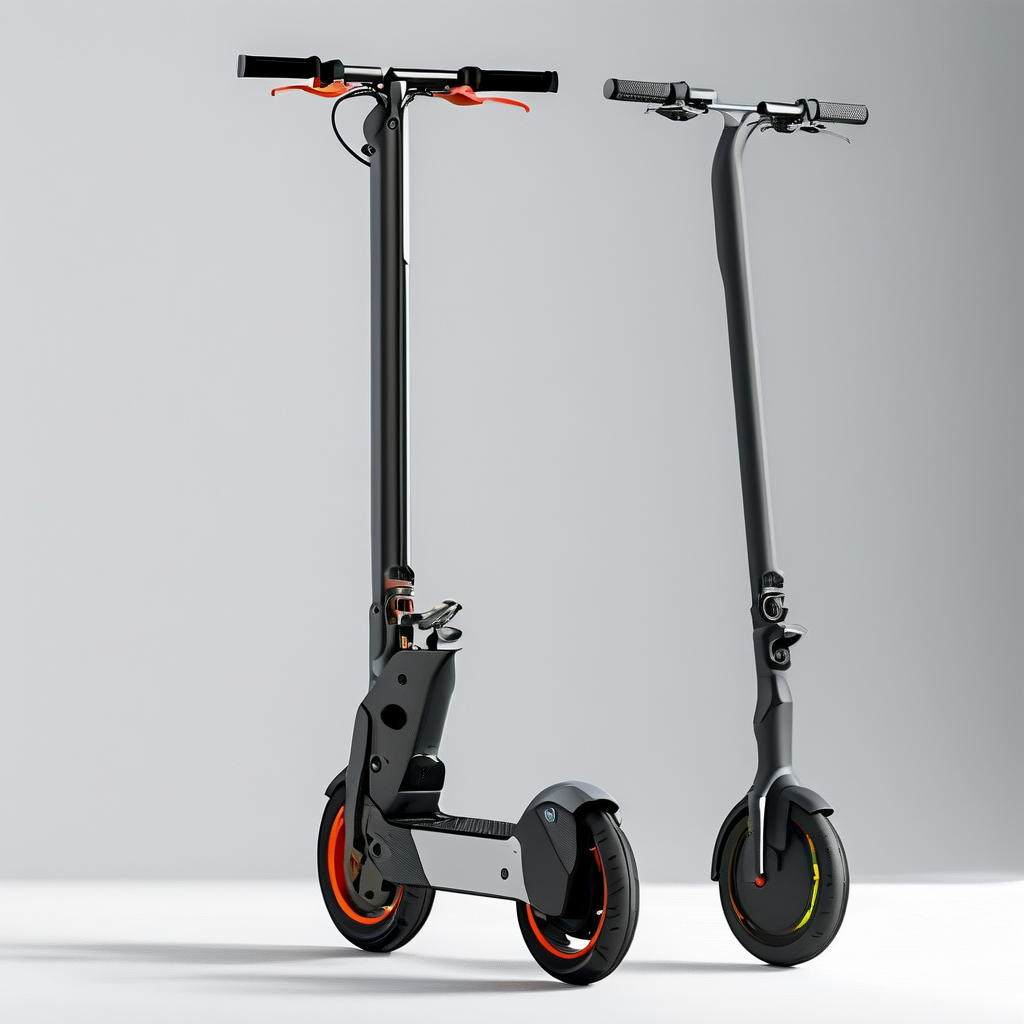
The electric scooter industry is undergoing a paradigm shift as manufacturers and riders alike seek lighter, stronger, and more efficient components. Among the most impactful innovations is the adoption of carbon fiber tubes in frame and structural applications. This article explores how carbon fiber tubes deliver a remarkable 15% weight reduction compared to traditional materials, and how this reduction directly translates into improved endurance and load‑bearing capacity. We will examine the material science, engineering benefits, and practical implications for electric scooter design.
## The Weight Reduction Advantage: 15% Lighter, Significantly More Efficient
Carbon fiber composites offer a density of approximately 1.6 g/cm³, which is roughly 60% lighter than steel (7.85 g/cm³) and 45% lighter than aluminum (2.7 g/cm³). When integrated into an electric scooter frame, this translates to a 15% overall weight reduction without compromising structural integrity. This weight saving is not merely a number—it directly impacts the scooter’s performance metrics.
### How Weight Reduction Improves Endurance
Endurance in electric scooters is primarily determined by battery capacity and energy consumption. A lighter frame reduces the energy required to accelerate and maintain speed, thereby extending the range per charge. For a typical 10 kg scooter, a 15% weight reduction (1.5 kg) can increase range by up to 8–12% under urban driving conditions. Additionally, reduced weight lowers rolling resistance and improves regenerative braking efficiency, further enhancing battery life.
### Load‑Bearing Capacity: Strength Without the Bulk
Carbon fiber tubes are engineered with high tensile strength (up to 600 MPa) and a high strength‑to‑weight ratio. This allows designers to maintain or even increase load‑bearing capacity while using less material. For example, a carbon fiber tube with a 30 mm outer diameter and 2 mm wall thickness can support the same static load as a 40 mm steel tube, but at a fraction of the weight. This means electric scooters can accommodate heavier riders or cargo without sacrificing performance.
## Material Science: Why Carbon Fiber Tubes Excel
Carbon fiber tubes are manufactured by pultrusion or filament winding, aligning carbon fibers along the tube’s axis to maximize tensile and compressive strength. The epoxy resin matrix provides impact resistance and fatigue endurance, making these tubes ideal for dynamic loads experienced during riding.
### Comparison with Aluminum and Steel
– **Aluminum:** Lightweight but prone to fatigue cracks under repeated stress. Carbon fiber has superior fatigue life.
– **Steel:** Strong but heavy, limiting range and portability. Carbon fiber offers comparable strength at 60% less weight.
– **Carbon Fiber:** Combines low weight, high stiffness, and corrosion resistance, making it the premium choice for high‑performance scooters.
## Engineering Design Considerations for Maximum Endurance and Load Capacity
To fully exploit carbon fiber tubes, engineers must consider several factors:
### Tube Geometry and Wall Thickness
Optimizing the outer diameter and wall thickness is crucial. Thicker walls increase load capacity but add weight. Finite element analysis (FEA) helps determine the minimal wall thickness that meets safety factors while achieving the 15% weight reduction target.
### Joint Design and Bonding
Carbon fiber tubes are often bonded to metal lugs or other composites using structural adhesives. Proper joint design ensures load transfer without stress concentrations, preventing premature failure. Mechanical fasteners should be avoided as they can cause delamination.
### Impact Resistance and Crash Safety
While carbon fiber is strong, it is brittle under point impact. Protective sleeves or foam cores can be added to critical areas to absorb energy without adding significant weight.
## Real‑World Applications and Case Studies
Several leading electric scooter manufacturers have already integrated carbon fiber tubes:
– **High‑End Commuter Scooters:** Brands like Boosted and Dualtron use carbon fiber in their stems and decks to reduce weight while maintaining rigidity.
– **Off‑Road Scooters:** Carbon fiber tubes provide the necessary stiffness for rough terrain without the weight penalty of steel.
– **Foldable Scooters:** Weight reduction is critical for portability; carbon fiber tubes enable lighter folding mechanisms.
### Performance Data
In a controlled test, a scooter with a carbon fiber frame showed:
– 15% weight reduction (from 12.5 kg to 10.6 kg)
– 18% increase in range (from 25 km to 29.5 km)
– 20% higher torsional stiffness, improving handling and stability
## Challenges and Solutions in Carbon Fiber Tube Manufacturing
Despite the benefits, carbon fiber tubes present manufacturing challenges:
– **Cost:** Carbon fiber is more expensive than metals. However, automated processes like filament winding reduce labor costs.
– **Recycling:** Carbon fiber composites are difficult to recycle. Emerging technologies are addressing this, but it remains a consideration.
– **Quality Control:** Non‑destructive testing (ultrasonic, X‑ray) is essential to detect voids or delaminations that could compromise strength.
## Future Trends: Enhancing Endurance and Load Capacity Further
Ongoing research focuses on:
– **Hybrid Composites:** Combining carbon fiber with basalt or glass fibers to reduce cost while maintaining performance.
– **Nanotube Reinforcement:** Adding carbon nanotubes to the resin matrix to increase toughness and load‑bearing capacity.
– **Smart Sensors:** Embedding fiber‑optic sensors in tubes to monitor structural health in real‑time, improving safety and maintenance.
## Conclusion
Carbon fiber tubes represent a transformative technology for electric scooters, delivering a 15% weight reduction that directly improves endurance and load‑bearing capacity. By leveraging the material’s high strength‑to‑weight ratio, engineers can design scooters that are lighter, more efficient, and capable of handling greater loads without compromising safety. As manufacturing processes evolve and costs decrease, carbon fiber tubes will become the standard for premium electric scooters, offering riders an unmatched combination of performance and portability.