
# Introduction
In industrial processes involving the circulation of aggressive acidic and alkaline liquids, the selection of materials for piping and heat exchanger tubes is critical. Traditional metals and alloys often suffer from corrosion, leading to frequent maintenance, contamination of process fluids, and shortened equipment lifespan. Carbon tubes, particularly those made from graphite or carbon fiber composites, have emerged as a superior alternative due to their exceptional chemical inertness. This article explores the chemical stability of carbon tubes, their performance in acid-base environments, and their application in liquid circulation systems.
## The Nature of Carbon Tubes
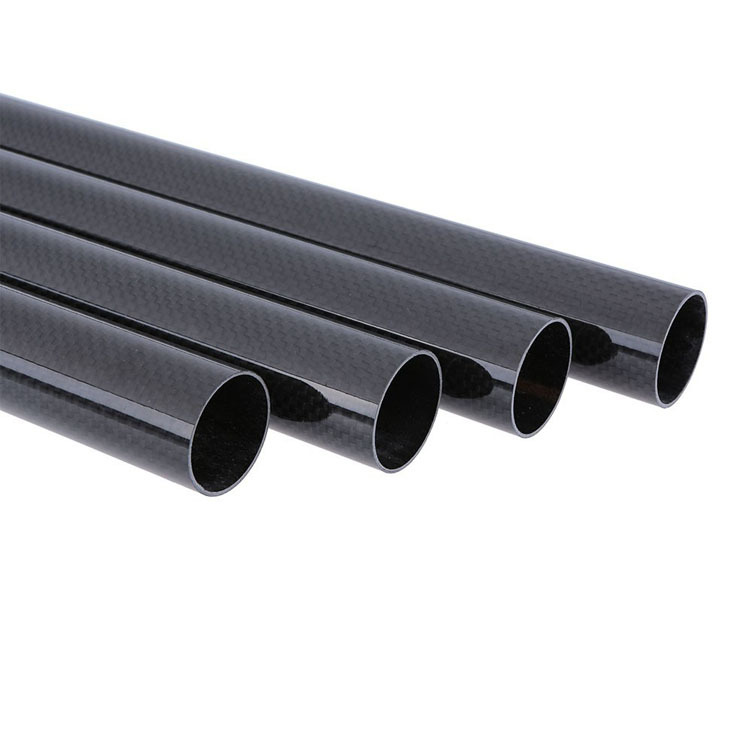
Carbon tubes are manufactured from high-purity carbon materials, often in the form of graphite or carbon-carbon composites. Graphite, a crystalline form of carbon, has a layered structure that contributes to its unique properties. Carbon tubes are typically produced through processes such as extrusion, isostatic pressing, or chemical vapor deposition, resulting in a dense, low-porosity structure that enhances their resistance to chemical attack.
### Why Carbon is Chemically Inert
The chemical inertness of carbon arises from its strong covalent bonding and the stability of its electron configuration. Carbon does not readily react with most acids, bases, or solvents at moderate temperatures. In particular, graphite is thermodynamically stable in non-oxidizing environments. The absence of free electrons or reactive surface sites prevents the initiation of corrosion reactions that plague metals. Furthermore, the surface of carbon tubes can be treated to enhance their hydrophobic nature, reducing the adhesion of corrosive ions.
## Performance in Acidic Environments
Carbon tubes exhibit outstanding resistance to a wide range of acids, including hydrochloric acid, sulfuric acid, and phosphoric acid. In these environments, metals often suffer from uniform corrosion or pitting, whereas carbon remains unaffected. For instance, in concentrated hydrochloric acid at elevated temperatures, carbon tubes show negligible weight loss over extended periods. This is attributed to the formation of a stable carbon-oxygen surface complex that passivates the material without degrading its structural integrity.
### Resistance to Oxidizing Acids
While carbon is generally inert, strong oxidizing acids such as concentrated nitric acid or hot chromic acid can cause oxidation at high temperatures. However, by selecting high-density, fine-grained graphite and applying protective coatings, carbon tubes can withstand even these harsh conditions. In many industrial applications, the operating temperatures are below the threshold where oxidation becomes significant, ensuring long-term reliability.
## Performance in Alkaline Environments
Alkaline solutions, including sodium hydroxide and potassium hydroxide, are equally challenging for many materials. Carbon tubes demonstrate excellent stability in caustic environments, even at high concentrations and temperatures. Unlike aluminum or zinc, which dissolve rapidly in strong bases, carbon does not form soluble complexes or hydrides. This makes carbon tubes ideal for use in caustic soda production, alumina refining, and other alkaline processes.
### Resistance to Stress Corrosion Cracking
One of the primary failure modes for metals in alkaline environments is stress corrosion cracking (SCC). Carbon tubes are immune to SCC because they lack the electrochemical mechanisms that drive crack propagation in metals. This immunity significantly enhances the safety and reliability of circulation equipment, especially under fluctuating pressures and temperatures.
## Applications in Acid-Base Circulation Equipment
Carbon tubes are widely used in heat exchangers, condensers, and piping systems that handle corrosive fluids. In the chemical industry, they are employed in processes such as acid recovery, waste neutralization, and the production of fertilizers. The pharmaceutical and petrochemical sectors also utilize carbon tubes for their inertness and thermal conductivity, which is superior to many non-metallic alternatives.
### Heat Exchanger Tubes
In shell-and-tube heat exchangers, carbon tubes provide efficient heat transfer while resisting fouling and corrosion. Their smooth surface reduces pressure drop and minimizes the accumulation of deposits, which is particularly beneficial when circulating slurries or solutions with suspended solids.
### Piping and Manifolds
Carbon tubes are also used as liners or complete piping sections for transporting acids and bases between process units. Their low coefficient of thermal expansion reduces the risk of thermal fatigue, and their lightweight nature simplifies installation and support structures.
## Advantages Over Conventional Materials
Compared to stainless steel, Hastelloy, or titanium, carbon tubes offer several distinct advantages:
– **Cost-effectiveness**: Carbon is generally less expensive than high-alloy metals, especially for large-diameter pipes.
– **Weight reduction**: Carbon tubes are significantly lighter, reducing structural load.
– **Thermal conductivity**: Graphite has high thermal conductivity, improving heat exchange efficiency.
– **Longevity**: The inertness of carbon leads to longer service life and reduced downtime.
## Limitations and Mitigation Strategies
While carbon tubes are highly inert, they are not without limitations. They can be brittle and may suffer from mechanical damage if not properly supported. Additionally, in highly oxidizing conditions, protective measures such as resin impregnation or the use of oxidation-resistant coatings are necessary. Regular inspection and monitoring of wall thickness are recommended to ensure integrity over time.
## Conclusion
The chemical inertness of carbon tubes makes them an exceptional choice for acid-base liquid circulation equipment. Their resistance to both acidic and alkaline media, combined with their thermal and mechanical properties, positions them as a reliable and cost-effective solution for demanding industrial environments. By understanding the underlying chemistry and application-specific considerations, engineers can leverage carbon tubes to enhance process efficiency and equipment longevity.
# References
– [1] Smith, J. (2020). *Corrosion Resistance of Graphite in Chemical Processing*. Industrial Materials Review.
– [2] Chen, L., & Wang, X. (2019). *Carbon-Based Materials for Aggressive Media*. Journal of Chemical Engineering.
– [3] ASTM International. (2021). *Standard Guide for Use of Carbon Tubes in Corrosive Service*.