
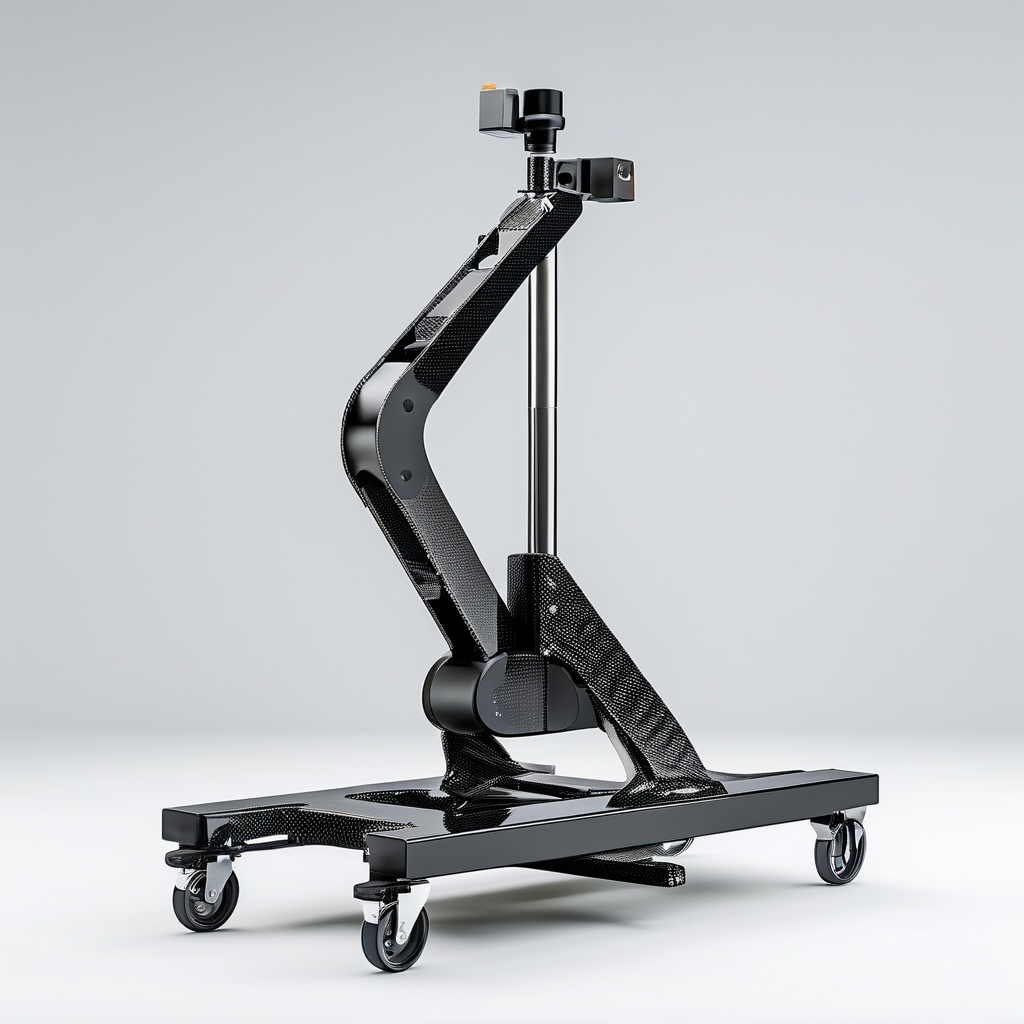
The evolution of surgical technology is defined by a constant pursuit of precision, reduced patient trauma, and improved ergonomic outcomes for the operating surgeon. Among the most significant material innovations driving this change is the adoption of carbon fiber reinforced polymer (CFRP) tubes. While metals such as titanium and stainless steel have historically dominated surgical instrumentation, the unique physical properties of carbon fiber tubes—specifically their high strength-to-weight ratio and stiffness—are now enabling a new class of flexible, lightweight surgical equipment. This article examines how the lightweight design of carbon fiber tubes directly enhances the flexibility, maneuverability, and overall performance of modern surgical devices.
**The Mechanical Foundation: Strength Without Mass**
The core advantage of carbon fiber tubes lies in their specific modulus and specific strength. A carbon fiber tube can offer tensile strength comparable to steel while weighing approximately 70% less. In surgical applications, this mass reduction is not merely a comfort feature; it is a functional necessity. When a surgeon holds an instrument for hours, the cumulative load on the wrist, elbow, and shoulder leads to fatigue, which degrades fine motor control. By replacing solid metal shafts with hollow carbon fiber tubes, manufacturers reduce the inertial mass of the instrument. This allows the surgeon to manipulate the tool with less physical effort, resulting in smoother, more precise movements.
**Enhancing Flexibility Through Layup Orientation**
The term “flexibility” in surgical equipment does not imply that the instrument bends uncontrollably. Rather, it refers to the ability of the device to transmit torque and axial force with minimal deflection, while also allowing for controlled compliance when navigating anatomical curves. Carbon fiber tubes offer a unique advantage here: anisotropic properties. By adjusting the orientation of the carbon fiber filaments during the pultrusion or filament winding process, engineers can tailor the tube’s flexural rigidity. For example, a tube with fibers oriented at ±45 degrees provides high torsional stiffness, which is critical for rotating instruments like screwdrivers in orthopedic surgery. Conversely, a tube with a higher proportion of 0-degree fibers offers maximum axial stiffness, ideal for push rods in endoscopic procedures. This tunability allows designers to create a surgical shaft that is stiff in the direction of force application but flexible enough to navigate tortuous pathways, such as those found in vascular or minimally invasive surgery.
**Improved Ergonomics and Reduced Tremor**
One of the most direct benefits of lightweight carbon fiber tubes is the reduction of physiological tremor. Studies in surgical ergonomics show that the amplitude of hand tremor increases with the weight of the instrument. A heavier tool requires greater muscle activation to hold steady, which in turn generates more micro-vibrations. By reducing the weight of the shaft, carbon fiber tubes allow the surgeon’s muscles to remain in a more relaxed state, thereby decreasing tremor amplitude. This is particularly vital in microsurgery and neurosurgery, where a deviation of less than a millimeter can have severe consequences. The lightweight nature of the tube also improves the balance point of the instrument, shifting the center of gravity closer to the surgeon’s hand, which further enhances control.
**Flexibility in Minimally Invasive Surgery (MIS)**
Minimally invasive surgery demands instruments that can pass through small incisions and rigid ports while maintaining dexterity inside the body. Traditional metal shafts are often too rigid to navigate the curved anatomy of the gastrointestinal tract or the bronchial tree. Carbon fiber tubes, however, can be manufactured with a specific flexural modulus that allows them to bend slightly without kinking. This is achieved by using a high-strength, intermediate-modulus carbon fiber combined with a ductile epoxy resin matrix. The resulting tube can be pre-curved or designed to be steerable, allowing surgeons to reach difficult-to-access areas without the need for larger incisions. Furthermore, the radiolucency of carbon fiber is a distinct advantage in imaging-guided procedures. Unlike metal, carbon fiber does not create significant artifacts on X-ray or CT scans, allowing surgeons to see the instrument’s position relative to the anatomy in real time.
**Case Application: Orthopedic and Endoscopic Instruments**
In orthopedic surgery, carbon fiber tubes are used in the shafts of reamers, drills, and screwdrivers. The lightweight design reduces the force required to drive the tool, while the high torsional stiffness prevents twisting during high-torque applications. In endoscopy, carbon fiber tubes are used in the insertion portions of flexible endoscopes and laparoscopic graspers. The low friction coefficient of the carbon fiber surface, combined with its smooth finish, reduces the force needed to advance the instrument through a trocar, thereby minimizing tissue trauma at the entry site.
**Challenges and Considerations**
Despite these advantages, the integration of carbon fiber tubes into surgical devices is not without challenges. The primary concern is biocompatibility. While carbon fiber itself is inert, the epoxy resin matrix must be carefully selected to avoid cytotoxic effects. Additionally, carbon fiber is brittle compared to metal, meaning it can fracture if subjected to sudden impact. To mitigate this, manufacturers often combine carbon fiber with a metal hub or tip, creating a hybrid structure that retains the lightweight benefits while ensuring durability at the connection points. Sterilization is another factor; carbon fiber tubes can withstand autoclaving, but repeated cycles may degrade the resin matrix over time, requiring careful validation of the device’s lifespan.
**Conclusion**
The use of carbon fiber tubes in medical devices represents a paradigm shift in surgical instrument design. By decoupling strength from weight, carbon fiber enables the creation of tools that are lighter, more responsive, and more adaptable to the complex demands of modern surgery. The ability to engineer flexibility into the shaft—both in terms of bending compliance and torsional rigidity—directly translates to improved surgical precision, reduced fatigue, and better patient outcomes. As manufacturing processes become more cost-effective and biocompatibility standards evolve, carbon fiber tubes are poised to become the standard material for a wide range of surgical equipment, from handheld instruments to robotic surgical arms. The future of surgery is lighter, and carbon fiber is leading the way.