
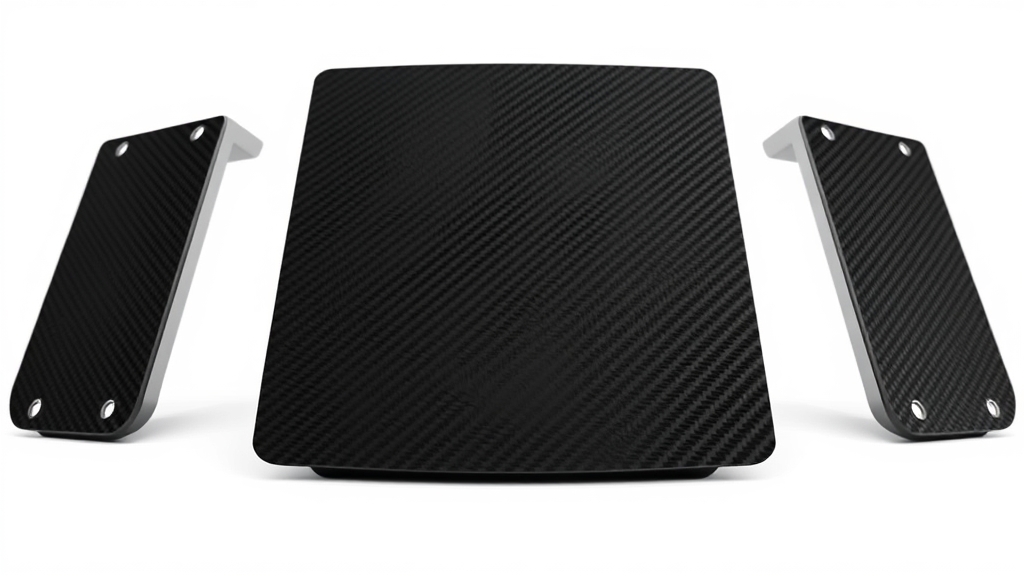
Warning: Read This Before Buying Carbon Fiber Online—It Could Save You Thousands
The Hidden Risk Behind a “Great Deal”
Carbon fiber has become the material of choice for automotive, aerospace, marine, and sporting goods applications. Its strength-to-weight ratio is unmatched, but the online marketplace is now flooded with mislabeled, counterfeit, and structurally questionable material. A single failed component can destroy an engine bay, damage a hull, or cause a catastrophic failure at speed. Before you click “buy,” understand what you are actually paying for—and what you might lose.
Know Your Grade and Weave
Not all carbon fiber is created equal. The two most common grades are standard modulus and intermediate modulus. Standard modulus fibers, such as Toray T300 or equivalent, are suitable for many cosmetic and structural applications. Intermediate modulus fibers, such as Toray T800 or equivalent, offer higher stiffness but often at a significant price increase.
The weave pattern also matters. Plain weave, twill weave, and unidirectional sheets each have different drapability, strength distribution, and finish characteristics. A 2×2 twill is popular for visible cosmetic panels because it drapes well and has a classic appearance. Unidirectional carbon fiber, however, places all fibers in one direction, delivering maximum strength along that axis but very little across it. Buying the wrong weave for your application can lead to delamination or premature failure, even if the material itself is genuine.
Always confirm the exact fiber grade, areal weight, and weave style from the seller. If the listing simply says “carbon fiber cloth” without specifying a grade or weight, treat that as a red flag.
Verify Certifications and Traceability
Legitimate carbon fiber suppliers provide mill certificates, batch numbers, and traceability documentation. Aerospace and structural buyers depend on this paperwork to verify that the material meets specific mechanical properties. Without traceability, you have no way of knowing whether the roll you received is actually the material you ordered.
Ask the seller for a certificate of conformance or a mill test report before purchasing. Reputable suppliers will provide documentation without hesitation. If the seller cannot or will not provide certification, you may be buying surplus, expired prepreg, or rejected material that was never intended for structural use.
Prepreg carbon fiber has a limited out-life and requires cold storage. Expired prepreg can appear perfectly fine visually but will not cure properly, resulting in weak, porous laminates. Some online sellers offload expired prepreg at deep discounts without clearly disclosing its condition. Never buy prepreg unless you can verify the manufacturing date, storage conditions, and remaining out-life.
Beware of Counterfeit and Cosmetic Seconds
Counterfeit carbon fiber is more common than many buyers realize. Some sellers take fiberglass cloth, apply a black coating or carbon-look finish, and market it as carbon fiber. Others sell low-grade or recycled carbon fiber as aerospace-grade material. The visual difference can be subtle, especially in photographs.
Cosmetic seconds are another concern. Carbon fiber with broken tow, misaligned weave, resin-rich areas, or surface contamination may be sold at a discount. For a purely cosmetic panel, that may be acceptable. For a structural part, it is not. If a listing mentions “minor defects,” “seconds,” or “no warranty,” understand exactly what you are accepting.
When possible, request a small sample before committing to a large order. Burn testing can help identify fiberglass disguised as carbon fiber: carbon fiber will leave a black residue and retain its shape when exposed to a flame, while fiberglass will melt or leave a white residue. This simple test can save you from purchasing an expensive counterfeit.
Understand Shipping and Handling Risks
Carbon fiber is not indestructible before it becomes a finished laminate. Raw fabric can be crushed, wrinkled, or contaminated during shipping. Once the sizing is damaged or the weave is distorted, the material may not wet out properly during lamination. Rolls that are loosely packed or shipped without protective wrap can arrive with creases that create weak points in the final part.
Prepreg must be shipped in insulated containers with cold packs or dry ice. If it arrives warm, it may already be advancing toward cure and should not be used for critical applications. Always check the package immediately upon delivery. Photograph any damage, retain all packaging, and report issues to the seller within the stated window.
Compare Total Cost, Not Just List Price
A low price per yard is not a bargain if you must scrap half the roll due to defects, pay for expensive returns, or rebuild a failed part. Calculate the total landed cost, including shipping, import duties, and the cost of any material that may be unusable.
For structural applications, the cost of failure can far exceed the material savings. If you are building a suspension component, a drone frame, or a bicycle frame, a single bad layup can result in injury. Material cost is a small fraction of the overall project cost when you factor in labor, tooling, and the value of your time.
Professional builders often prefer to pay slightly more from a known supplier with consistent quality and documented traceability. That premium buys you confidence in the mechanical properties, consistency between batches, and a clear chain of accountability if something goes wrong.
Final Checklist Before You Buy
Before completing any online carbon fiber purchase, run through this checklist.
- Confirm the exact fiber grade, weave, and areal weight.
- Request a mill certificate or certificate of