
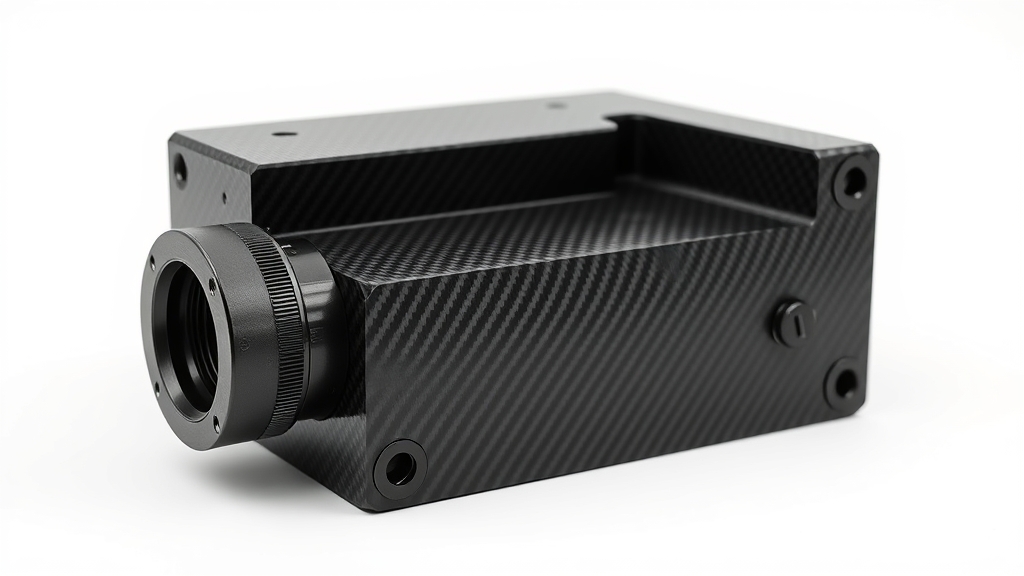
Carbon fiber sheets have emerged as a transformative material, redefining performance standards across a broad spectrum of industrial applications. Their remarkable ability to combine minimal weight with extraordinary strength makes them an indispensable resource for engineers and designers seeking to push the boundaries of efficiency, durability, and innovation. This post explores the unique properties, manufacturing processes, and diverse uses of carbon fiber sheets, illustrating why they are widely regarded as the “performance king” in modern industry.
What Are Carbon Fiber Sheets?
Carbon fiber sheets are composite structures formed by embedding thousands of continuous carbon filaments within a polymer matrix, most commonly epoxy resin. The carbon fibers themselves are produced through the controlled pyrolysis of organic precursors, such as polyacrylonitrile (PAN) or pitch, resulting in a material where carbon atoms are aligned in microscopic crystals parallel to the fiber axis. This alignment grants the fibers exceptional tensile strength and stiffness.
The manufacturing process typically involves layering unidirectional or woven carbon fiber fabrics, pre-impregnated with a precise amount of resin, to create prepreg sheets. These layers are stacked in specific orientations, then cured under heat and pressure—often in an autoclave—to consolidate the laminate. The result is a rigid, high-performance panel that can be machined, cut, and bonded into complex shapes. The versatility of carbon fiber sheets is further enhanced by the ability to tailor fiber orientation, thickness, and resin formulation to meet exacting mechanical and environmental requirements.
The Lightweight Advantage
One of the most compelling attributes of carbon fiber sheets is their extraordinarily low density. Typically ranging from 1.5 to 1.7 g/cm³, they are roughly 70% lighter than steel and 30% lighter than aluminum. This weight reduction does not come at the expense of performance; instead, it directly translates into significant operational benefits. In transportation sectors, for instance, every kilogram saved reduces fuel consumption and emissions over the lifetime of a vehicle or aircraft. The lightweight nature also simplifies handling, installation, and assembly, lowering labor costs and enabling the design of portable or handheld equipment that would be prohibitive with traditional metals.
Moreover, the weight advantage allows engineers to redistribute mass to other critical components, optimizing overall system efficiency. In high-speed machinery or robotics, reduced inertia from lighter structural parts leads to faster acceleration, improved precision, and lower energy draw. This combination of low mass and high performance is a primary driver behind the material’s widespread adoption.
Exceptional Strength and Stiffness
Carbon fiber sheets deliver mechanical properties that far surpass those of conventional engineering materials on a weight-specific basis. The tensile strength of standard carbon fiber laminates can exceed 1,000 MPa, and ultra-high-modulus variants push stiffness values above 500 GPa. When compared to structural steel, carbon fiber composites can exhibit five times the strength while remaining a fraction of the weight. The specific modulus—stiffness relative to density—is particularly impressive, making these sheets ideal for applications where deflection and vibration must be minimized without adding mass.
This remarkable strength originates from the covalent bonding and crystalline structure of the carbon atoms within the fibers. When forces are applied along the fiber direction, the load is distributed efficiently across the continuous filaments. Engineers exploit anisotropy by orienting fibers precisely along predicted stress paths, creating optimized, load-bearing panels that outperform isotropic materials. In aerospace and motorsport, this property enables thinner, more aerodynamic structures that maintain structural integrity under extreme forces.
Corrosion Resistance and Durability
Unlike metals, carbon fiber sheets are inherently resistant to corrosion and chemical degradation. The polymer matrix shields the fibers from moisture, salt spray, and a wide range of industrial chemicals, eliminating the need for protective coatings or cathodic protection systems. This resistance makes the material exceptionally durable in harsh environments, such as offshore platforms, chemical processing plants, and marine structures.
Fatigue performance is another key advantage. Carbon fiber composites exhibit a flatter S-N curve compared to aluminum and steel, meaning they retain a higher percentage of their original strength under cyclic loading. Cracks propagate slowly, if at all, within the laminate, leading to extended service life and reduced maintenance intervals. When properly designed, carbon fiber components can endure millions of load cycles without significant degradation, a critical factor in aerospace and infrastructure applications.
Thermal and Electrical Properties
Carbon fiber sheets possess a unique set of thermal and electrical characteristics. The coefficient of thermal expansion (CTE) for carbon fiber is near zero in the fiber direction, providing exceptional dimensional stability across a wide temperature range. This property is invaluable in precision instruments, satellite components, and optical benches where thermal distortion must be minimized. However, the matrix material can dominate transverse expansion, so careful laminate design is required.
Electrically, carbon fibers are conductive, though the overall conductivity of a sheet depends on fiber volume fraction and resin type. This conductivity can be leveraged for lightning strike protection on aircraft, electromagnetic interference (EMI) shielding in electronics enclosures, and static dissipation in sensitive environments. Conversely, the galvanic potential between carbon and metals mandates isolation techniques to prevent electrolytic corrosion when dissimilar materials are joined.
Applications in Industrial Fields
The unique blend of properties has propelled carbon fiber sheets into virtually every high-performance sector. In aerospace, they form primary structures like fuselage panels, wing skins, and interior components, shaving hundreds of kilograms from aircraft weight and directly improving fuel economy. Automotive manufacturers employ them in monocoques, body panels, and drivetrain components, particularly in electric vehicles where weight reduction extends battery range.
Industrial robotics benefits from the stiffness and low inertia of carbon fiber arms and end-effectors, enabling faster, more precise automated operations. The sports and recreation industry relies on carbon fiber sheets for bicycle frames, tennis rackets, and protective gear, where the stiffness-to-weight ratio enhances athletic performance. In civil engineering, externally bonded carbon fiber sheets are used to strengthen aging concrete bridges and buildings, offering a non-intrusive, corrosion-proof retrofit solution. Medical applications include lightweight prosthetics, surgical tables, and imaging equipment where radiolucency and strength are paramount.
The Future of Carbon Fiber Sheets
Innovation continues to expand the capabilities and accessibility of carbon fiber sheets. Manufacturing advancements, such as automated fiber placement and out-of-autoclave prepregs, are driving down production costs and cycle times. The