
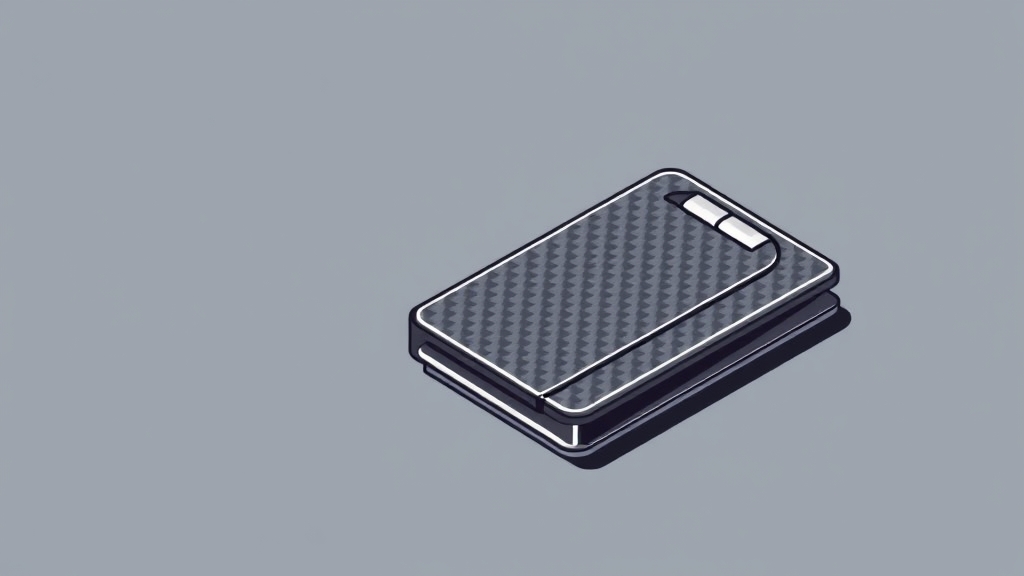
The Day My Metal Wallet Bent for the Last Time
I still recall the exact moment I became a true believer. My premium titanium money clip, gifted to me after a promotion, was supposed to represent engineering perfection. Yet after an ordinary commute, I pulled it from my back pocket to find it permanently deformed — a subtle, sad curve that refused to straighten. That was the day I stopped romanticizing metal and started researching carbon fiber. What followed was a shopping epiphany that completely overhauled how I evaluate everyday carry items, home accessories, and even sporting equipment. The secret I uncovered didn’t just convince me to switch materials; it made me wonder why anyone still accepts the hidden compromises of stainless steel, aluminum, and titanium.
The Allure of Metal and Its Hidden Weaknesses
Metal possesses a cultural weight that carbon fiber has always struggled against. We associate steel with durability, titanium with aerospace excellence, and brass with timeless craftsmanship. When something is cold to the touch and has a reassuring heft, we automatically presume it’s built to last. But in day-to-day use, metal betrays us in ways we rarely anticipate until it’s too late.
Scratches were my first real frustration. A beautifully machined aluminum phone case or a brushed stainless steel watch band would accumulate micro-abrasions within a week, losing its pristine look. Then there was weight. Manufacturers celebrate the “solid feel” of metal, but when you’re moving through life — commuting, hiking, traveling with a carry-on — every gram compounds. I started adding up the ounces in my pocket: keys, phone, wallet, knife, pen. The sum was needless gravity I had become numb to.
Corrosion was the final insult. No matter how premium the alloy, moisture and salt eventually leave their mark. A high-end steel ring developed pitting after a beach vacation. A titanium pen clip, despite the metal’s reputation for inertness, showed tiny rust specks where it met spring steel. These were expensive items, and each failure made me question the entire material class.
The Real Breakthrough: Understanding Carbon Fiber Grading
The average consumer sees carbon fiber as a binary choice — it’s either real or it’s fake. That oversimplification keeps many people trapped in the metal ecosystem. The shopping secret that changed everything for me was learning to distinguish between decorative carbon fiber, intermediate-grade carbon fiber, and premium, structurally optimized carbon fiber. The difference isn’t marketing fluff; it determines whether your product will delaminate, yellow, or simply look like a checkerboard sticker after a few months.
Decorative carbon fiber is often a single 3K twill layer bonded to a plastic or glass fiber core. It looks fine at first, maybe even impressive under a glossy clear coat, but offers virtually none of the material’s legendary mechanical properties. When I examined a wallet or a pen made this way, I could spot inconsistent weave alignment, resin pooling along edges, and an unnaturally heavy weight — because the carbon layer was just a veneer over a dense substrate.
The secret shifted when I found makers using fully structural carbon fiber composites. These products use multiple layers of fabric, oriented in different directions, encased in high-grade epoxy systems cured under heat and pressure. The result is not a shell but a monocoque structure where the entire wall thickness contributes to strength. I learned to ask questions no metal manufacturer ever forced me to consider: What fibers? What tow size? What resin system? What layup schedule? Suddenly, I wasn’t shopping for an object; I was evaluating an engineered material solution.
The Purchasing Protocol That Eliminated Guesswork
My personal protocol for ditching metal forever came down to four filters. First, I only consider items where carbon fiber isn’t a trim piece but the primary structure. If a product description brags about a “carbon fiber inlay,” I move on. I want the weave to wrap around edges, to be visible on the back, and to show evidence that the part was molded as a single piece.
Second, I look for surface quality without optical tricks. A properly finished carbon fiber part has a deep, three-dimensional luster where the light interacts with the weave. Heavy layers of automotive clear coat can mask surface pinholes. The best manufacturers achieve a virtually pore-free finish directly from the mold and then apply a minimal UV-stabilized coating. I learned to reject glossy lake-like surfaces that look like they’re encased in half a millimeter of plastic — those will scratch and chip just like painted metal.
Third, I weigh everything. This might sound obsessive, but true high-grade carbon fiber composites are unmistakably light. A structural carbon wallet might weigh a third of its titanium equivalent. When I pick up a supposed “full carbon” product and it feels almost as heavy as aluminum, I suspect a fiberglass or metallic core. My digital scale became a tool of truth.
Fourth, I source directly from workshops that photograph their layup rooms, not just the finished product. The secret I stumbled upon wasn’t a brand name; it was a cluster of small, engineering-led studios that sell online without the markup of luxury branding. They list their curing temperatures, their CNC finish processes, and their fiber suppliers. They talk about vacuum bagging and autoclave cycles. When a maker exposes that level of detail, metal becomes archaic overnight.
Corrosion, Fatigue, and the Argument That Sealed My Conversion
Metals fatigue